Learn how to measure content trust signals that boost Google rankings, AI citations, and long-term brand credibility for startups.
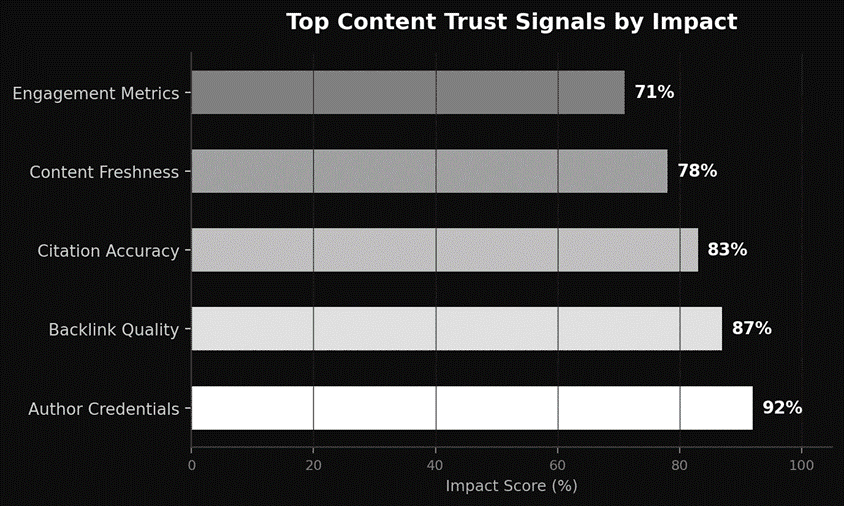
You measure content trust signals by tracking author credibility, backlink quality, citation accuracy, content freshness, and user engagement. These metrics tell search engines and AI platforms whether your content deserves to rank or stay buried.
Most startups chase keywords and traffic numbers. That works early on. But Google and AI search engines now evaluate TRUST. If your content lacks trust signals, it will not survive algorithm updates or earn AI citations. Here is how to measure them and why they matter.
What Are Content Trust Signals?
Content trust signals are measurable indicators that tell search engines and AI models your content is reliable and worth referencing. Google calls this E-E-A-T: Experience, Expertise, Authoritativeness, and Trustworthiness. AI platforms like ChatGPT and Perplexity follow similar logic when choosing what to cite.
The most important trust signals include:
• Author credentials and visible expertise on the page.
• Quality and relevance of backlinks pointing to your content.
• Accuracy of data, stats, and sources you reference.
• How recently the content was published or updated.
• Real engagement, like time on page, scroll depth, and shares.
How Do You Track Author Credibility?
Google wants to know who wrote your content and why they should be trusted. Startups that skip this lose rankings to competitors with clear author signals.
To measure author credibility, check these elements:
• Every article has a visible author bio with relevant qualifications.
• Author profiles link to LinkedIn or professional portfolios.
• The same authors appear on other reputable sites.
• Schema markup includes author structured data for search engines.
Building this authority takes time. A strong SEO and AEO growth strategy connects author trust signals directly to how your pages perform in Google and AI search results.
What Metrics Show Your Content Is Trusted?
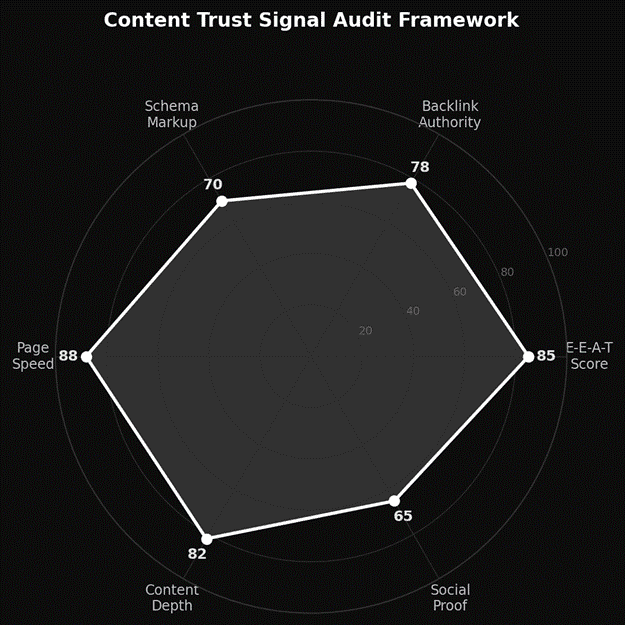
Trust is not a feeling. It is a set of numbers you can track. Here are the metrics that show whether your content earns trust or loses it.
• Backlink profile quality: Use Ahrefs or Moz to check if links come from high-authority domains.
• Dwell time and bounce rate: Longer visits and lower bounce rates mean people trust your content.
• Citation frequency in AI tools: Track how often ChatGPT, Perplexity, and Google AI Overviews reference your pages.
• Content freshness score: Pages updated within 90 days consistently outperform stale content.
• Social proof signals: Shares, mentions, and reviews that validate your content externally.
If you want AI platforms to cite your startup, your content must pass these checks. That is what the AEO blog writing focuses on: structuring every article to earn trust from both humans and algorithms.
How Does Content Trust Grow Over Time?
Trust compounds. Startups that consistently measure and improve these signals see a clear upward trend in rankings and AI visibility over three to six months.
Startups that invest in trust signals early build a foundation that protects them from algorithm changes. Those who skip this keep chasing short-term fixes. For a deeper look at sustainable visibility, check out how to build authority fast for your startup.
The Bottom Line
Measuring content trust signals is not complicated, but it requires attention. Track author credibility, backlink quality, citation accuracy, content freshness, and engagement metrics consistently. The startups that do this are the ones that rank on Google, get cited by AI, and build real brand authority.
Ready to build content that earns trust from search engines and AI platforms? Visit Viral-Impact and see how we help startups grow faster with strategies that actually work.