Learn how to create scalable brand assets that keep your startup consistent, credible, and ready to grow fast.
Create a documented brand system with reusable files, defined rules, and modular components so every designer, developer, and marketer works from the same source. A scalable brand asset library keeps your startup looking consistent, whether you have one person or a hundred.
What Are Brand Assets, Exactly?
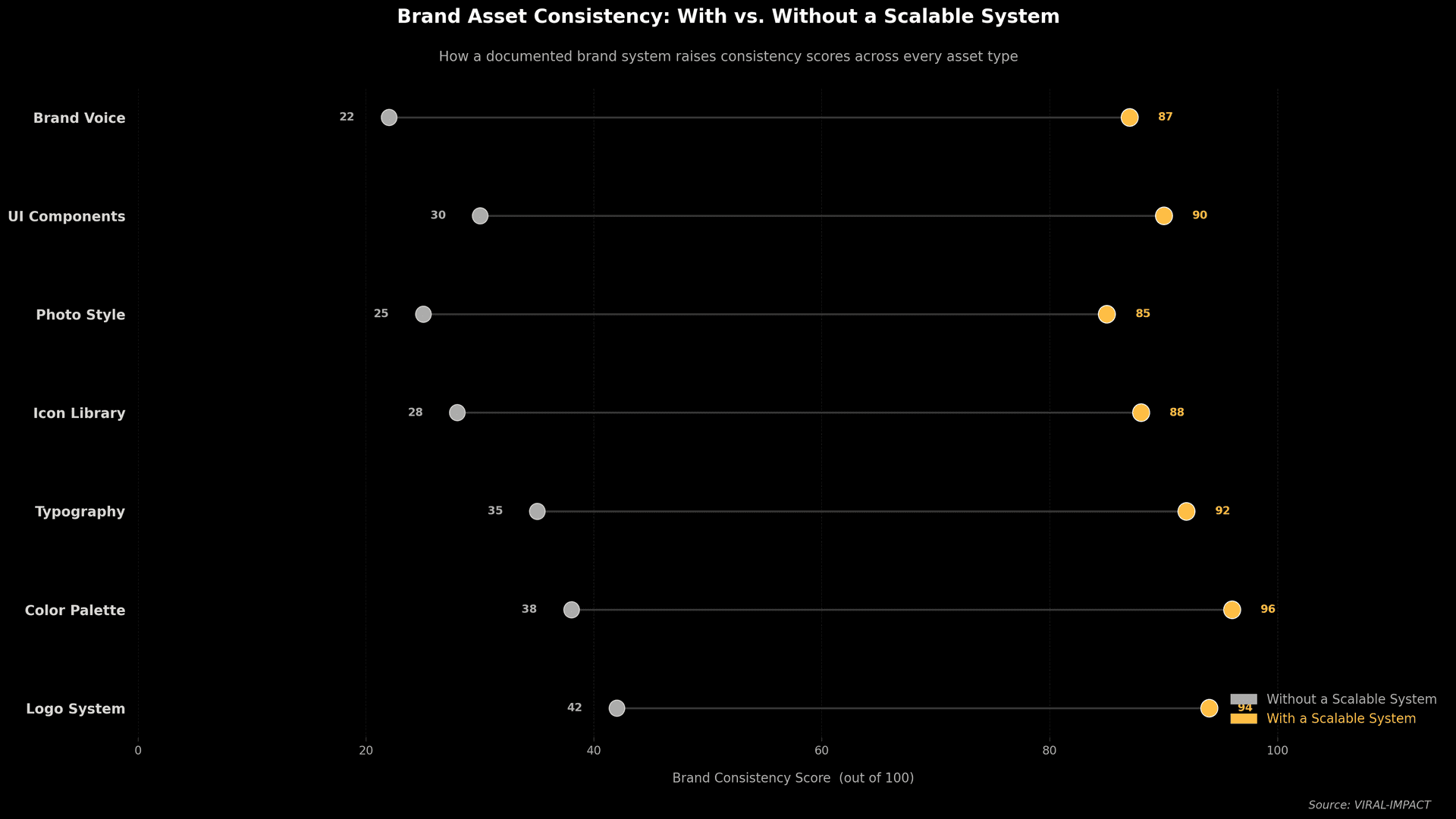
Brand assets are the building blocks of how your company looks and sounds. Not just your logo. The full set includes:
• Logo files: SVG, PNG, dark and light versions, favicon.
• Color palette: hex codes with documented usage rules.
• Typography: font choices and hierarchy for headings and body copy.
• Icon library: consistent style, not a random mix from different packs.
• UI components: buttons, forms, and states for your product or site.
• Brand voice guide: the words you use, the tone you keep, what you avoid.
When any of these are missing or undocumented, the cracks show quickly. Social posts drift. New hires guess. Contractors deliver work that feels off-brand.
Why Most Startup Brand Assets Fall Apart at Scale
The failure is rarely the assets themselves. It is the lack of a system around them.
• Assets live in someone's Figma file, not a shared library.
• The logo has five slightly different versions floating around Google Drive.
• Nobody knows which hex code is "the real one."
• New team members guess instead of looking things up.
A brand style guide or hosted design system fixes this. One source of truth, accessible to everyone.
How to Build a Brand Asset System That Scales
Here is what actually works for early-stage startups building for growth:
1. Start with master source files, not exported copies
Keep your logo and visuals as editable source files (Figma, Illustrator, or Sketch). Exports are generated from these, never saved as the only version.
2. Use a consistent naming convention
Something like logo-primary-dark.svg or icon-check-16px.png. When your team grows, consistent names save real time.
3. Document rules, not just visuals
A hex code without context is incomplete. Write down what each color is for, what it should never go on, and the accessible fallback at small sizes.
4. Organize into clear folders
Brand identity, UI components, marketing materials, social templates. Each folder should stand alone so anyone can find what they need.
5. Put everything in one shared location
Google Drive, Notion, or a Figma shared library all work. What matters is one URL your whole team knows.
If you are still figuring out your brand foundations, building your logo and brand identity with a clear system from day one saves you a painful rebrand later.
What Makes a Brand System Actually Usable?
Having brand assets and having a brand system are two different things. A system means:
• Any team member can find the right file in under two minutes
• There is only one version of each asset in circulation
• New designers do not have to ask for "the brand kit."
• Your brand looks the same on your website, your pitch deck, and your LinkedIn banner
For the web side of things, your website design and development should pull directly from your brand system, not sit outside it. When your site, components, and color tokens all reference the same style layer, updates take minutes instead of weeks.
How Does Brand Consistency Affect SEO and Growth?
Consistent branding affects trust, and trust affects conversion and search performance.
• Users stay longer on sites that feel cohesive and intentional
• Consistent visual identity makes your content more recognizable in search results and social feeds
• Backlinks and press coverage build domain authority faster when your brand is easy to recognize and describe
If you want to understand how organic visibility compounds over time alongside brand signals, this guide on off-page SEO for startups breaks down exactly how the two are connected.
The Bottom Line
Brand assets that scale are not about having more files. They are about having the right system so your team can move fast without making your brand look inconsistent.
Define your rules. Build your source files. Centralize everything.
If you are building from scratch or cleaning up a messy brand situation, Viral-Impact works with startups to build brand systems and scalable visual identities that hold up as you grow. See what we can do for your brand at viral-impact.