Learn the tested cold email tactics that get busy C-suite and VP-level decision-makers to actually respond to you.
Decision-makers respond to cold emails that speak directly to a problem they are already thinking about, with one clear and easy ask. Ditch the product pitch and lead with relevance; that shift alone can double your reply rate.
Why Do Most Cold Emails to Decision-Makers Get Ignored?
The average VP or C-suite executive receives over 100 emails a day. Cold emails get deleted in seconds, usually because they look, feel, and read like every other pitch.
Here is what kills the response rate:
• The email opens with "I hope this finds you well" or something equally forgettable.
• The first paragraph is about the sender's company, not the reader's situation.
• The ask is too big for a first touch: book a demo, sign a trial, or jump on a 30-minute call.
• There is no clear reason why this specific person is being contacted right now.
What Should the First Line of a Cold Email Actually Say?
This line decides whether the rest gets read. It should feel written for one person, not pulled from a template.
Strong first-line approaches:
• Reference something recent: a post they published, a hire they announced, or a product update they ran
• Name a challenge specific to their role: "I saw you scaled to 12 reps usually at that point, outbound pipeline quality becomes the real bottleneck."
• Open with a short observation, not a compliment, skip "I love your work" and say something they have not heard before
Keep the structure simple: problem they recognize, result you produced for someone similar, and one low-pressure ask. The entire email should fit in three to four sentences.
For a full breakdown, our cold outreach guide covers proven openers, tested CTAs, and the complete 2026 framework.
How Do You Write a Subject Line That Gets Opened?
Short wins. Subject lines under seven words consistently outperform longer ones. Decision-makers scan them in under two seconds.
Subject line tactics that improve open rates:
• Use their company name: "[Company] quick thought on outbound pipeline"
• Reference a trigger event: "Congrats on the Series A one idea."
• Ask a direct question: "Still building pipeline for Q3 manually?"
• Go lowercase, it looks like a real message, not an automated campaign.
Avoid "synergy," "touching base," "quick win," or anything that reads as if it came from a mass send.
How Many Follow-Ups Should You Send to a Decision-Maker?
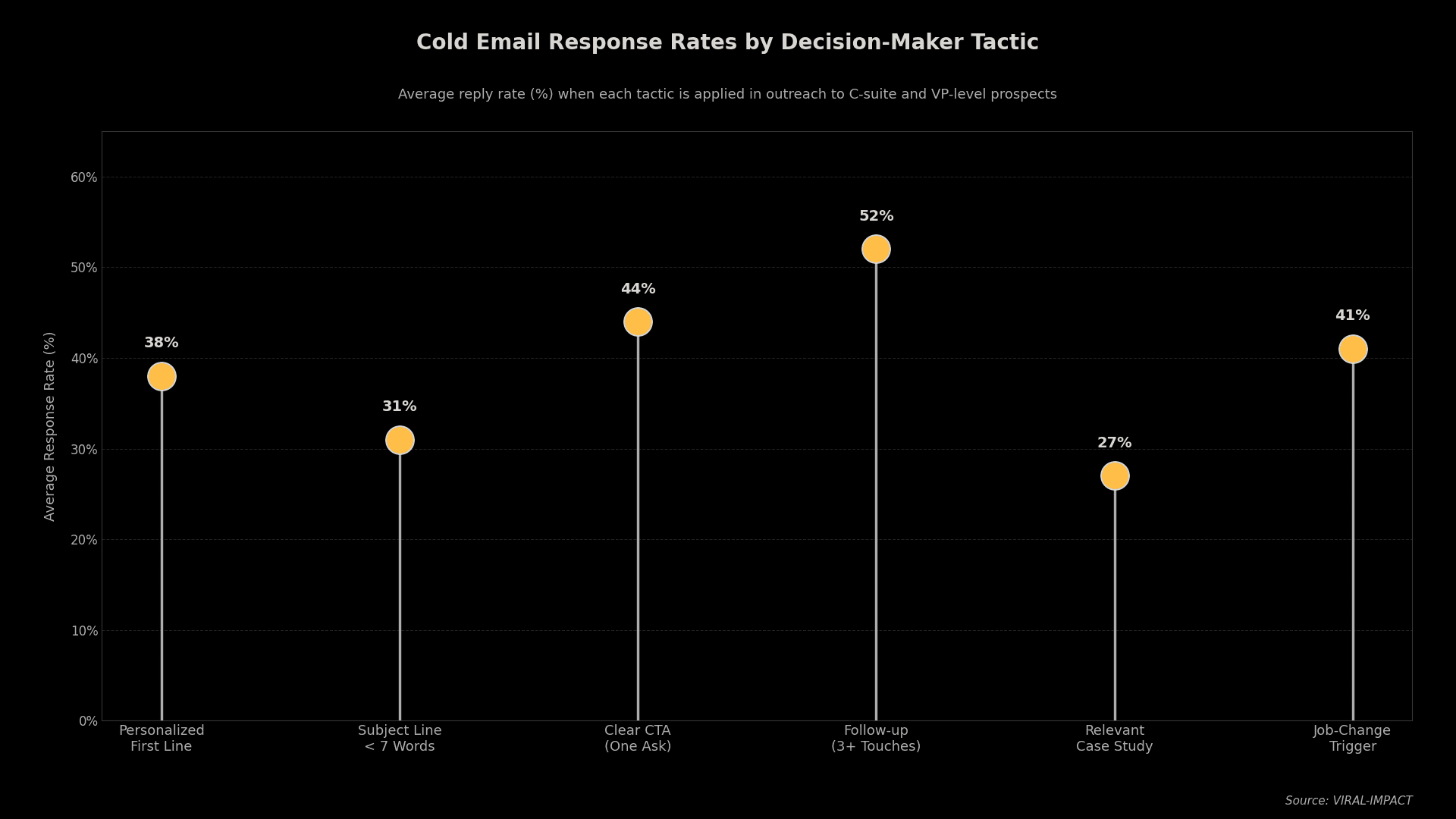
Most replies do not come from the first email. As shown in the chart above, three or more follow-up touches produce the highest response rates across all the tactics tracked.
A practical follow-up cadence:
• Day 1: Send the initial email
• Day 3: Add a new data point or a short customer result
• Day 7: Introduce a new angle, not just a nudge
• Day 14: Breakup email: "Should I stop following up?"
Each message should add something new, never just resend the original with "just checking in."
Setting up a structured email sequence is exactly what our email outreach service is designed to handle, from targeting to timing.
What Signals Tell You the Right Time to Reach Out?
Timing a cold email well can matter just as much as the message inside it. These are the triggers worth watching before you hit send:
• A recent job change or promotion.
• A new funding announcement.
• A blog post or LinkedIn article about a problem you solve.
• A competitor move that creates urgency on their end.
• A new hire that signals a growing initiative.
Reaching out within 48 to 72 hours of a trigger increases reply rates noticeably. Combine that timing with a relevant message, and you stand out even in a crowded inbox.
Pair your outreach with a consistent organic growth strategy, so decision-makers have already seen your brand before your email arrives.
The Bottom Line
Getting decision-makers to respond comes down to three things: relevant timing, a message that speaks to their world, and a low-friction ask. Most outreach fails on all three. Fix one, and your numbers improve. Fix all three, and you will start hearing back from people who actually have buying authority.
Want to build an outreach system that converts? Start at viral-impact and see how we help startups turn cold email into a real, repeatable pipeline.