Discover exactly how to identify your target audience with proven strategies that help startups attract ideal customers fast.
You identify your target audience by studying who actually needs what you sell, where they spend time online, and what problems keep them up at night. Combine real customer data with competitor research and analytics tools to build a clear picture of the people most likely to buy from you.
Most startups waste months marketing to everyone and converting nobody. That happens when founders skip audience research and jump straight to running ads. You do not need a massive budget to figure out who your customers are. You just need a structured approach and a willingness to follow real data instead of gut feelings.
Why Does Knowing Your Target Audience Matter?
When you understand your audience, every marketing dollar works harder. You write copy that resonates, pick channels where your buyers hang out, and stop competing for attention with people who were never going to purchase.
• Ad spend drops because you stop targeting the wrong demographics.
• Content engagement rises when messaging matches real pain points.
• Sales cycles shorten because leads arrive pre-qualified.
A well-defined audience also strengthens your organic growth strategy by ensuring every piece of content speaks directly to the right people.
What Are the Best Steps to Find Your Target Audience?
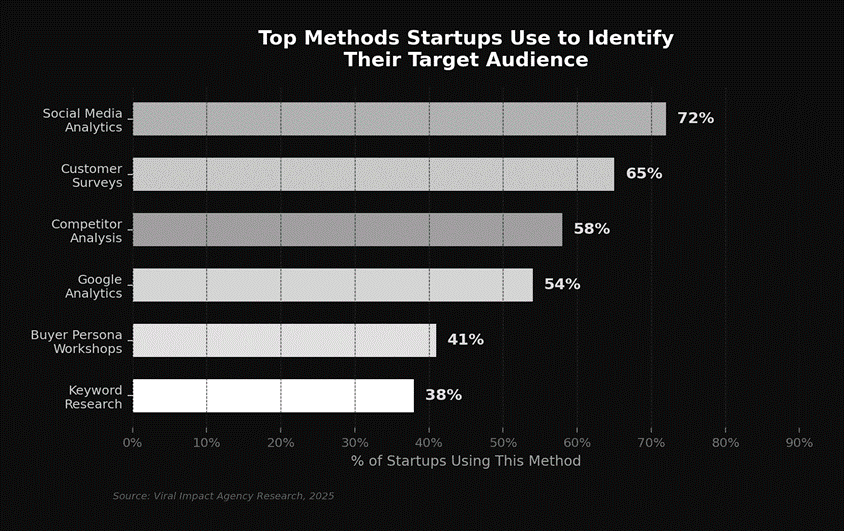
• Start with existing customers. Review purchase history, support tickets, and feedback. Patterns emerge around age, job title, industry, and location.
• Dig into analytics. Google Analytics and social media insights reveal who visits your site and what they click. Behavioral data tells you more than assumptions.
• Study your competitors. Look at who they attract and find gaps they ignore. Sometimes the best audience is the one nobody else serves well.
• Run surveys and interviews. Ask about challenges, goals, and where they search for solutions. Even five honest conversations can reshape your strategy.
• Build buyer personas. Turn research into profiles that include demographics, motivations, objections, and preferred content formats.
• Test with small campaigns. Run targeted ads or publish content for your new personas. Track conversions and adjust based on what the numbers say.
Which Tools Help You Find Your Target Audience?
• Google Analytics: free demographic and behavioral data about your visitors.
• Google Search Console: shows which queries bring people to your site.
• Social media analytics: LinkedIn, X, and Reddit offer insights about followers and engagement.
• SparkToro and AnswerThePublic: reveal where your audience hangs out and what they ask.
Pairing these tools with a solid SEO and AEO growth strategy turns audience insights into content that ranks on Google and gets cited by AI search engines.
What Mistakes Do Startups Make When Defining Their Audience?
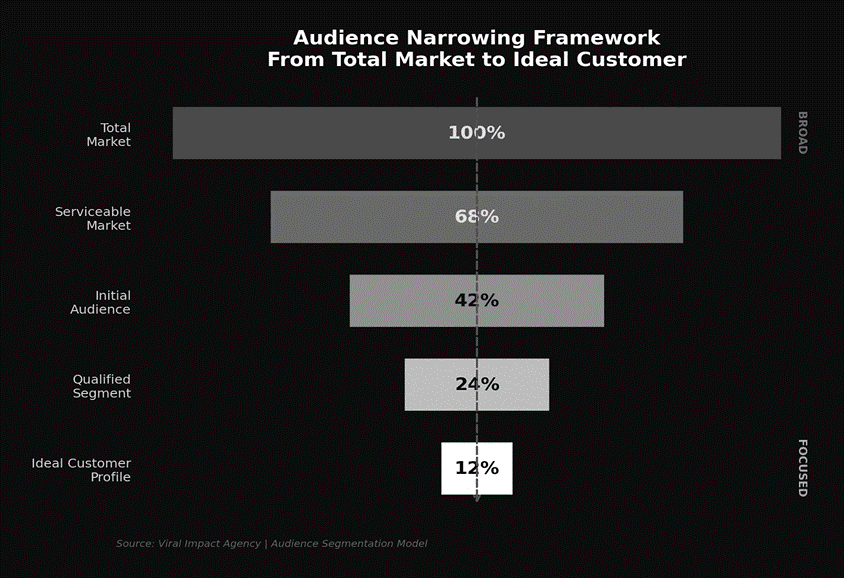
• Targeting too broadly. Saying "everyone" is your customer means nobody feels like your marketing speaks to them.
• Relying on assumptions. Founders often assume they know their customer without validating with data.
• Ignoring existing data. Your analytics and social profiles already hold clues about who engages with your brand.
• Never updating personas. Audiences shift over time. Review your buyer personas at least every quarter.
If this feels overwhelming, our guide on how to create a buyer persona for your startup walks you through the full process.
The Bottom Line
Identifying your target audience is not a one-time task. It gets sharper every time you collect new data, talk to real customers, and analyze what works. The startups that grow fastest are the ones that stop trying to reach everyone and start focusing on people who actually need what they offer.
Need help turning audience insights into a growth strategy that delivers? Viral-Impact builds data-driven marketing systems for startups ready to stop guessing and start scaling.