Learn how to measure marketing qualified leads using lead scoring, CRM tracking, and conversion metrics that actually matter.
You measure marketing qualified leads by assigning point-based scores to prospect behaviors like page visits, content downloads, and email clicks, then tracking those scores inside a CRM. Once a lead crosses your predefined threshold, it becomes an MQL ready for your sales team to pursue.
What Exactly Is an MQL?
A marketing qualified lead is someone who has shown real buying interest through their actions, not just a random name on a list. If a visitor reads your pricing page, downloads a case study, and opens three emails, they are signaling purchase intent.
MQLs sit between cold leads and sales qualified leads (SQLs). They have engaged enough to deserve sales attention, but still need validation. Without clear scoring criteria, marketing passes unqualified names to sales, and deals stall.
How Does Lead Scoring Work for MQLs?
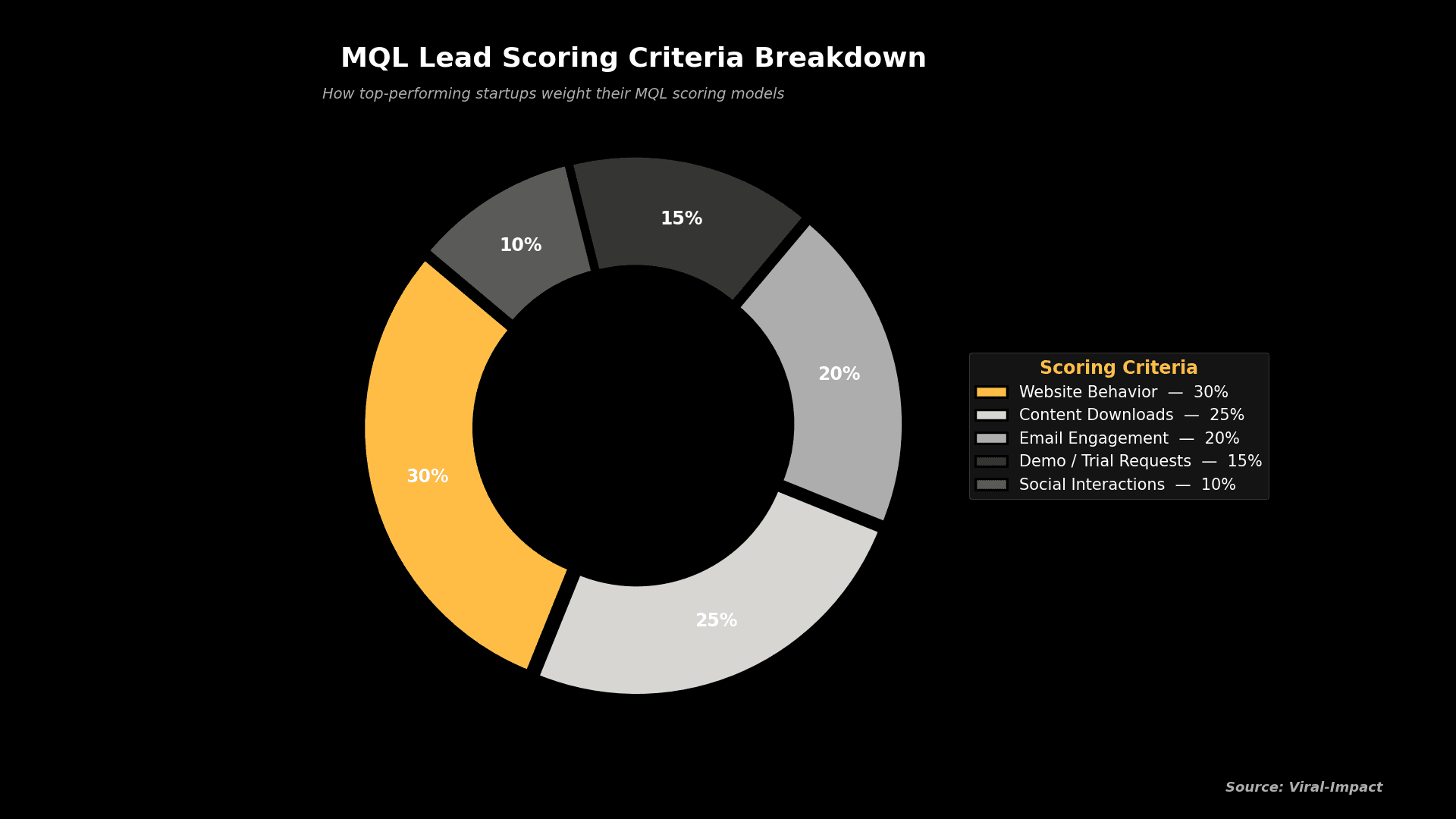
Lead scoring assigns numerical values to prospect actions. When someone accumulates enough points, your system flags them as an MQL:
• Page visits to high-intent pages (pricing, demo, features) earn higher points.
• Downloading gated content like whitepapers or guides adds mid-range points.
• Email opens and clicks contribute smaller but consistent scores.
• Requesting a demo or starting a free trial earns the highest points.
• Social media engagement adds supporting signals.
The exact numbers depend on your business. A B2B SaaS startup might set its MQL threshold at 50 points, while an ecommerce brand might use 30. Align scores with actual conversion data over time.
Running proper keyword research helps you understand which topics attract qualified visitors, so your scoring reflects real buyer behavior.
What Tools Should Startups Use to Track MQLs?
You do not need enterprise software to measure MQLs. Several accessible platforms handle it well:
Tool | Best For | Starting Cost |
HubSpot CRM | All-in-one lead scoring and tracking | Free tier available |
Salesforce | Scalable scoring for growing teams | Paid plans |
ActiveCampaign | Email-driven lead scoring | Affordable tiers |
Pipedrive | Simple pipeline-based tracking | Budget-friendly |
Google Analytics + Sheets | Manual scoring on a tight budget | Free |
Whichever tool you choose, connect it to your website analytics so every interaction feeds your scoring model.
Which Metrics Matter Most When Measuring MQLs?
Tracking the right numbers makes your MQL system useful. Focus on these:
• MQL-to-SQL conversion rate: shows if marketing passes quality leads
• Time to MQL: reveals how long nurturing takes
• MQL volume by channel: identifies your strongest lead sources
• Cost per MQL: measures marketing spend efficiency
• MQL-to-customer rate: connects lead quality to actual revenue
If your MQL-to-SQL rate drops below 30%, your scoring threshold is likely too low. If the cost per MQL climbs, revisit your content strategy.
Tracking marketing KPIs like these consistently helps founders make smarter budget decisions.
How Do I Set Up an MQL Scoring Model From Scratch?
Starting simple beats starting perfect. Here is how:
• Define your ideal customer profile based on real buyer data.
• List every touchpoint between the first visit and purchase.
• Assign point values to each action weighted by purchase intent.
• Set a threshold score that triggers MQL status.
• Connect your CRM to capture scores automatically.
• Review and adjust thresholds monthly based on conversion data.
Pairing this process with a data-driven SEO and AEO strategy ensures the visitors entering your funnel already match your ideal profile.
The Bottom Line
Measuring MQLs is not about vanity metrics. It is about building a system that tells your sales team who is ready to buy and when. Start with a simple scoring model, track the right metrics, and refine thresholds based on real data. The startups that get this right close deals faster. Ready to build a marketing system that generates qualified leads? Visit viral-impact to get started.