Learn proven follow-up email strategies that boost reply rates, nurture leads, and convert prospects into paying customers fast.
A follow-up email that converts is short, specific, and gives the reader a clear reason to reply. The best ones reference something personal, offer real value, and include a single low-friction call to action.
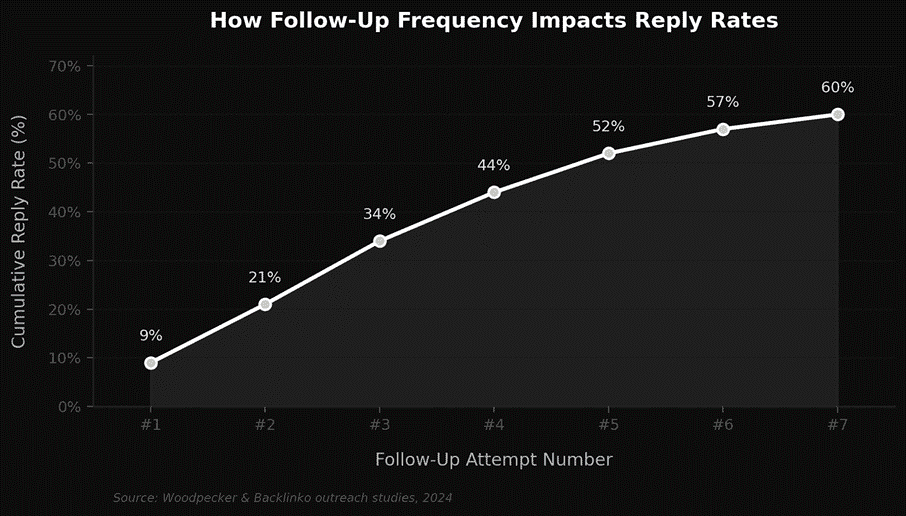
Most people send one email and stop. That is a huge mistake. Research shows that most conversions occur after the second, third, or even fifth touchpoint. If you are running outreach for a startup, follow-up emails are where the real results come from. This guide breaks down how to write follow-ups that people actually respond to.
Why Do Most Follow-Up Emails Fail?
The biggest reason follow-ups fail is that they sound desperate or add zero value. Here is what kills your reply rate:
• Generic openers like "just checking in" that give no reason to engage.
• Walls of text that ask the reader to do too much thinking.
• No clear ask, so the reader does nothing.
• Sending too soon or too late without a timing strategy.
• Copy-paste templates that feel robotic and get treated like spam.
For a deeper look at structuring outreach that works, read our complete guide to writing cold outreach emails.
What Makes a Follow-Up Email Convert?
High-converting follow-ups feel human, stay brief, and move the conversation forward.
• Lead with context. Reference your previous email or something specific about their business.
• Offer something new. Share a case study, stat, or insight they missed the first time.
• Keep it under 120 words. Busy people scan, they do not read.
• Use one clear CTA. Ask for a 15-minute call or a simple yes-or-no.
• Write a curiosity-driven subject line. "Quick thought on [their company]" beats "Following up" every time.
Pair these techniques with a well-built cold email campaign strategy, and your reply rates will climb within weeks.
Follow-Up Email Framework by Stage
Follow-Up # | Timing | Goal | Tone | CTA Style |
1st | 2 days after | Remind and add value | Friendly | Soft ask |
2nd | 4–5 days later | Share proof or insight | Helpful | Specific ask |
3rd | 7 days later | Create gentle urgency | Direct | Yes or no |
4th | 10–14 days later | Try a new angle | Casual | Reframe offer |
5th | 21+ days later | Breakup or re-engage | Honest | Final check-in |
How Many Follow-Ups Should You Send?
Three to five is the sweet spot. Studies show 80 percent of deals need at least five touchpoints, yet 44 percent of salespeople quit after one email. That gap is a massive missed opportunity for startups on a budget. Space them wisely and always stop if someone asks.
What Is the Best Timing for Follow-Up Emails?
Timing can make or break your sequence:
• First follow-up: 2 days after your initial email.
• Second follow-up: 4 to 5 days later.
• Third follow-up: 7 days later.
• Final follow-up: 14 to 21 days later with a breakup message.
Tuesdays and Thursdays between 8 and 10 AM tend to get the best open rates. Make sure your landing page is ready to convert every click-through.
The Bottom Line
Writing follow-up emails that convert is not about being pushy. It is about being useful, timely, and clear. Most competitors quit after one email, so every thoughtful follow-up puts you ahead. Lead with value, keep it brief, and make it easy for the reader to say yes.
Want outreach campaigns that fill your pipeline? Viral Impact can help. Visit Viral-Impact to see how we help startups grow faster through smarter marketing.