Discover the perfect press release length that gets media coverage, earns backlinks, and boosts your startup’s visibility fast.
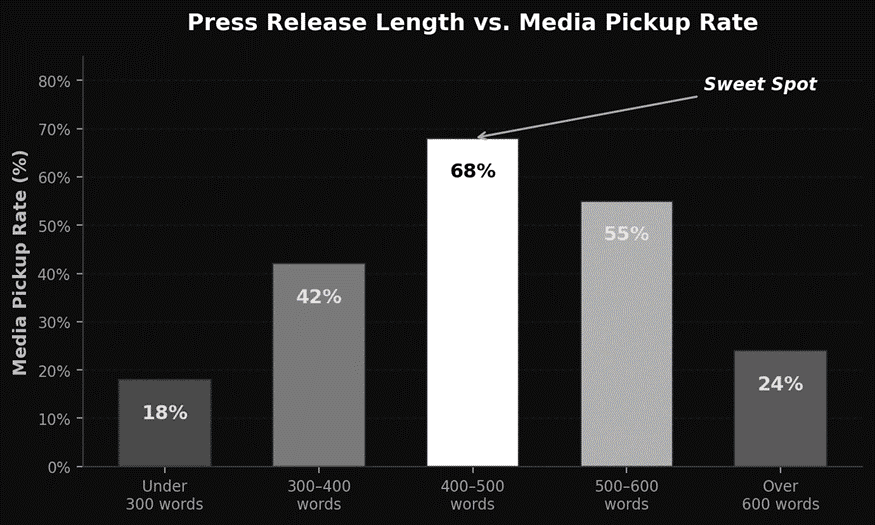
A press release should be between 400 and 500 words, giving journalists everything they need on a single page. Going shorter leaves out key details, while going longer risks getting ignored; most editors decide within seconds whether your story is worth covering.
If you’re a startup founder writing your first press release, you’ve probably wondered how much you should actually write. Press release length matters more than most people think. Too short, and you look unprepared. Too long, and nobody reads past the headline. Here’s what works and why.
Why Does Press Release Length Matter?
Journalists receive hundreds of pitches daily. The ones that get read respect the reader’s time. Here’s why length plays a bigger role than you’d expect:
Editors skim fast: Releases past 600 words rarely get finished. Journalists move on to something punchier.
Search engines reward focus: A tight press release ranks better for target keywords and shows up in AI-driven search results.
Wire services have limits: Platforms like PR Newswire are optimized for releases under 500 words. Longer ones get trimmed.
Shorter releases earn more backlinks: When concise, publications use your release directly, earning you quality backlinks faster.
What Should You Include in Those 400–500 Words?
Every word needs to earn its place. Here’s the structure that works for startups:
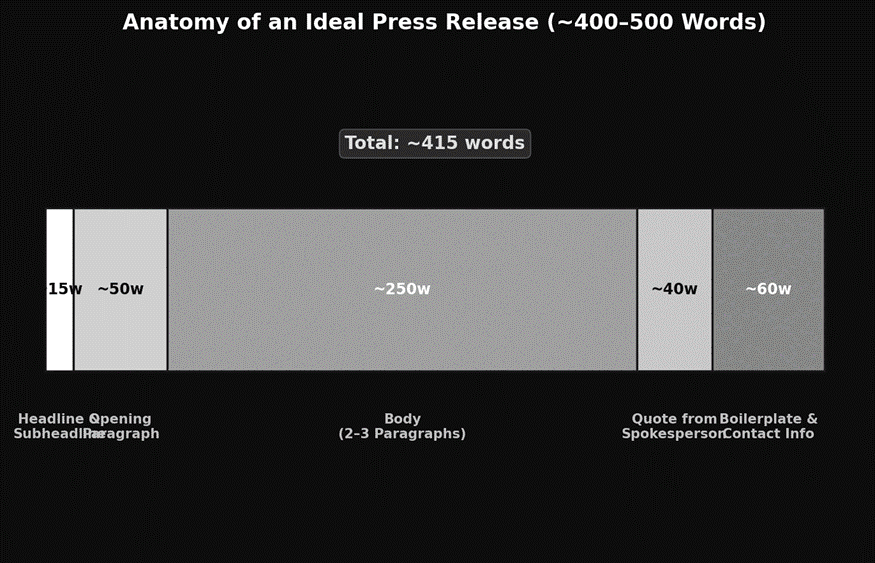
• Headline and subheadline (~15 words): Hook the reader instantly with something clear and newsworthy.
• Opening paragraph (~50 words): Answer who, what, when, where, and why upfront. Don’t bury the lead.
• Body paragraphs (~250 words): Add context, data, and supporting details across two to three short paragraphs.
• Quote from a spokesperson (~40 words): Adds a human voice and gives journalists a ready-made quote.
Boilerplate and contact info (~60 words): A short company description and clear contact details wrap it up. Our press release publishing service handles writing through distribution.
Can a Press Release Be Longer Than 500 Words?
Technically, yes, but rarely should it be. A few exceptions where going slightly longer makes sense:
• Major funding rounds or acquisitions requiring a detailed financial context.
• Product launches with technical specs that need explaining for the audience.
• Crisis communications where leaving out details causes more confusion than including them.
Even then, stay under 600 words. If you have that much to share, publish a companion blog post. We’ve covered the difference between press releases and blog posts to help you decide where each format fits.
How Does Press Release Length Affect SEO?
Press releases are one of the fastest ways for startups to build backlinks. Length directly impacts performance:
• Concise releases get republished more often, earning backlinks from news aggregators and outlets.
• Focused keyword placement within 400–500 words keeps density natural, which search engines reward.
AI engines like ChatGPT and Perplexity cite well-structured, direct content. A tight press release is more likely to get picked up.
The Bottom Line
The best press releases land between 400 and 500 words. That’s not a random number; it’s backed by how journalists consume content and how distribution platforms work. If you’re a startup trying to get noticed, nailing your press release length is one of the simplest wins available.
Need a team that writes press releases that actually get picked up?
Visit Viral-Impact and let us handle the heavy lifting so you can focus on building your business.