Learn how to build a B2B content marketing funnel that attracts leads, nurtures prospects, and drives consistent revenue.
A B2B content marketing funnel uses targeted content to guide potential buyers from discovery to purchase through structured stages. When you map the right content to each stage of the buyer journey, you build a predictable pipeline that grows without relying on paid ads.
Most B2B startups publish content without thinking about where it fits in the buying process. Blog posts attract visitors who never return, and sales teams chase leads who aren't ready. A content funnel fixes this by giving every piece of content a clear job; whether that's grabbing attention, building trust, or closing the deal.
What Are the Stages of a B2B Content Marketing Funnel?
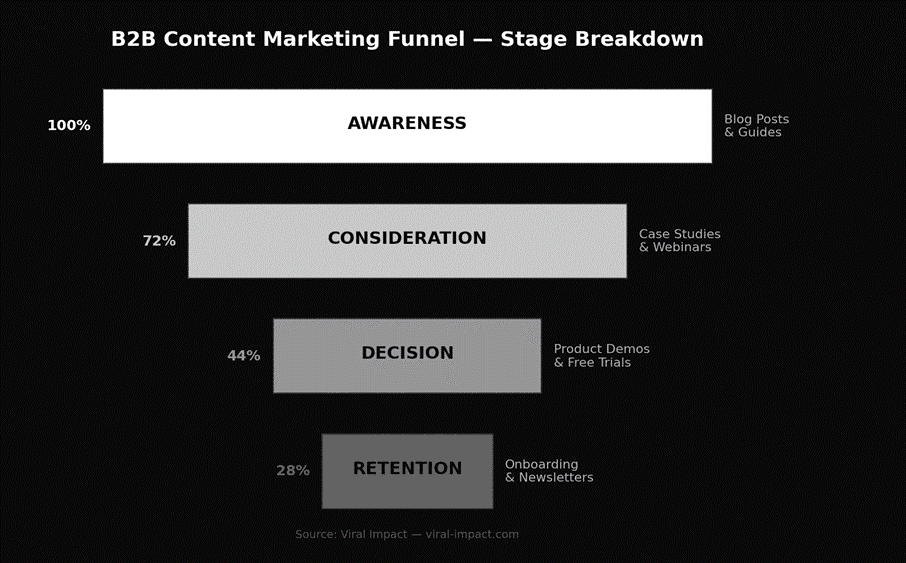
Every B2B funnel follows four core stages, each calling for different content types.
• Top of Funnel (Awareness): SEO blog posts, guides, and social content that answer what your buyers are already searching for. The goal is visibility, not sales.
• Middle of Funnel (Consideration): Case studies, comparison guides, and webinars that prove you understand their problem better than competitors.
• Bottom of Funnel (Decision): Product demos, free trials, testimonials, and pricing breakdowns that remove every reason to say no.
• Post-Sale (Retention): Onboarding guides, product update emails, and loyalty newsletters that keep customers coming back.
How Do You Build a B2B Content Funnel Step by Step?
• Define your ideal buyer: Know their job title, pain points, and goals. A detailed buyer persona gives every piece of content direction.
• Map content to each stage: Awareness attracts, consideration educates, decision closes. Assign formats to each stage.
• Research keywords with intent: Informational queries belong at the top, commercial in the middle, transactional at the bottom. A solid SEO and AEO strategy matches the right people to the right content.
• Create clear calls to action: Every piece should tell readers what to do next. A blog post leads to a guide. A case study leads to a demo request.
• Set up lead nurturing: Use gated content, email sequences, and retargeting to keep moving people through the funnel.
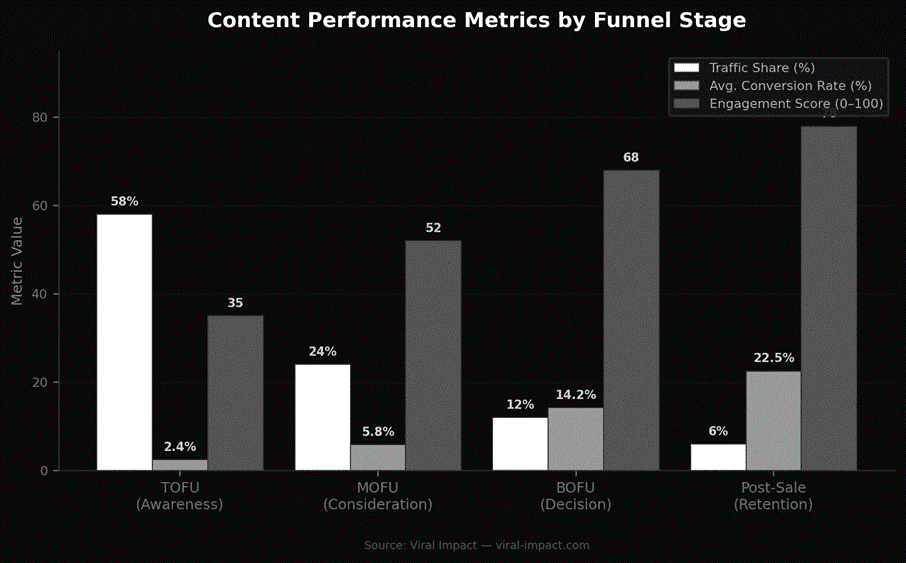
• Measure and optimize: Track traffic for TOFU, engagement for MOFU, conversions for BOFU. An organic growth strategy keeps improving results month over month.
What Content Types Work Best at Each Funnel Stage?
Choosing the wrong format for a stage is like handing someone a brochure when they don't even know they have a problem. Match the format to the mindset.
• Awareness: How-to posts, trend reports, infographics, social threads.
• Consideration: Case studies, webinars, whitepapers, comparison guides.
• Decision: Free trials, demos, testimonials, ROI calculators.
• Retention: Onboarding tutorials, product newsletters, referral programs.
The Bottom Line
A B2B content marketing funnel isn't optional; it's the engine that turns strangers into leads and leads into revenue. When you align content with each buyer stage, you build a system that works around the clock without depending on paid ads alone.
Ready to build a content funnel that drives real growth? Visit Viral-Impact and let our team build a strategy made for your startup.