Learn how to write press release headlines that grab journalists' attention, earn media coverage, and drive startup visibility.
A strong press release headline tells the reader exactly what happened and why it matters in one clear sentence. The best headlines combine your brand name, a strong action verb, and a specific result so journalists know the story is worth covering.
Most startups spend weeks crafting the perfect press release body, then slap on a headline in five minutes. That is a costly mistake. Your headline is the first thing a journalist sees. If it fails to grab attention, the rest of your release never gets read. Reporters at major outlets receive hundreds of pitches daily. Your headline is your one shot at standing out.
The good news? Writing a headline that works is not about being clever. It is about being clear, specific, and newsworthy.
What Makes a Press Release Headline Effective?
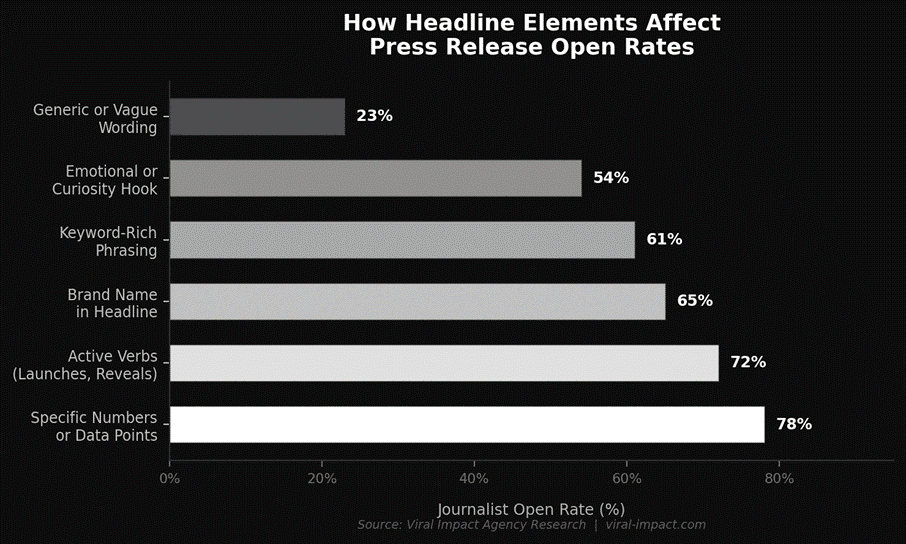
An effective headline communicates the news, identifies the source, and creates enough interest to keep reading. Here is what separates headlines that get picked up from the ones that get deleted:
• Clarity over cleverness: Journalists want facts, not wordplay. Say exactly what the news is.
• Active language: Use verbs like "launches," "reveals," or "secures." These signals that something is happening now.
• Brand name up front: Start with your company name so editors immediately identify the source and boost search visibility.
• Specific numbers: Headlines with data points like "raises $5M" or "grows 200%" consistently outperform vague alternatives.
• Under 70 characters: Shorter headlines are easier to scan and less likely to get cut off in inboxes or news feeds.
If you are building your press release strategy for the first time, getting the headline right is the single most important step.
How Should You Structure a Press Release Headline?
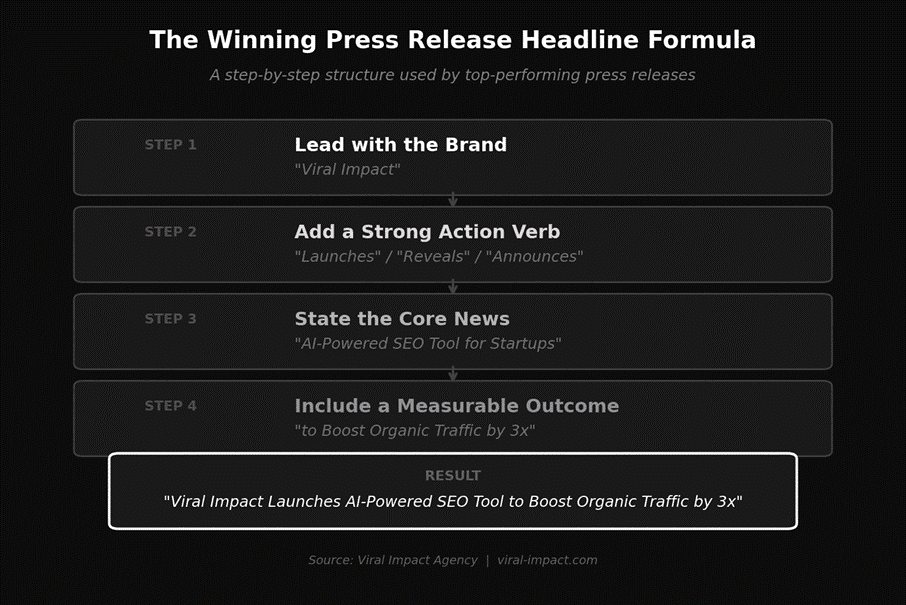
The strongest press release headlines follow a simple pattern:
• Brand Name + Action Verb + Core News + Outcome.
For example: "Viral Impact Launches AI-Powered Growth Platform to Help Startups Triple Organic Traffic."
This works because the reader instantly knows who is involved, what happened, and why it matters. Compare that to "Exciting New Development in Digital Marketing," which tells readers nothing useful.
A well-structured headline also supports your broader SEO and AEO strategy because search engines and AI platforms both favor direct, keyword-rich headlines.
What Are Common Press Release Headline Mistakes?
Even experienced marketers fall into these traps. Knowing what to avoid is just as valuable as knowing what to include:
• Being too vague: "Company Announces Exciting Partnership" tells nobody anything. Name the partner and the outcome.
• Using jargon: Words like "synergy" and "disruptive" have been overused to the point where journalists ignore them.
• Writing it like an ad: Press releases are news, not ads. Avoid "the best" or "number one." Let facts speak.
• Making it too long: If your headline runs past two lines, it is too wordy. Edit ruthlessly.
• Forgetting the audience: Write for journalists and editors, not your internal team.
For a deeper look at pitfalls and distribution strategies, check out our guide on common press release mistakes to avoid.
The Bottom Line
Your press release headline is the most important line in the entire document. Get it right, and journalists open your story. Get it wrong, and months of work sit unread. Stick with the formula: lead with your brand, use a strong verb, state the news, and show the result.
If you want expert help crafting press releases that actually get picked up, Viral-Impact can build a complete media strategy that puts your startup in front of the right people.