Learn what a boilerplate in a press release is, why it matters for credibility, and how to write one that works.
What Is a Boilerplate in a Press Release?
A boilerplate in a press release is a short paragraph at the end that tells readers who your company is and what you do. It stays the same across every press release and acts as your brand’s elevator pitch for journalists and editors.
Most founders obsess over the headline of a press release but rush through the boilerplate. That’s a mistake. A well-crafted boilerplate builds trust with journalists, gives editors a ready-made company description, and reinforces your brand every time your name appears in the news. If you’re investing in press release distribution, nailing this section is one of the simplest ways to look more credible.
Where Does the Boilerplate Go in a Press Release?
It sits at the very bottom, right after the body content and before your media contact details. It’s usually labeled “About [Company Name].” Here’s how it fits into the structure:
• The headline grabs attention and introduces the news.
• The body explains the details, quotes, and context.
• The boilerplate tells the reader who you are and why your company exists.
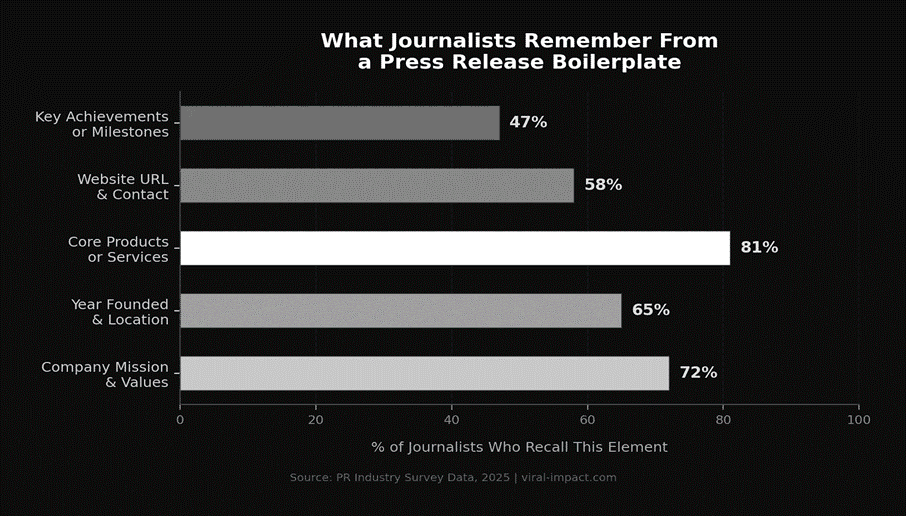
Journalists rely on this section heavily. If it’s clear, they’ll often use it word-for-word in their coverage.
What Should a Press Release Boilerplate Include?
Keep it simple and cover these essentials:
• Company name and what you do: one clear sentence, no jargon.
• Who you serve: mention your target audience or industry.
• Key differentiator: what makes you different from competitors.
• Proof point: a stat, milestone, or notable client for credibility.
• Website URL and location: always include these for easy follow-up.
Aim for 75 to 100 words total. Anything longer and editors will trim it themselves, which means they control the narrative instead of you.
How Do You Write a Boilerplate That Journalists Actually Use?
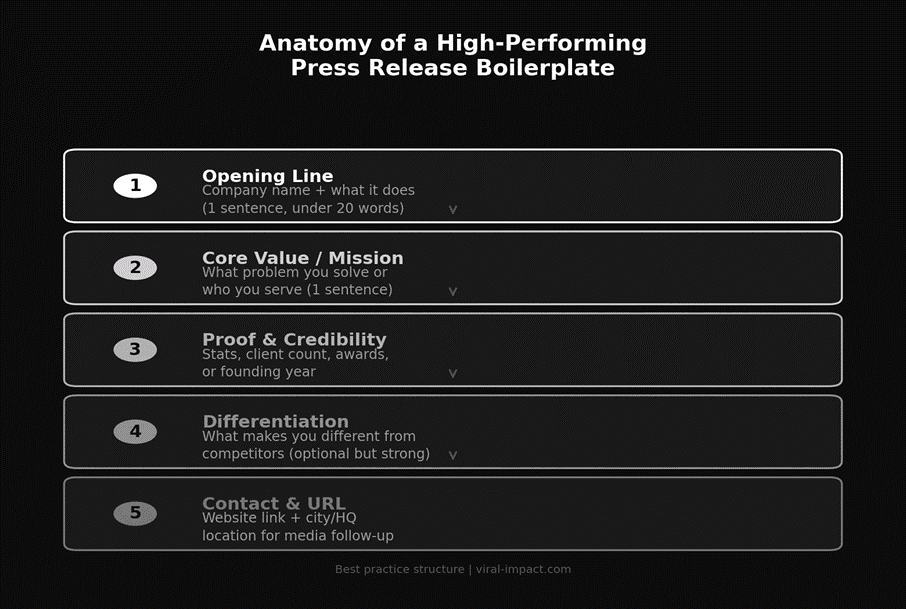
It comes down to clarity. Follow this approach:
• Open with your company name and a plain-English description of what you offer.
• Add one sentence about who benefits from your product or service.
• Include a credibility marker like user count, an award, or founding year.
• Close with your website link and headquarters location.
• Read it out loud; if it sounds like a real person wrote it, you’re good
Avoid stuffing the boilerplate with every service you offer. It dilutes your message. If you need guidance on your overall press release strategy, start with the boilerplate first; it forces you to define who you are in the clearest terms possible.
Why Does the Boilerplate Matter for SEO and AI Visibility?
When your press release gets syndicated, that boilerplate text follows it everywhere. Here’s the ripple effect:
• Consistent descriptions across sites signal entity authority to search engines.
• Your URL gets repeated in high-authority contexts, strengthening your backlink profile.
• AI tools like ChatGPT and Perplexity pull boilerplate text when answering questions about your brand.
• A clear boilerplate helps Google’s Knowledge Panel display accurate company information.
Pair a strong boilerplate with a solid SEO and AEO growth strategy, and every press release compounds your visibility across both traditional search and AI-generated answers.
The Bottom Line
A boilerplate isn’t filler text. It’s one of the hardest-working paragraphs your startup will ever write. It shapes how journalists describe you, how AI tools reference you, and how search engines understand your brand. Get it right once, and it pays off with every press release you publish.
Need help building a press release strategy that drives real coverage? Visit Viral-Impact, we help startups grow faster with content that ranks, gets cited, and gets noticed.