Discover what a good page load time is and how faster websites improve SEO rankings, conversions, and growth.
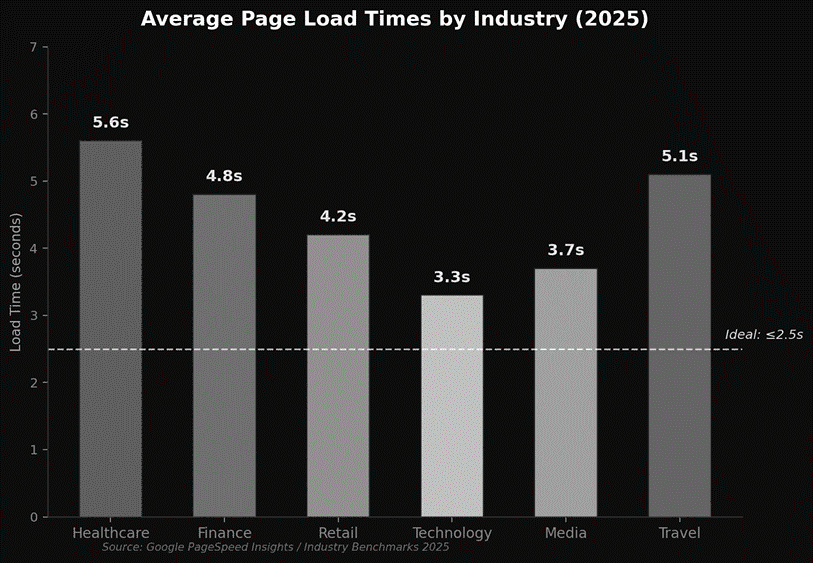
A good page load time is under 2.5 seconds for most websites. Anything slower than 3 seconds pushes visitors away and hurts your Google rankings.
Page load time measures how long it takes your webpage to display fully on a visitor’s screen. Google has confirmed that page speed is a ranking factor, and users expect fast experiences on every device. If your site lags, you lose traffic, leads, and revenue before anyone reads your headline.
Why Does Page Load Time Matter for SEO?
Google uses Core Web Vitals to measure user experience, and page speed sits at the heart of that framework. Slow sites get penalized while fast ones earn better visibility. Here’s why:
• Google’s algorithm prioritizes pages with a Largest Contentful Paint (LCP) under 2.5 seconds.
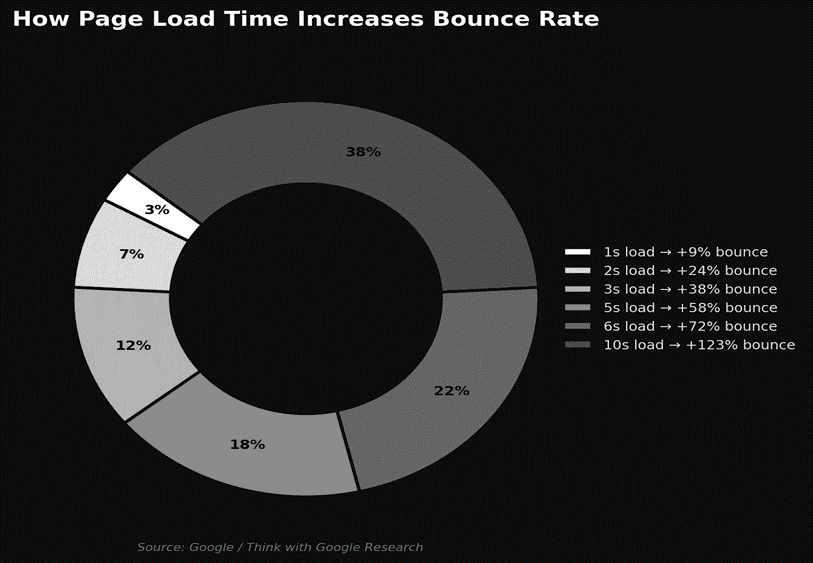
• Slow pages increase bounce rates, which signals low quality to search engines.
• Faster websites get crawled more frequently by Googlebot, improving indexation speed.
• Mobile-first indexing makes speed even more critical since mobile connections are slower.
• AI search engines like ChatGPT and Perplexity also favor well-structured, fast-loading sources.
If you’re building a startup website from scratch, speed should be baked into your website design and development process from day one. Retrofitting speed later costs more time and money.
What Is the Ideal Page Load Time?
The ideal page load time depends on your industry and audience, but general benchmarks tell a clear story:
• Under 1 second: Exceptional. Creates an instant experience and maximizes conversions.
• 1 to 2.5 seconds: Good. Most high-performing websites fall here, and Google considers this acceptable.
• 2.5 to 4 seconds: Needs work. You’ll start losing visitors and rankings at this speed.
• Over 4 seconds: Poor. 53% of mobile users abandon sites that take more than 3 seconds to load.
For e-commerce sites, every extra second of load time drops conversion rates by up to 7%. That’s real money walking away from your checkout page.
How Can You Improve Your Page Load Time?
Improving page speed doesn’t always mean rebuilding your site. Small, targeted changes often create massive results:
• Compress images: Use WebP or AVIF formats instead of PNG or JPEG to cut image file sizes by 30–50%.
• Enable browser caching: Store static files locally so returning visitors load pages faster.
• Minify CSS and JavaScript: Remove unnecessary code to reduce file sizes and speed up rendering.
• Use a CDN: Content delivery networks serve your files from servers closest to each visitor’s location.
• Reduce server response time: Upgrade your hosting plan or switch to a faster provider if your TTFB exceeds 200 milliseconds.
• Lazy load below-the-fold content: Only load visible elements first, then fetch the rest as users scroll down.
These tweaks directly impact your SEO and AEO growth strategy because Google rewards sites that deliver faster, smoother experiences. Pair speed improvements with conversion-focused website tweaks, and the results compound quickly.
The Bottom Line
Page load time isn’t just a technical metric. It’s a growth lever. Every second your site takes to load costs you visitors, leads, and revenue. For startups in crowded markets, a fast website separates you from competitors who haven’t prioritized speed. Aim for under 2.5 seconds, optimize your images and code, and test regularly.
Need a website that loads fast and ranks higher?
Viral-Impact specializes in performance-optimized website design and SEO strategies for startups. Let’s make your site faster.