Discover what a sales cadence is and exactly how to structure one that drives B2B lead generation results.
A sales cadence is a structured sequence of outreach steps, emails, calls, and social touches used to contact a prospect over a defined period. An effective one typically runs 8 to 12 touchpoints across two to four weeks, mixing channels and spacing follow-ups with intention.
Why Most Outreach Fails Without a Cadence
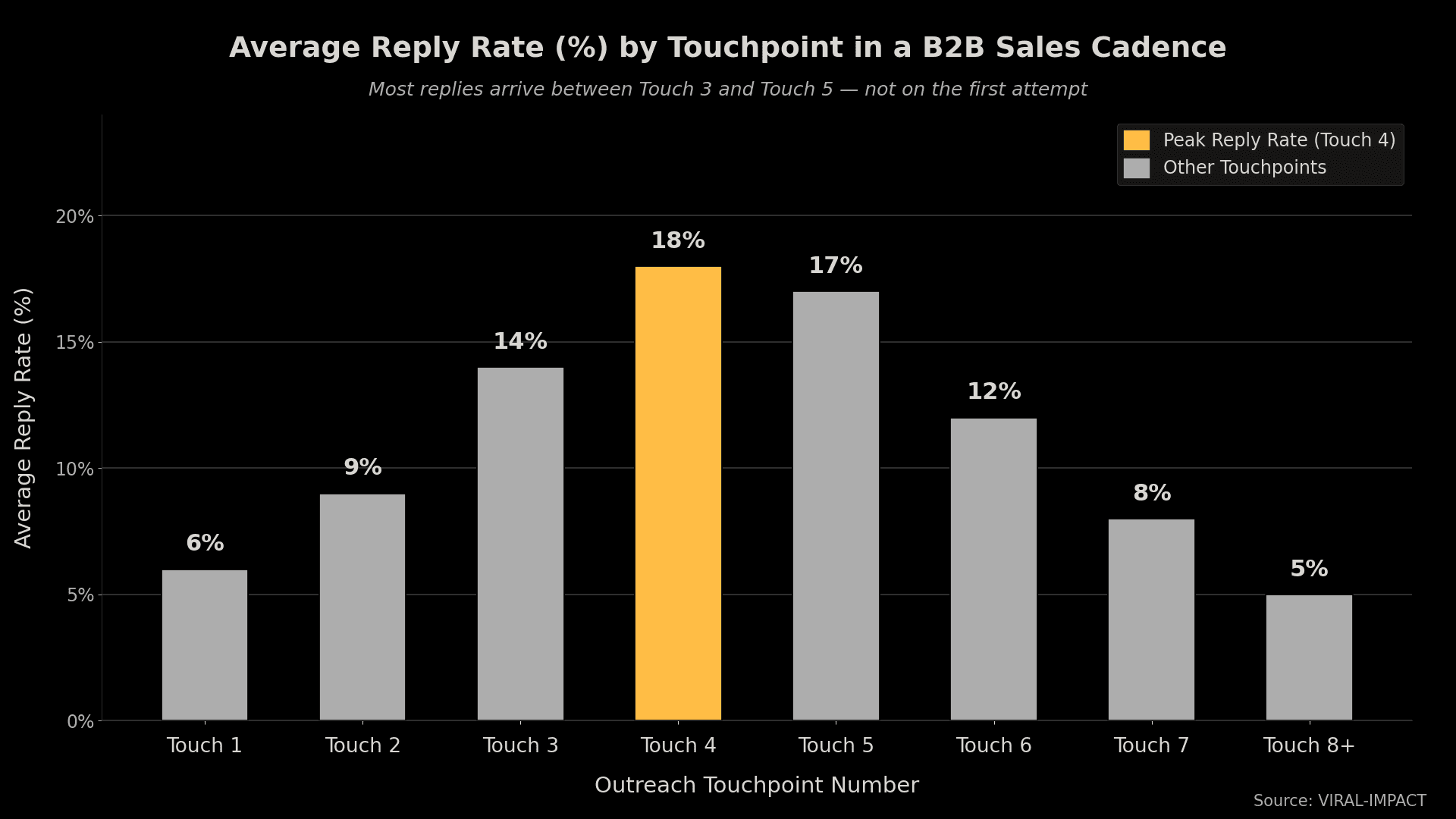
Most salespeople quit after one or two attempts. The majority of replies in B2B outreach come after the third or fourth touchpoint, meaning single-touch outreach misses most of the available conversations before they even start.
Without a cadence, follow-up becomes inconsistent. Some prospects get chased too aggressively; others never hear from you again. A cadence fixes that by giving every rep a repeatable playbook they can trust.
What Goes Into an Effective Sales Cadence
A good cadence is not just a schedule. It is a deliberate mix of the following elements:
• Channels: email, phone, LinkedIn, and sometimes short video messages.
• Timing: when each step fires relative to the one before it.
• Messaging: how the angle and ask shift with each follow-up.
• Exit conditions: a clear point to stop and mark a lead as cold.
Here is what a standard 8-touch B2B cadence typically looks like across two to three weeks:
• Day 1: Personalized cold email
• Day 3: LinkedIn connection request
• Day 5: Follow-up email referencing the first
• Day 7: Phone call
• Day 9: LinkedIn message
• Day 12: Email with a relevant case study or insight
• Day 15: Phone call with voicemail
• Day 18: Final "breakup" email
This structure keeps you visible without tipping into spam territory.
How Many Touchpoints Is the Right Number?
For most B2B outreach, 6 to 10 touchpoints is the sweet spot. Too few and you miss the window where prospects are ready to respond. Too many and you risk souring the relationship before it even starts.
Most responses in outbound come between touches three and six. The first email rarely converts on its own; that is just how buying decisions work. Timing matters as much as the message.
For enterprise deals with larger contract values, stretching a cadence to 12 or more touches over five to six weeks is reasonable. For SMB or lower-ticket offers, shorter and tighter generally perform better.
The Most Common Cadence Mistakes
Even well-built cadences break down when reps misuse them. The most frequent issues include:
• Sending the same message twice: every touch should bring something new to the conversation.
• Skipping the phone step: email-only cadences consistently underperform in B2B.
• Ignoring personalization: templates work, but the opening lines still need to feel specific.
• No defined stopping point: without one, follow-up turns random and awkward.
A well-structured email outreach strategy pairs naturally with a clear cadence, especially when the messaging speaks directly to the prospect's situation rather than defaulting to a generic pitch.
Building a Cadence That Actually Converts
The best cadences get reviewed regularly. Reply rates, open rates, and booked meetings all show you which step is working and which is dragging the sequence down.
A few practical principles to follow:
• Lead with value on the first touch: open with something relevant to them, not your pitch.
• Space follow-ups every two to three days: daily outreach feels aggressive and usually backfires.
• Track at the touchpoint level: knowing which step gets the most replies helps you optimize the whole sequence.
• Match your outreach to a strong landing page: if a prospect clicks through from an email, the page needs to convert that interest into action.
If you want to go deeper on the outreach side, this guide on writing cold outreach emails that get replies covers what separates high-response messages from the ones that never get opened.
The Bottom Line
A sales cadence turns scattered outreach into a system. It is not about following up more; it is about following up smarter, with the right message, through the right channel, at the right moment.
If your current outreach produces inconsistent results, the fix is usually a process problem, not a product problem. Build your cadence, test it consistently, and refine based on what the data tells you.
Ready to turn cold outreach into a qualified pipeline? Visit Viral-Impact to see how we help startups build outreach systems that actually work.