Learn what a visual identity system is and why every startup needs one to build strong brand recognition.
A visual identity system is the collection of design elements that shape how your brand looks and feels across every touchpoint. It includes your logo, color palette, typography, imagery style, and the rules that keep them consistent wherever your brand appears.
Think of it as your startup’s visual DNA. Every time someone visits your website, opens your email, or scrolls past your social post, they pick up visual cues about who you are. Without a system, those cues send mixed messages. With one, they tell a clear story that people start to recognize and trust.
What Are the Core Elements of a Visual Identity System?
Every visual identity system is built on a few essential pieces:
• Logo Design: Your primary visual mark that works in full color, black and white, and at every size.
• Color Palette: A defined set of primary and secondary colors reflecting your brand’s personality.
• Typography: Specific fonts for headings, body text, and marketing materials that signal professionalism.
• Imagery and Iconography: Guidelines on photo styles, illustrations, and icons aligned with your brand voice.
• Brand Guidelines Document: A rulebook that tells your team exactly how to use each element consistently.
Starting from scratch? Working with a professional logo and brand identity service gives you all these pieces in one cohesive package.
Why Does a Visual Identity System Matter for Startups?
Startups compete against established brands with bigger budgets and years of brand equity. A visual identity system helps close that gap:
• Builds instant credibility: People judge brands in under 50 milliseconds based on visual appearance alone.
• Creates consistency at scale: A documented system keeps your brand from drifting as your team grows.
• Supports recognition: Repeated exposure to the same visual elements builds memory in a crowded market.
• Drives conversions: Consistent branding across your website and landing pages improves user trust and click-through rates.
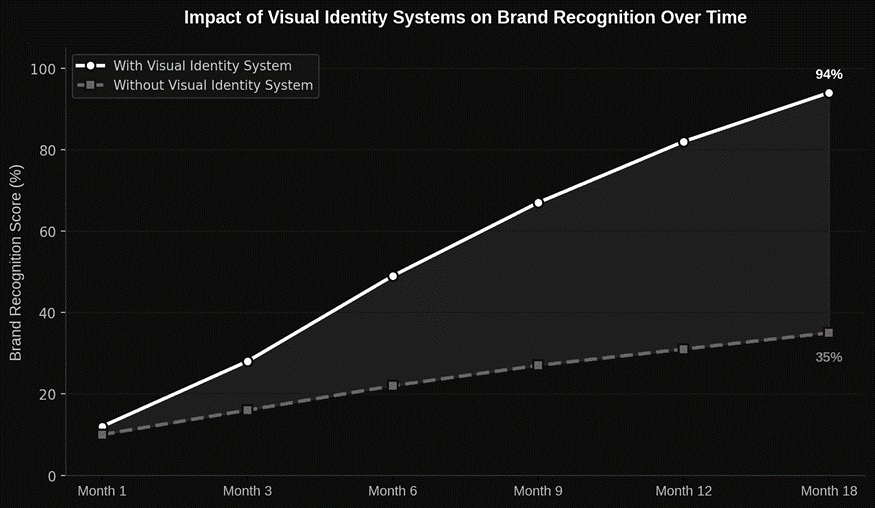
Brands maintaining visual consistency see an average revenue increase of 10–20%. The chart below shows how recognition compounds over time with a system in place.
How Do You Build a Visual Identity System From Scratch?
You don’t need a massive budget. Follow these steps:
• Define your brand personality: Are you bold and disruptive, or calm and reliable?
• Design your logo first: Everything else branches from this central mark.
• Choose 2–4 brand colors: Pick a primary color, then supporting shades that complement it.
• Select your typefaces: One for headlines, one for body copy.
• Create a brand guidelines document: Detail usage rules, spacing, and color codes.
• Apply it everywhere: Website, social profiles, pitch decks, and email signatures should reflect the same system.
Visual Identity System: Elements at a Glance
Element | What It Covers | Why It Matters |
Logo | Primary mark, icon, wordmark | Instant brand recall |
Color Palette | Primary, secondary, neutral tones | Emotional response and recognition |
Typography | Heading and body fonts, hierarchy | Readability and consistency |
Imagery Style | Photos, illustrations, icons | Unified visual storytelling |
Brand Guidelines | Usage rules, spacing, and color codes | Prevents brand dilution at scale |
The Bottom Line
A visual identity system isn’t a luxury for startups. It’s a growth tool. When your brand looks consistent and professional across every channel, people trust you faster. That trust turns into leads, partnerships, and revenue. Getting your visual identity right now saves you from expensive rebranding later.
Ready to build a visual identity that sets your startup apart? Visit Viral-Impact to explore how our team can help you create a brand people remember.