Discover what link gap analysis reveals about your competitors' backlink strategies and how to close the gap fast.
Link gap analysis is the process of comparing your backlink profile against competitors to find links they have that you don't. It reveals which authoritative domains are already backing your rivals, so you know exactly where to focus your outreach.
Why Link Gap Analysis Actually Matters
Your content can be well-written, technically clean, and full of useful information, and still not rank. Nine times out of ten, the missing piece is backlinks. Specifically, it's the backlinks your competitors have that you don't.
Link gap analysis shifts the focus from guessing to knowing. Rather than cold-pitching random domains, you get a working list of publishers already linking into your space. That changes the whole dynamic of your outreach, your content planning, and your growth timeline.
Think about it from the other direction, every backlink your competitor holds is a vote that domain casts in their favour instead of yours. Some of those domains would link to you, too, if you gave them a good reason. Finding those sites is the whole point of this process.
What Does a Link Gap Analysis Reveal?
Running a link gap analysis surfaces more than just a list of missing links. It exposes patterns you wouldn't otherwise notice:
• Domains linking to competitors but not to you are your highest-priority outreach targets
• Authority levels of those domains, knowing whether competitors earn DR 40 or DR 80 links, set realistic benchmarks for your own efforts
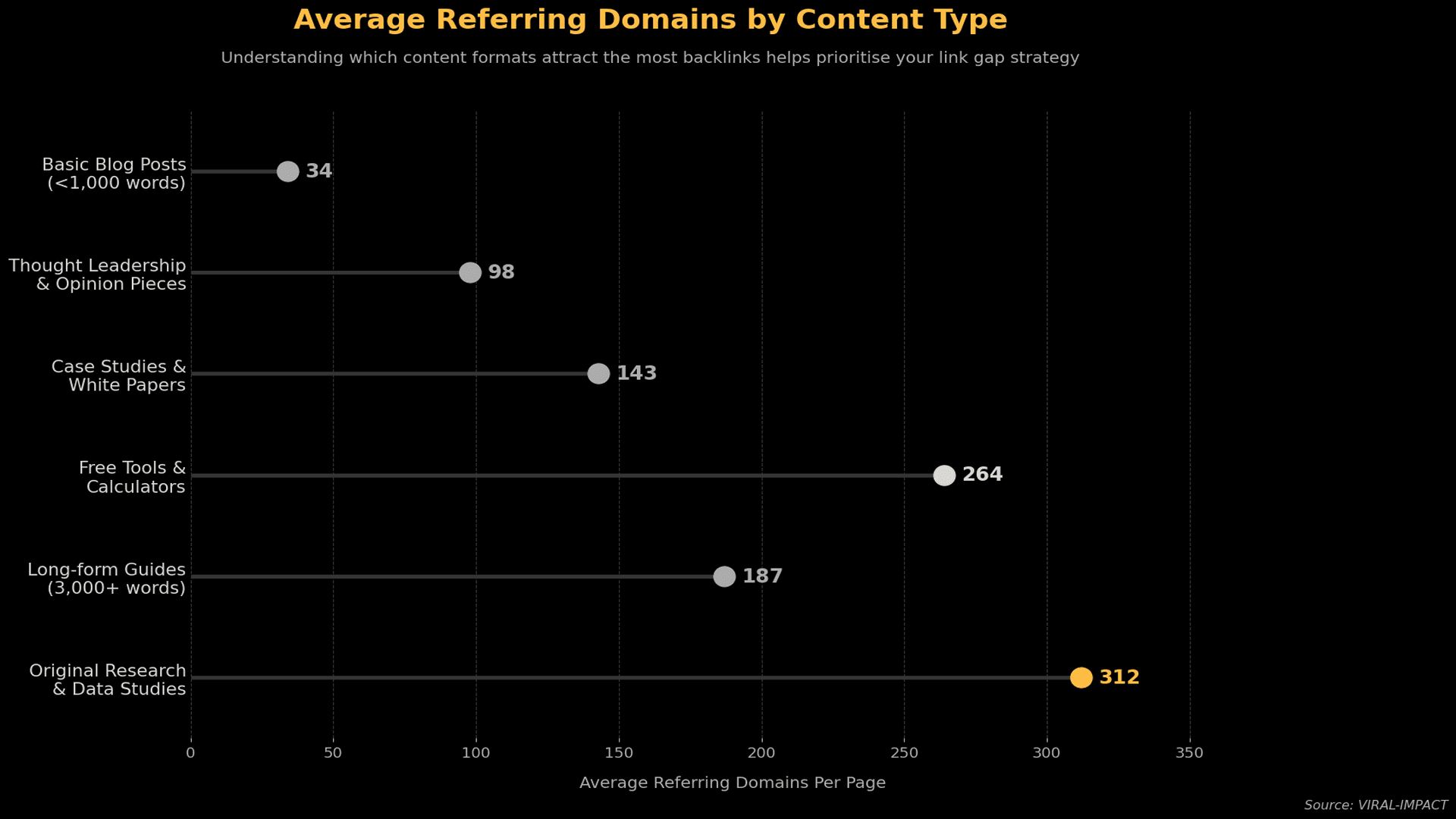
• Content types attracting backlinks, data studies, tools, and long-form guides consistently outperform thin posts (see chart below)
• Link velocity trends: if a competitor gained 200 links in 90 days, something changed in their strategy worth investigating
• Anchor text patterns how publishers describe competitors, tell you what messaging and positioning resonate in your niche
How to Run One in Five Steps
The process doesn't require anything complicated. Here's how most teams approach it:
1. Pick 3 to 5 direct competitors: choose those ranking just above you for your core keywords, not the industry giants you can't realistically match yet.
2. Export their backlink profiles: tools like Ahrefs, Semrush, or Moz handle this cleanly.
3. Filter for domains linking to two or more competitors: these are warm prospects, not cold ones.
4. Score by relevance first, authority second: a DR 65 niche blog beats a DR 90 off-topic directory every time.
5. Build your outreach list: start with the highest-scoring domains and work down systematically.
The output is a prioritised prospecting list. That's far more useful than a raw data dump with nothing to act on.
What the Gaps Tell You About Competitor Strategy
This is where it stops being just an SEO task and becomes competitive intelligence.
• Content gaps: if a publisher keeps linking to competitors for a topic you haven't covered, that's a content brief waiting to be written.
• PR and media presence: repeated editorial mentions in industry outlets usually trace back to an active guest posting or PR strategy worth replicating.
• Partnership networks: some links come from business relationships, not content; spotting this helps you understand how competitors actually operate.
• Trust signals you lack: editorial links from authoritative publishers signal credibility; if competitors hold these and you don't, rankings will reflect it.
Link Gap Analysis vs. a Backlink Audit
These two often get confused, but they serve different purposes.
A backlink audit is inward-facing; it checks whether your existing links are healthy, relevant, and free from spam. A link gap analysis is outward-facing; it maps opportunities your competitors are already converting.
Both are worth doing. But if your goal is growth rather than maintenance, the link gap analysis is where the actionable wins are. Running this alongside a dedicated SEO and AEO growth strategy turns raw competitor data into a concrete execution plan.
How Often Should You Run One?
Quarterly works for most early-stage startups. But a few situations warrant running one sooner:
• When a competitor makes a sudden jump in rankings.
• Before launching a new content vertical or product page.
• After completing a major content push, see where gaps still exist.
Backlink profiles aren't static. Your competitors are building links this quarter. Gaps you close now can reopen within a few months if you stop paying attention. The SEO gap between you and a competitor often has nothing to do with content quality; it traces back to who has more links from the right places.
The Bottom Line
Link gap analysis removes the guesswork from link building. You're not cold-pitching strangers, you're approaching publishers who already trust this space and have shown that by linking to content like yours.
If you want to close the gap faster, Viral Impact runs full link gap audits and builds the outreach strategy around what the data shows. Read our guide on link-building strategies for startups to see how this fits into a broader growth plan, or visit viral-impact to get started.