Learn how programmatic SEO automates page creation at scale to capture thousands of search queries and drive organic traffic.
Programmatic SEO is a method of creating large numbers of web pages automatically using templates and structured data. It lets businesses target thousands of long-tail search queries at once without writing every page by hand.
Why Programmatic SEO Gets Results
Traditional SEO targets a handful of keywords and leaves thousands of relevant queries uncovered. Programmatic SEO flips that logic. You build one template, connect it to a structured dataset, and let the system publish a unique page for each query variation automatically without writing each one individually.
Zappos has a page for "red Nike running shoes size 10." Yelp generates a separate result for every "best pizza in [city]" search. Those pages weren't written one by one. They were built at scale.
How Programmatic SEO Actually Works
Three things make a programmatic SEO system run:
• A template: page layout with fixed structure and data-filled variable slots.
• A structured dataset: a database or spreadsheet with the unique content each page needs.
• An automated build process: the system that merges data into the template and publishes pages.
Here is the standard workflow:
• Identify a repeatable search pattern "[service] in [city]" or "best [product] for [use case]."
• Build a dataset with every valid variable combination.
• Create a template that pulls data into headings, meta tags, and body content.
• Publish pages at scale; some sites deploy thousands in a single push.
• Monitor rankings and refine the template based on what earns clicks.
Each page looks distinct to search engines because the underlying data is genuinely different, even when the structure is shared. Search engines evaluate content, not code patterns.
What You Need Before You Start
Google penalizes thin pages. Each programmatic page needs to offer genuine value, not just slot a keyword into a template.
Before you build, you need:
• A clear search pattern with search volume behind it.
• A clean, detailed dataset with empty or duplicate fields produces junk pages.
• A template designed to answer the searcher's actual question.
• Technical infrastructure that can handle thousands of indexed pages without slowing load times.
Understanding how programmatic SEO fits a broader traffic strategy is the difference between scattered pages and a compounding system. The SEO & AEO Growth Strategy service explains how to combine programmatic and editorial content for compound growth.
Where Programmatic SEO Works Best
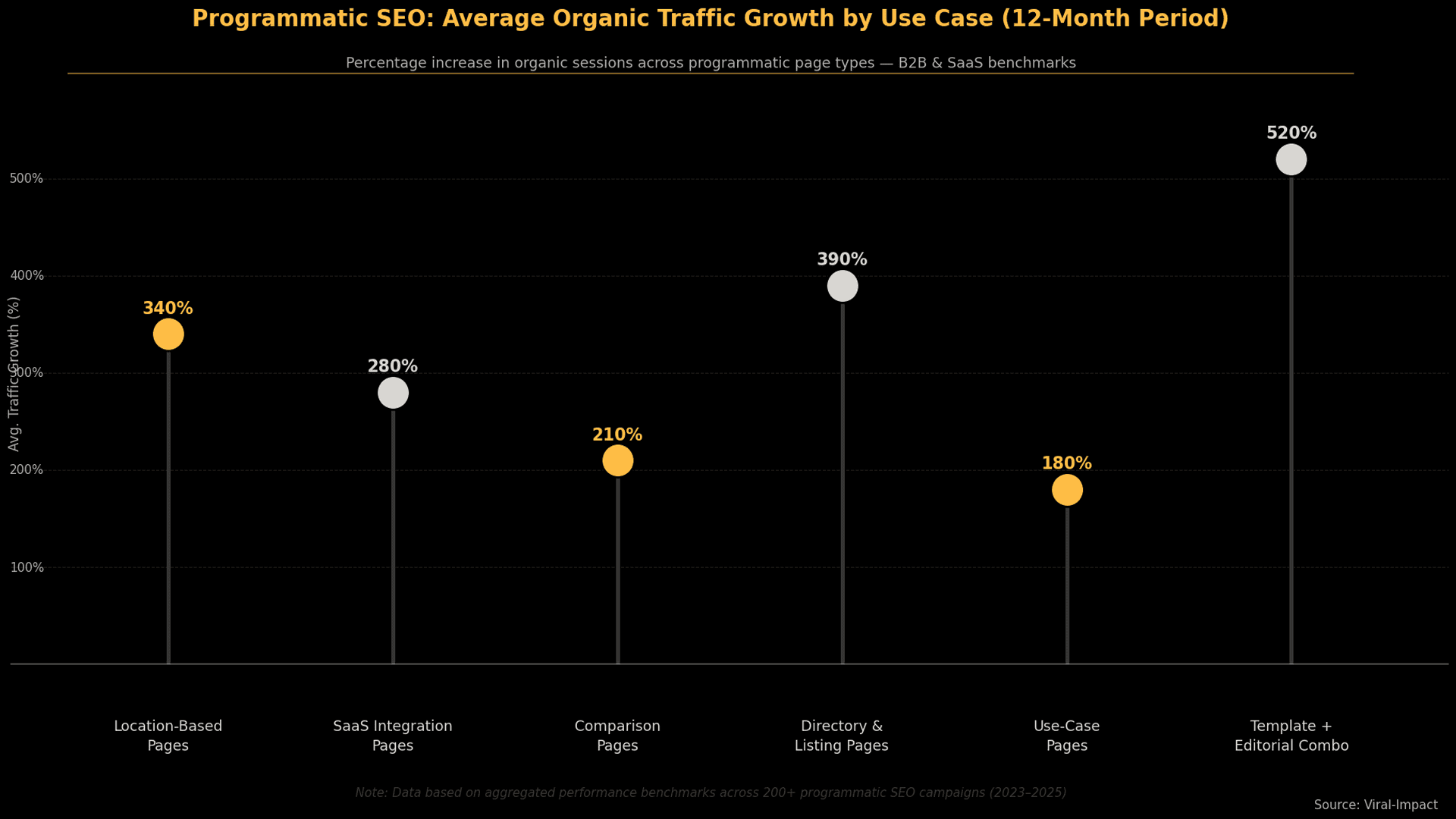
The strongest use cases share one thing: a natural data structure behind the queries.
• Location pages service providers, restaurants, and real estate.
• Comparison pages "[Tool A] vs [Tool B]" across product pairs.
• Use-case pages "best [product] for [specific job]."
• Directory listings job boards, review platforms, and SaaS aggregators.
• SaaS integration pages, one page per integration your product supports.
For a practical look at how startups are applying this, the Startup SEO in 2025 guide covers the full playbook.
Common Mistakes That Kill Results
The most common errors that waste the entire effort:
• Launching pages before the dataset is clean, bad data produces bad pages at scale
• Skipping internal links, programmatic pages need to connect to editorial content
• A missing structured data markup schema tells search engines what each page covers
• Treating templates as permanent search behavior shifts and templates need regular audits
Pairing programmatic pages with strong editorial content also accelerates results. SEO Blog Writing builds the authority layer that makes programmatic pages easier to rank.
The Bottom Line
Programmatic SEO is one of the most efficient ways to build organic traffic at scale. Done right, a single template and clean dataset become thousands of ranking opportunities. Done poorly, you get thousands of thin pages that damage domain authority instead.
Quality at scale is what separates results from penalties. Every page needs to genuinely answer a real search query with content that would satisfy the visitor, not just satisfy a crawler.
Ready to build a programmatic or full-stack SEO system? Visit Viral Impact to see how we help SaaS and startup teams turn structured data into organic growth.