Learn what broken link building is, how it works, and whether it still drives real SEO results today.
Broken link building is an SEO tactic where you find dead links on other websites and offer your own content as a replacement. It works because you give webmasters a real reason to link back to you, you're solving their problem, not just asking for a favor.
How Does Broken Link Building Work?
The process is simpler than most people think. It has three clear steps:
• Find broken links. Use tools to scan pages in your niche for links that return a 404 error.
• Create or match content. Either write new content or identify an existing page on your site that fits the dead resource's topic.
• Reach out. Contact the site owner, point out the broken link, and offer your page as a working replacement.
That's the whole system. You're solving a real, visible problem for the webmaster. That's exactly why this outreach style performs better than a cold "please link to me" email.
Why Does Broken Link Building Actually Work for SEO?
When a website links to a page that no longer exists, that link equity is wasted. The webmaster loses credibility. Visitors hit a dead end. Your content fixes all three problems in one email.
From an SEO angle, every link you earn this way:
• Passes domain authority directly to your page
• Builds your backlink profile with contextual, relevant links
• Tells Google your content is a current and trusted source
• Replaces a broken user experience with a working resource
This is why broken link building fits naturally into any well-built SEO strategy. You're targeting pages that already hold real authority, receive genuine traffic, and have a clear reason to update their links.
What Tools Do Most Teams Use for Broken Link Building?
You don't need a complex tech stack. These are the tools most SEO teams rely on:
• Ahrefs: Best for identifying broken backlinks across entire competitor domains.
• Semrush: Strong for site audits that surface 404 errors at scale.
• Check My Links: A lightweight Chrome extension for fast, manual page checks.
• Google Search Console: Surfaces broken internal links on your own site.
• Hunter.io: Finds contact emails quickly for webmaster outreach.
Ahrefs is the strongest choice for competitor analysis. Check My Links works best for one-off checks on a specific page.
Does Broken Link Building Still Work in 2025?
Yes, but you have to earn it more than you used to.
A few years ago, a basic broken link email got decent replies with little personalization. That era is mostly gone. Webmasters receive more outreach now, so the bar has risen. Here's what still works:
• Personalized emails that reference the exact broken URL and why your page is a genuine fit.
• High-quality replacement content, not a thin, 300-word placeholder.
• Targeting sites with a Domain Authority of 30 or higher.
• Consistent volume, most campaigns need 50+ contacts to land 5–10 links.
• One follow-up email is sent 5–7 days after the first, which can double response rates.
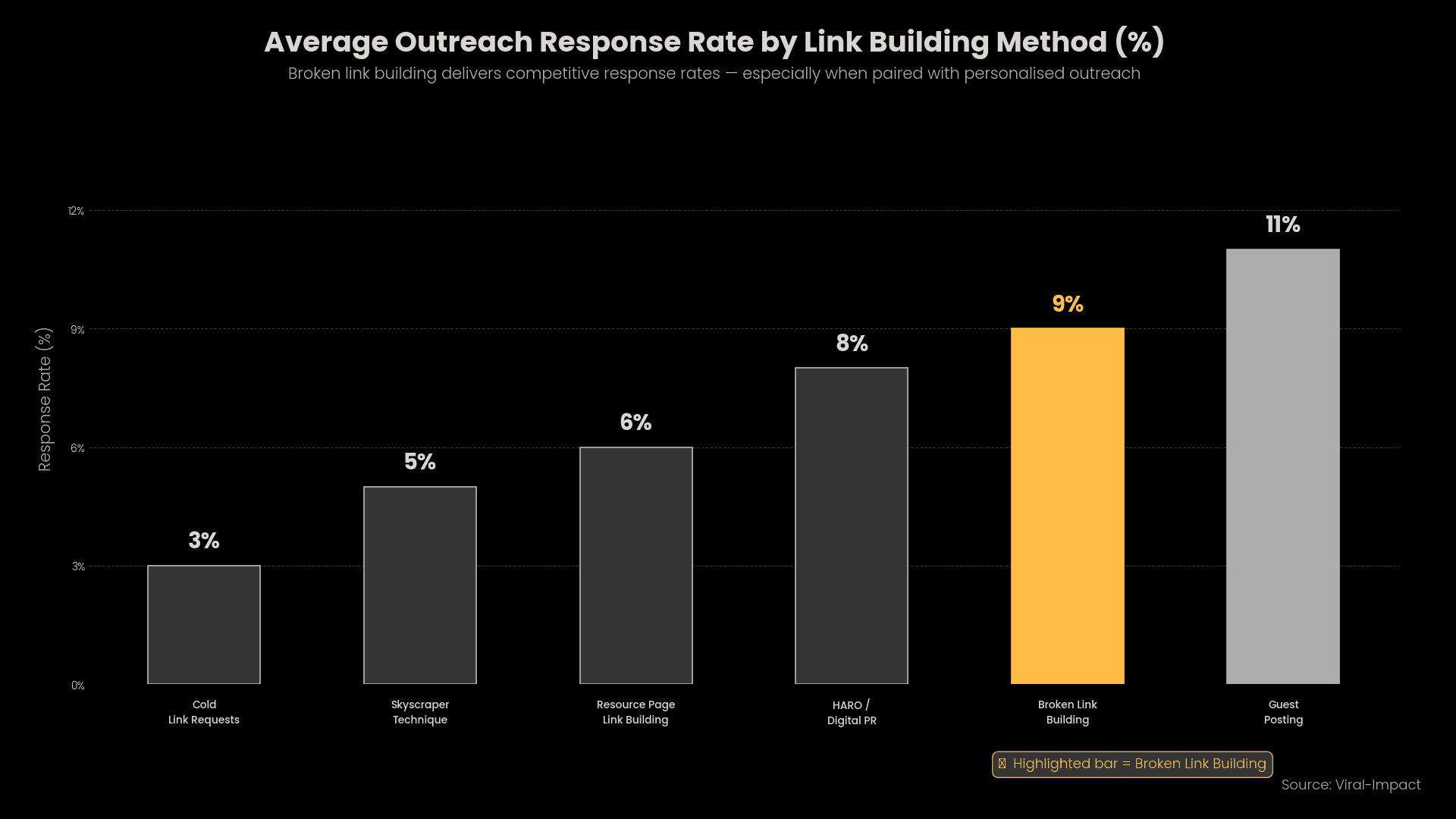
Across most industries, broken link outreach averages response rates between 5% and 12%. That's low, but the links you earn are contextual and durable, not paid or manipulated.
Stack this with guest posting, and your backlink profile gains both depth and variety, a combination Google consistently rewards.
What Are the Biggest Mistakes in Broken Link Building?
Most campaigns fail for the same handful of reasons:
• Targeting low-authority domains (under DA 30).
• Sending templated outreach with zero personalization.
• Offering replacement content that doesn't closely match the dead page's topic.
• Skipping the follow-up email entirely.
• Reaching out to pages where the broken link is irrelevant to your content.
The fix is rarely more tools. It's almost always a better email and a closer content match.
For startups building organic traction, broken link building pairs well with the tactics covered in our link-building guide for startups. Together, they create a more resilient, harder-to-replicate backlink profile.
The Bottom Line
Broken link building isn't dead. It's more competitive now, but that also makes it more durable. The teams treating it as a consistent, quality-first process still earn real, contextual ones that compound authority over time.
Start small. Pick one competitor, find their broken outbound links, match your content to what was there, and send 20 personalized emails this week. See what comes back.
If you're ready to build a backlink strategy that goes well beyond quick wins, visit Viral-Impact.com to explore how we build organic growth systems for B2B and SaaS companies that compound over the long run.