Learn what truly separates a cold email from spam and discover how to stay legally compliant and trusted.
A cold email is a targeted, personalized message sent to a specific prospect who fits your ideal customer profile, with a clear opt-out option. Spam is a mass-blasted, untargeted message sent to random inboxes without permission, relevance, or regard for the recipient.
If you've ever hesitated before hitting send on an outreach email, you're not alone. Many founders worry their emails might come across as spam. But cold email and spam are fundamentally different things, and knowing that difference is what keeps your domain healthy and your pipeline full.
What Makes Cold Email Different from Spam?
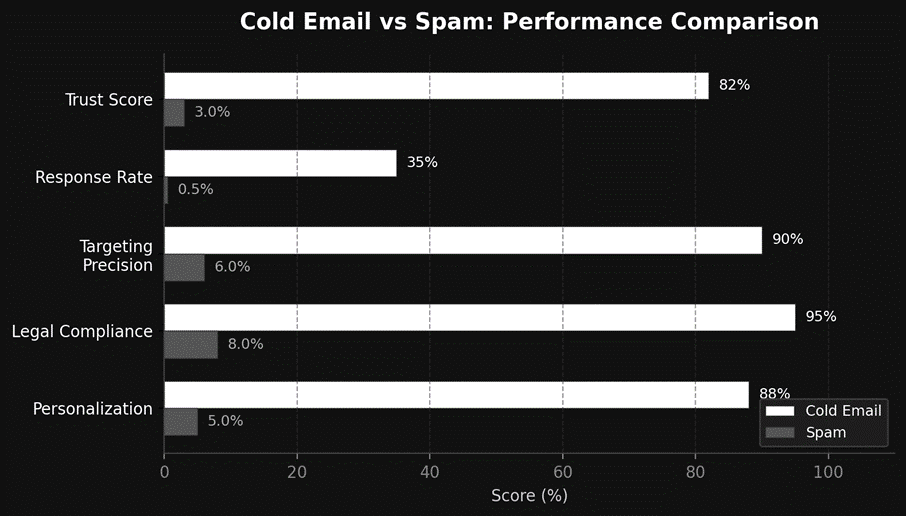
The core difference comes down to intent, targeting, and compliance. Here's how they compare:
• Cold email targets a specific person based on their role, industry, or company fit. Spam blasts thousands of random addresses with zero filtering.
• Cold email offers genuine value, like a useful resource or relevant solution. Spam pushes irrelevant promotions or scams.
• Cold email includes your real name, business address, and a visible unsubscribe link. Spam hides behind fake identities.
• Cold email respects opt-out requests immediately. Spam ignores them.
• Cold email is built on research. Spam treats every inbox the same.
When done right, cold email is one of the most effective B2B lead generation channels. Learn how to craft outreach that gets replies in our complete cold outreach email guide.
How Do You Keep Cold Emails Legal and Compliant?
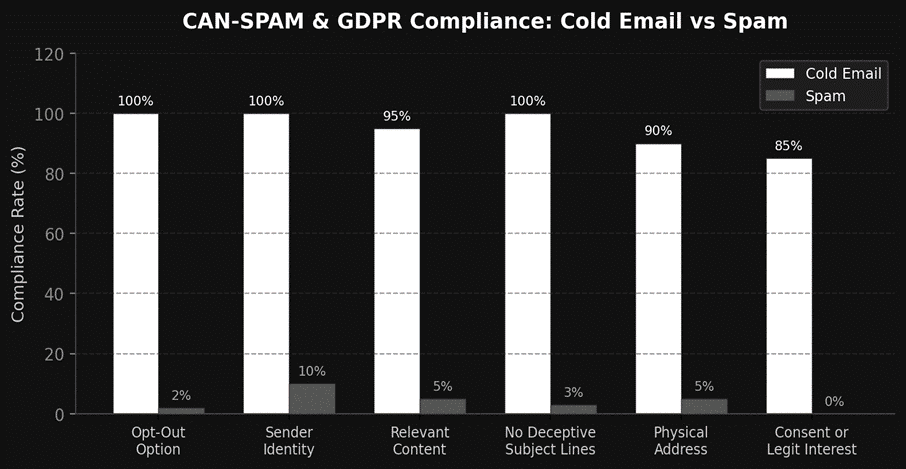
Staying legal isn't complicated, but you do need to follow the rules. Whether you fall under CAN-SPAM, GDPR, or CASL, here are the non-negotiables:
• Always include your real business name and physical mailing address.
• Give recipients a clear unsubscribe link and honor every request within 10 business days.
• Never use misleading subject lines. What you promise should match the email body.
• Have a legitimate reason for reaching out. Under GDPR, the recipient's role or business should make your offer relevant.
• Keep your email list clean. Remove bounces, unsubscribes, and invalid contacts regularly.
Need help setting up compliant campaigns that convert? Our cold email campaign service handles deliverability, personalization, and legal compliance from day one.
How Can You Build Trust Through Cold Email?
Legal compliance keeps you out of trouble, but trust is what gets replies. Here's how to earn it:
• Personalize beyond the first name. Reference their company, a recent post, or a challenge their industry faces.
• Keep it short. Nobody trusts a wall of text from a stranger. Aim for 80 to 120 words.
• Lead with value, not a pitch. Share an insight or ask a thoughtful question before asking for anything.
• Use a professional email domain. Free addresses like Gmail or Yahoo lower credibility instantly.
• Follow up respectfully. Two to three follow-ups spaced a few days apart show persistence without being pushy.
Pairing outreach with strong SEO-driven blog content gives prospects something credible to find when they Google you after reading your email. That builds serious trust.
The Bottom Line
Cold email isn't spam, and it never has to be. When you target the right people, write with genuine intent, and follow the legal basics, cold email becomes one of the highest-ROI channels for startups. The difference between landing in someone's inbox and their spam folder comes down to respect, relevance, and doing things right.
Ready to launch outreach that actually works?
Visit Viral-Impact and let our team build a cold email strategy that gets you in front of the right people, legally and effectively.