Learn the difference between SEO and SEM and pick the right digital marketing channel for your startup's growth.
SEO focuses on earning traffic through unpaid search results by optimizing content, site structure, and backlinks. SEM is broader; it covers both organic SEO and paid search advertising, like Google Ads.
What Does SEO Actually Mean?
SEO stands for Search Engine Optimization. It's the practice of making your website appear in organic (unpaid) search results on Google and other search engines.
The main parts of SEO include:
• On-page SEO optimizing content, headings, keywords, and meta tags.
• Technical SEO improving site speed, crawlability, and mobile-friendliness.
• Off-page SEO earns backlinks from other authoritative websites.
• Content strategy publishing helpful, search-optimized pages that answer real questions.
SEO takes time. Expect 3 to 6 months before you see meaningful traction. The traffic it builds doesn't disappear when you stop paying, which makes it a long-term asset.
Running a solid SEO strategy gives your brand compounding search visibility over time.
What Does SEM Include?
SEM stands for Search Engine Marketing. It's an umbrella term covering all search-related marketing activity, both organic and paid.
"In practice, most marketers use 'SEM' to refer to paid search. That typically includes:
• Google Ads (PPC): pay-per-click campaigns that place your ad at the top of results.
• Bing Ads: similar paid placements on Microsoft's search engine.
• Shopping ads: product listings for e-commerce queries.
• Remarketing campaigns: targeting users who've already visited your site.
The defining feature: you pay for every click. Stop spending, and the traffic stops.
SEO vs SEM: The Core Differences
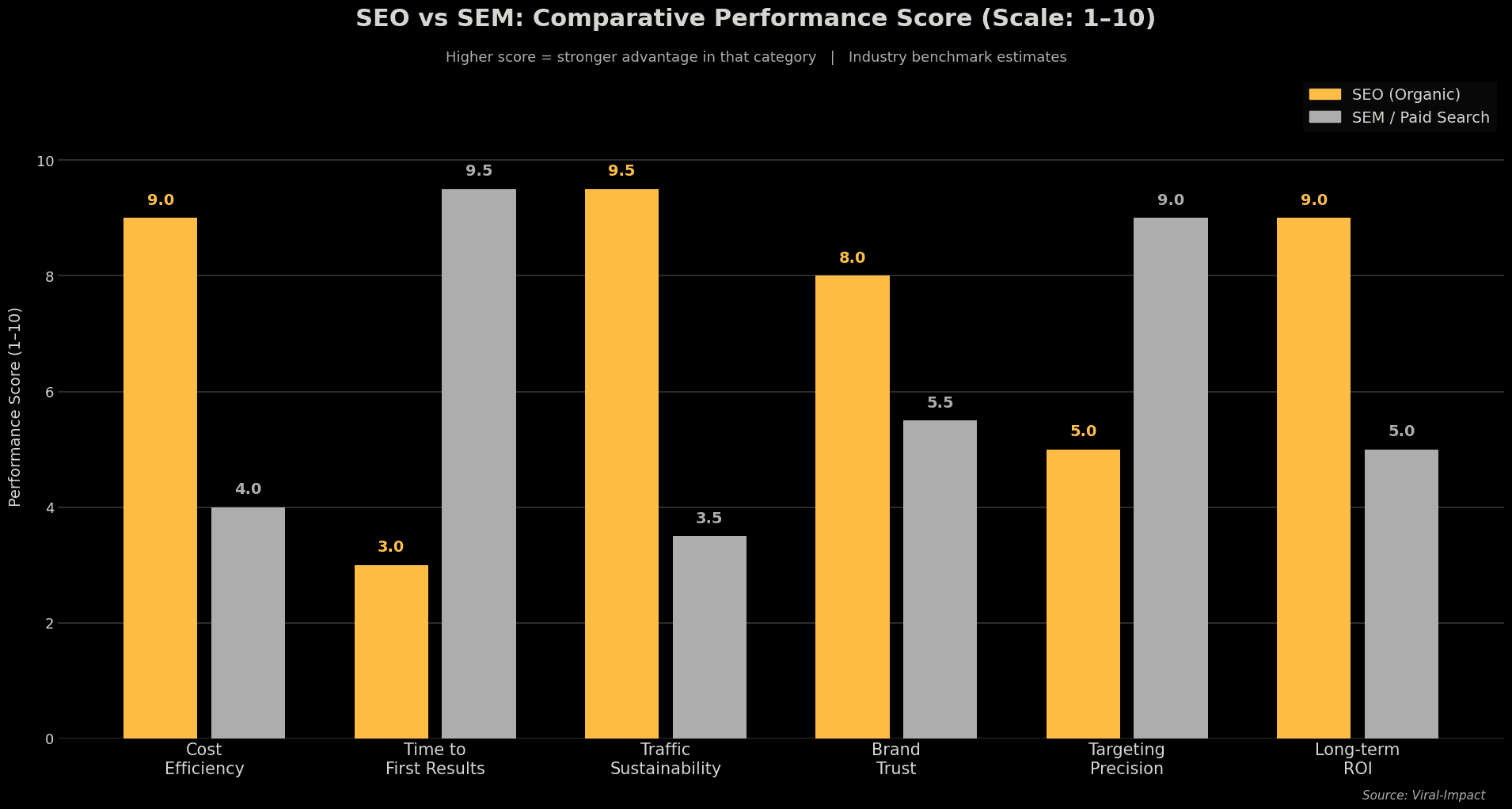
Here's where it gets practical. These two strategies operate on fundamentally different timelines and cost models.
• Cost: SEO requires no cost per click; you invest in content and optimization. Paid SEM averages $2–$4 per click in most B2B niches.
• Speed: SEO takes 3–12 months to gain traction. Paid SEM drives traffic within hours of launch.
• Longevity: Organic SEO traffic persists after the work is done. Paid traffic stops when your budget runs out.
• Trust: Organic listings consistently earn higher click-through rates than paid ads.
• Best use: SEO for sustainable brand authority. SEM for fast traffic, product launches, or conversion testing.
When Should You Use SEO Over SEM?
SEO is the stronger play when:
• You're building long-term authority in a competitive niche.
• You want traffic that compounds without ongoing ad spend.
• Your audience researches before buying is common in B2B and SaaS.
• You're working with a tight monthly marketing budget.
• You're building content to capture multiple keywords over time.
When Does SEM Make More Sense?
Paid search earns its place when:
• You need leads immediately for a new product launch, a seasonal campaign, or a funded push.
• You're testing which keywords and offers convert before committing to long-form SEO content.
• You're targeting high-intent, bottom-of-funnel buyers ready to act now.
• You want precise control over ad messaging and placement timing.
A smart organic growth system can use paid data to inform your SEO content plan, finding which keywords convert before you invest months ranking for them.
Before spending heavily on ads, read this comparison of Google Ads vs SEO for early-stage startups.
Can You Use Both SEO and SEM at the Same Time?
Yes, and most startups are better off running them in parallel.
• Use SEM to generate leads while SEO builds momentum in the background.
• Use paid data to identify which keywords convert, then build SEO content around them.
• Reduce ad spend gradually as your organic rankings improve.
• Use SEO for informational queries at the top of the funnel; use ads for transactional, high-intent terms.
The Bottom Line
SEO and SEM aren't rivals; they're tools built for different timelines and goals. SEO compounds over time without ad spend. SEM delivers immediate traffic at a cost that never stops.
For most SaaS and B2B startups, the smartest move is running both together, letting paid data guide SEO content decisions, and shifting the balance toward organic as rankings improve.
Ready to build a search strategy that doesn't drain your budget? Visit Viral-Impact to explore how we help startups grow through SEO, AEO, and content-led systems built for lasting results.