Learn the ideal keyword density for SEO in 2026. Optimize content without stuffing and rank higher on Google.
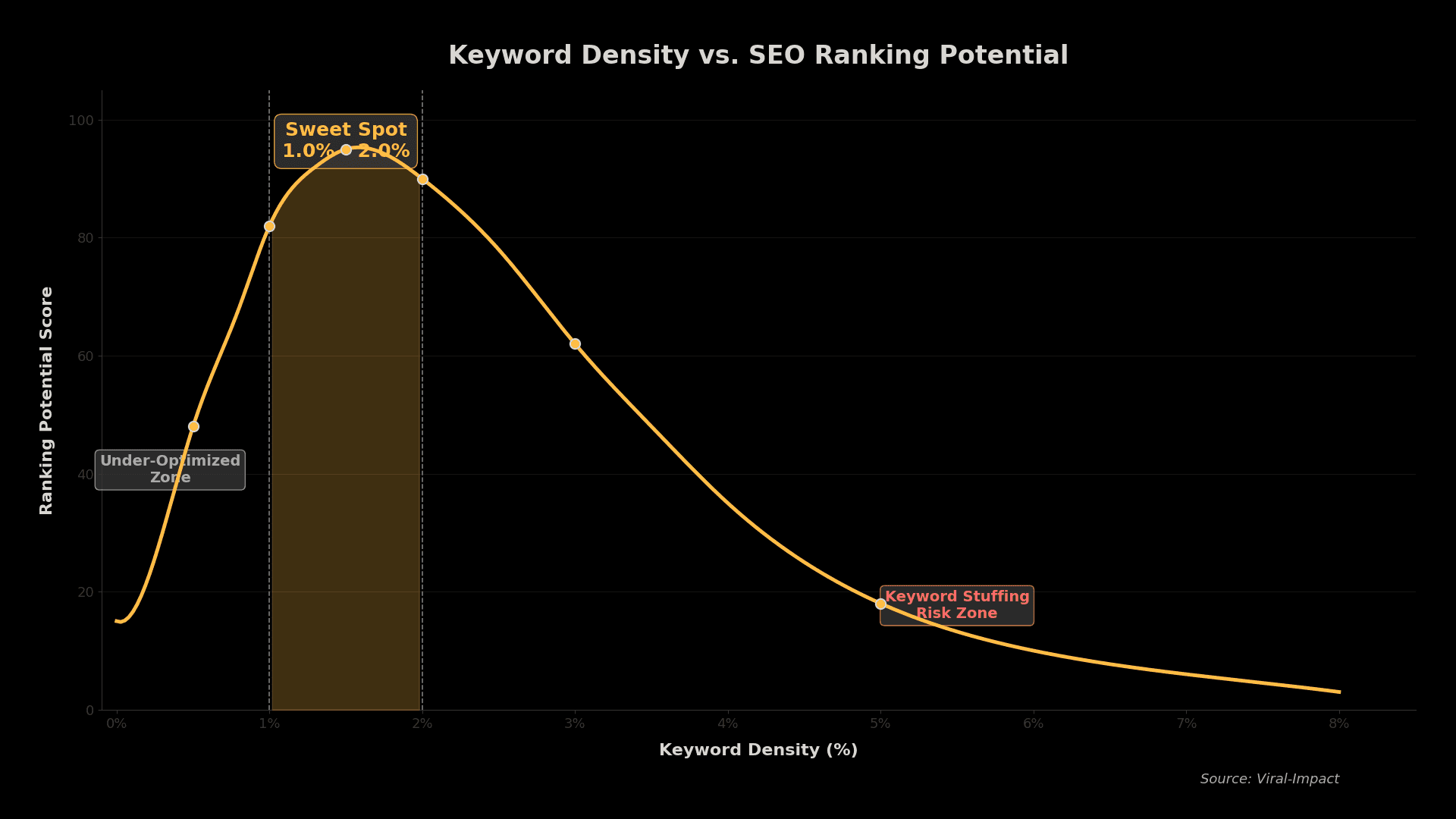
The ideal keyword density for SEO falls between 1% and 2% of your total word count. This range helps search engines understand your topic without triggering keyword stuffing penalties that damage your rankings.
If you have ever wondered how many times to drop your target keyword into a blog post, you are asking the right question. Keyword density has been debated in SEO circles for years. The truth is simple. Get the balance right and Google rewards you. Get it wrong and your content either gets ignored or penalized.
Why Does Keyword Density Matter for SEO?
Keyword density signals to Google what your page covers. Without enough mentions, search engines may miss your topic entirely. Too many and they flag it as spam.
• Search engines use keyword frequency as one signal alongside hundreds of others.
• Balanced density improves topical relevance without making content feel robotic.
• Over-optimization triggers spam detection that can drop your page from results.
A solid SEO and AEO growth strategy accounts for all these signals together, not just density alone.
How Do You Calculate Keyword Density?
Divide the number of keyword appearances by the total word count, then multiply by 100.
Keyword Density = (Keyword Count / Total Words) x 100
So if your article has 1,000 words and the keyword appears 15 times, your density is 1.5%. Right in the sweet spot.
What Happens at Different Density Levels?
Density | SEO Impact | Action |
Below 0.5% | Google may not connect your page to the query. | Add natural keyword mentions. |
1% – 2% | Optimal. Strong relevance, no over-optimization risk. | Maintain. Mix in synonyms and LSI terms. |
2% – 3% | Borderline. Risky in competitive markets. | Audit and reduce if the content feels forced. |
Above 3% | High stuffing penalty risk. Poor readability. | Rewrite with semantic alternatives. |
How Can You Keep Keyword Density Natural?
• Write for your reader first. If a sentence sounds awkward with the keyword, use a synonym.
• Spread keywords across headings, intro, body, and conclusion instead of clustering them.
• Use LSI keywords like "keyword frequency" and "on-page optimization" alongside your main phrase.
• Run your draft through Surfer SEO or Clearscope before publishing.
If you want posts built to perform, explore how professional SEO blog writing removes the guesswork.
Does Keyword Density Still Matter in 2026?
Yes, but differently than before. Google now prioritizes intent, content depth, and topical authority through advanced NLP. Still, density remains a useful baseline. Ignore it completely, and Google may not rank your page. Overdo it, and you get penalized. Combine balanced density with:
• Comprehensive coverage answering every angle of the query.
• Structured formatting AI search engines can parse easily.
• E-E-A-T signals, including author expertise and cited sources.
For a deeper dive, read this guide on how to write blog posts that rank on Google.
The Bottom Line
Keyword density is not the single factor that decides rankings. But it remains a useful benchmark. Stick to 1% to 2%, write naturally, use semantic variations, and put the reader first every time.
If your startup needs content built to rank from day one, Viral Impact delivers SEO strategies, optimized content, and growth systems that put your brand in front of the right audience.