Learn what every startup must include in a press release to earn real media coverage and build credibility.
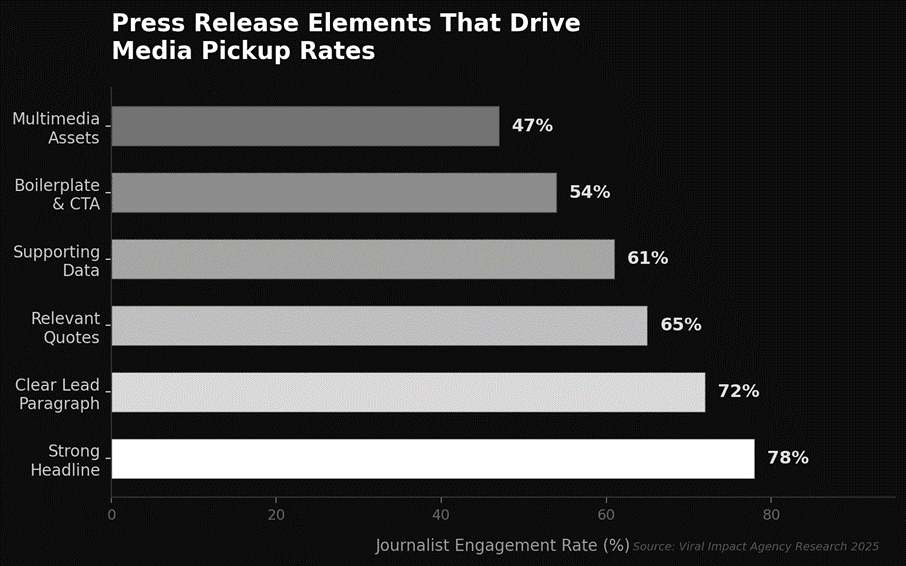
A press release should include a compelling headline, a clear lead paragraph, supporting body content, relevant quotes, a company boilerplate, and media contact details. These six elements work together to grab journalists' attention and give reporters everything they need to cover your story.
If you have ever sent a press release and heard nothing back, the problem probably was not your news. It was your structure. Journalists scan hundreds of pitches daily, and a release that misses even one critical element gets ignored. Having a solid press release strategy from day one shapes how the media sees your brand.
What Are the Key Elements of a Press Release?
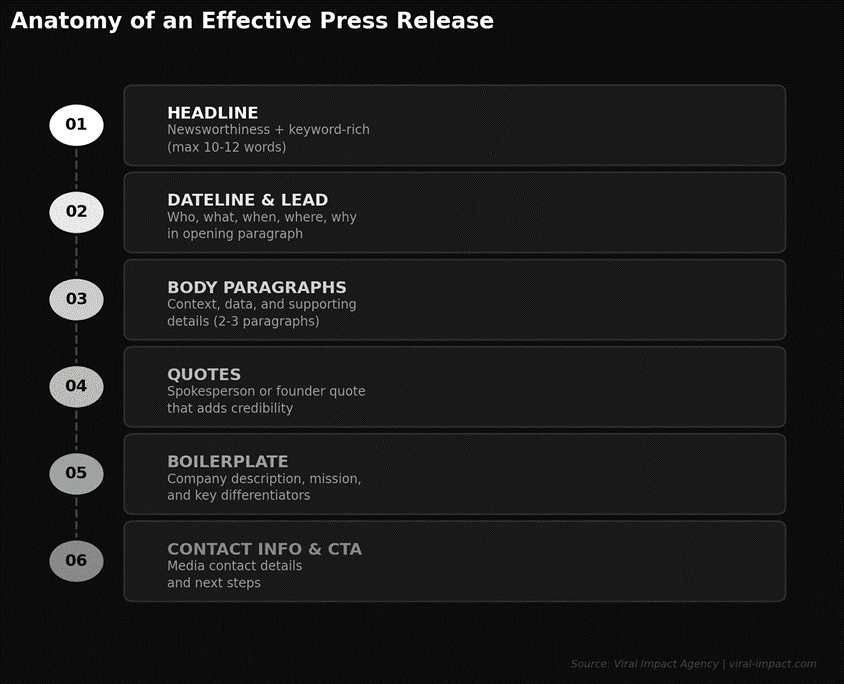
Every effective press release follows a proven format. Here are the six must-have components:
Headline: Keep it short, specific, and newsworthy. Use active language and include your primary keyword naturally.
Lead Paragraph: Answer who, what, when, where, and why in three to four sentences. If someone only reads this section, they should still understand your announcement.
Body Content: Add depth with supporting facts, market context, or traction numbers. For startups, mention partnerships, funding milestones, or key differentiators here.
Quotes: Include one or two quotes from a founder or spokesperson. Quotes add a human voice and give journalists something to pull directly into their coverage. Keep them conversational, not corporate.
Boilerplate: A short paragraph describing your company, what it does, who it serves, and what makes it unique. Think of it as your elevator pitch.
Contact Information: Always close with a media contact name, email, and phone number. Make it easy for journalists to reach your team.
Why Does Structure Matter for Startup Press Releases?
When you are a new company with little brand recognition, structure is your credibility. A well-organized release signals professionalism and shows editors you respect their time. Most reporters decide within the first few seconds whether a release is worth reading, so formatting matters just as much as the story itself.
Press releases also contribute to your overall SEO and AEO growth strategy. Distributed through reputable platforms, they generate high-authority backlinks, improve domain authority, and increase the chances of AI search engines citing your brand. That is why getting the structure right is not just about media pickup. It is about building long-term digital visibility.
What Mistakes Should You Avoid in a Press Release?
Even with the right elements, small errors can ruin your chances. Here are the most common missteps startups make:
• Writing a vague headline: If it does not clearly state the news, it gets skipped.
• Overloading with jargon: Keep the language simple enough for someone outside your industry to follow.
• Forgetting the CTA: Every release should tell the reader what to do next.
Skipping distribution: Writing is only half the job. A solid startup press release strategy ensures it reaches the right journalists.
The Bottom Line
A press release is not just a formality. Done right, it becomes one of the most powerful tools a startup has for earning coverage, building credibility, and strengthening search visibility. Nail the structure: a sharp headline, a clear lead, solid body content, authentic quotes, a professional boilerplate, and easy-to-find contact details. Every element plays a role, and skipping even one can cost you the coverage your startup deserves.
If you want expert help crafting press releases that actually get picked up, Viral-Impact specializes in strategic press release creation and distribution for startups ready to grow.