Discover which guest post types actually drive referral traffic and how startups can use them for real growth.
Not all guest posts are created equal. The ones that actually send referral traffic share specific qualities that go beyond just earning a backlink from a high-authority site.
Most startups treat guest posting as a link-building tactic. They pitch generic articles, grab a bio link, and move on. But that approach barely moves the needle when it comes to real visitors landing on your site. So what separates a guest post that just sits there from one that drives actual clicks?
Which Guest Post Formats Generate the Most Referral Clicks?
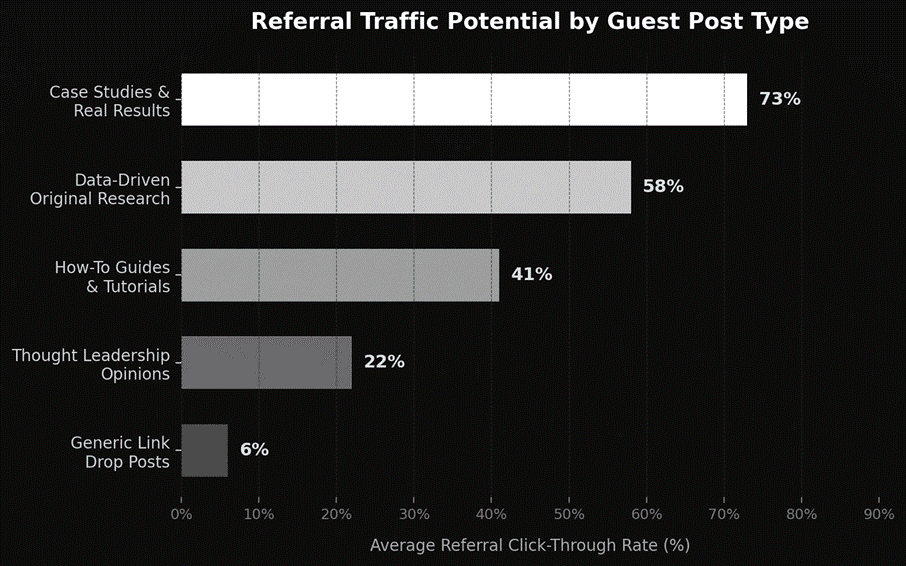
The format matters more than most founders realize. Certain types consistently outperform others in sending readers back to your site.
Case studies with real results pull the highest referral traffic. When you show specific numbers from a real project, readers naturally want to learn more about who delivered those results.
Data-driven posts with original research earn clicks because they offer something unique. Articles with proprietary stats or benchmarks get bookmarked and shared.
How-to guides and tutorials keep readers engaged longer. Mentioning your service as part of the solution makes the click feel organic rather than forced.
Thought leadership pieces can work, but only when the opinion is genuinely fresh. Rehashing common advice won’t drive traffic.
Generic filler posts with a bio-only link rarely generate meaningful referral visits.
Does the Host Site’s Audience Matter for Referral Traffic?
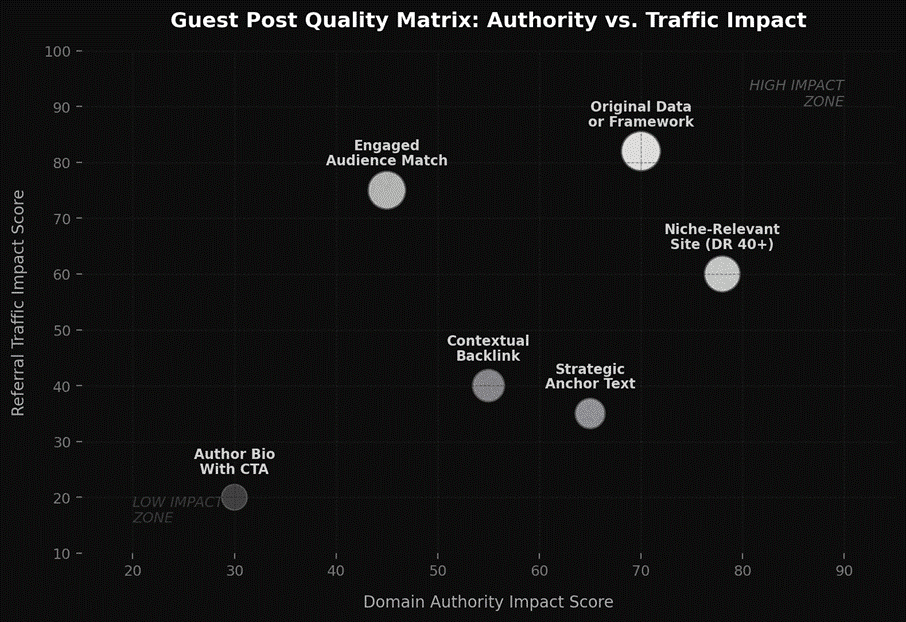
Absolutely. A backlink from a DR 70 site sounds impressive on paper, but if that site’s audience has zero overlap with your target customer, the referral traffic will be close to nothing.
Guest posts that drive clicks are published where readers already care about what you offer. A SaaS startup writing for a general business blog might get a decent backlink but minimal visitors. That same startup writing for a niche review site will see significantly more qualified traffic. Before pitching any site, ask one question: would this blog’s readers realistically become my customers? If not, the post might strengthen your domain authority through a professional guest posting strategy, but it won’t send much traffic.
Where Should You Place Links Inside a Guest Post?
Link placement dramatically affects referral performance, yet most people default to a single link in the author bio.
Contextual links within the article body get clicked far more than bio links. When a link supports the point you’re making, readers follow it naturally.
The first third of the article is prime real estate. Links placed early with clear value see the highest click-through rates.
Bio-only links get the lowest engagement. Most readers never scroll past the conclusion.
For startups pairing guest posting with a strong SEO blog content writing strategy, placing contextual links to in-depth resources on your own site creates a referral loop that compounds over time.
What Makes Readers Actually Click Through to Your Site?
Curiosity and incomplete value. The best guest posts deliver genuine insight but leave readers wanting more depth on a specific point. That’s where your contextual link steps in; it promises the deeper answer. If you want to study how strong guest content is structured, this guest post content guide breaks down the framework behind posts that consistently earn referral clicks.
The Bottom Line
Guest posts that drive real referral traffic share three qualities: they solve a specific problem, they’re published where the right audience gathers, and they include contextual links that feel like natural next steps. If your startup is serious about organic growth through guest content, focus on quality over quantity. Visit Viral-Impact to explore how strategic guest posting can turn every published article into a steady source of qualified referral traffic.