Discover proven steps to build entity authority so AI search engines recognize, trust, and cite your startup consistently.
You build entity authority for AI search by consistently creating structured information about your brand across trusted platforms so AI models can recognize you as a credible source. When search engines find matching data about your business in multiple authoritative places, they start citing you instead of your competitors.
If you have ever wondered why certain brands keep showing up in ChatGPT responses or Google AI Overviews while yours stays invisible, the answer usually comes down to entity authority. AI search tools need to trust who you are before they trust what you say.
Think of it as your brand’s digital reputation card; Google’s Knowledge Graph, Wikidata, and LLMs all cross-reference business information. When your startup’s details appear consistently across these databases, AI systems gain confidence in recommending you. That is the foundation of a solid SEO and AEO growth strategy.
What Is Entity Authority and Why Does AI Search Care?
Entity authority measures how well search engines and AI platforms can identify, verify, and trust a specific brand or organization. Traditional SEO focused on pages. AI search focuses on entities; the real-world things behind those pages.
• AI models like ChatGPT pull answers from sources they consider authoritative, not just well-optimized.
• Google’s AI Overviews prioritize brands that appear in structured databases and knowledge panels.
• Startups without entity authority get skipped entirely, no matter how good their content is.
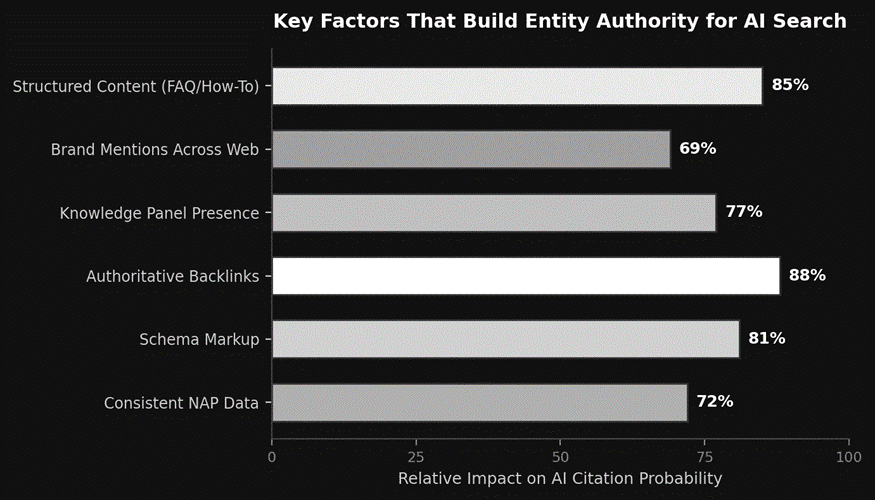
How Do You Actually Build Entity Authority From Scratch?
Building entity authority is not overnight work, but every step compounds. Here is a practical breakdown for early-stage startups and B2B SaaS companies.
1. Nail Your Structured Data First
• Add Organization, FAQPage, and Article schema markup across your website.
• Include your brand name, logo, founding date, and social profiles in the Organization schema.
• Use JSON-LD format; it is what Google recommends, and AI crawlers read most easily.
Structured data is non-negotiable for AI citations. Our AEO blog writing service builds this directly into every piece of content we produce.
2. Get Listed on Knowledge Databases
• Claim and complete your Google Business Profile with accurate details.
• Create or update your Wikidata entry; this feeds directly into Google’s Knowledge Graph.
• Ensure your Crunchbase, LinkedIn company page, and directories all have matching information.
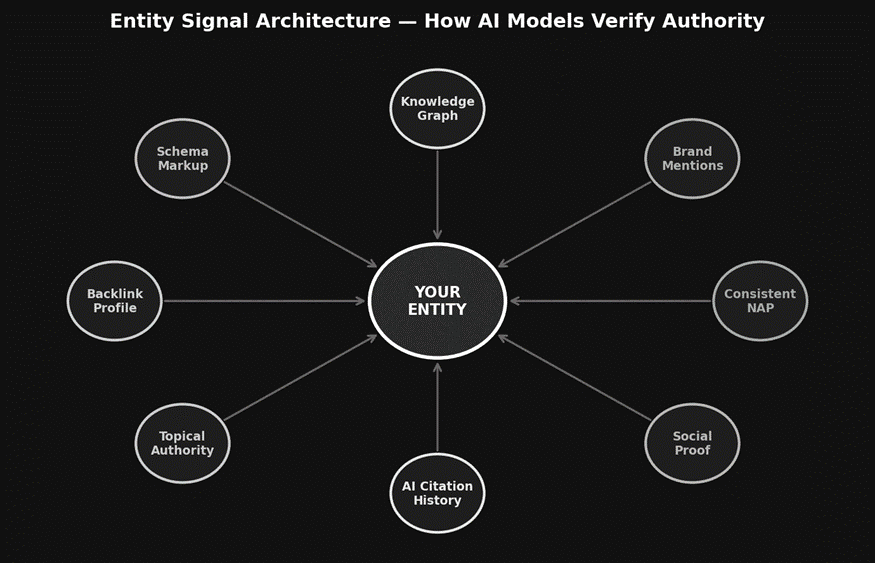
3. Build Topical Authority Through Content Clusters
• Publish deep, interlinked content around your core expertise; not random topics.
• Create pillar pages connected to supporting posts through strategic internal linking.
• The more comprehensive your topic coverage, the more AI models associate your brand with that subject.
Our guide on how to get cited in AI search results walks through exactly how content clusters feed into AI citation algorithms.
4. Earn Brand Mentions and Authoritative Backlinks
• Get mentioned on industry publications, podcasts, and news outlets; even unlinked mentions help.
• Pursue guest posts on high-domain-authority websites within your niche.
• Press releases distributed through reputable channels create entity signals across multiple platforms at once.
The Bottom Line
Entity authority is quickly becoming the deciding factor in whether AI search tools mention your brand or ignore it. Startups that invest in structured data, consistent brand information, depth in topical content, and earned mentions now will dominate AI-driven search results for years. You do not need a massive budget; you need a focused strategy.
If you want expert help building entity authority and getting your startup cited in AI search, visit Viral-Impact, and let’s build your search presence together.