7 Steps to Get Cited in AI Search Results: A Practical Framework
The rules of search visibility have changed. Ranking on Google's first page no longer guarantees your audience will find you. Today, millions of users ask ChatGPT, Perplexity, and Google AI Overviews for answers, and these platforms cite only a handful of sources in their responses.
Getting cited in AI search has become the new currency of digital visibility. According to Search Engine Land, analysis of 8,000 AI citations revealed that only 12% matched URLs on Google's first page. This means traditional SEO success doesn't automatically translate to AI visibility.
The brands winning in AI search aren't waiting, they're implementing specific tactics to earn citations now. Here are seven proven steps to make your content the source AI platforms trust and reference.
Step 1: Identify High-Value AI Search Queries
Before optimising, you need to know which questions your audience asks AI platforms.
How to find citation-worthy queries:
Mine customer conversations: Review sales calls and support tickets for exact questions prospects ask
Test AI platforms directly: Enter industry questions into ChatGPT, Perplexity, and Google AI Overviews
Analyse competitor citations: Note which sources appear when you search topics in your space
Query types with highest citation potential:
Query Type | Example | Why It Works |
|---|---|---|
Definition queries | "What is revenue operations?" | AI needs clear, authoritative definitions |
Comparison queries | "HubSpot vs Salesforce" | AI cites balanced, factual comparisons |
How-to queries | "How to reduce churn" | AI extracts step-by-step processes |
Best-of queries | "Best project management tools" | AI references comprehensive evaluations |
Focus on queries where you can genuinely provide expert, differentiated answers.
Step 2: Create Extractable Content Chunks
AI platforms don't cite entire pages, they extract specific passages. Your content must be structured for easy extraction.
The extractable content formula:
Every section should function as a standalone answer. AI systems pull content chunks, so each passage must make sense independently.
Structural tactics that earn citations:
Lead with the answer: State your key point in the first 40-60 words of each section
Use question-based H2s: Match headings to exact queries users ask
Write in complete statements: Avoid pronouns that require context from other paragraphs
Include specific details: Numbers, percentages, and concrete examples get cited more than vague claims
Example of extractable vs non-extractable content:
Non-extractable: "This approach has many benefits. Companies that use it see great results. It's becoming increasingly popular."
Extractable: "Account-based marketing increases deal size by 171% on average. Companies implementing ABM report 208% higher revenue from marketing efforts, according to ITSMA research."
The second version can stand alone as a citation. The first cannot.
Step 3: Add Statistics and Original Data
Research shows that content with statistics earns 40% more AI citations than content without. AI platforms prioritise factual, verifiable information.
How to leverage data for citations:
Cite authoritative sources: Reference research from recognised institutions, industry reports, and peer-reviewed studies
Include specific numbers: "67% increase" is more citable than "significant increase"
Publish original research: Surveys, benchmarks, and case studies you conduct become unique citation sources
Update data regularly: AI platforms increasingly favour current information over outdated statistics
High-citation data formats:
Industry benchmark reports
Customer survey findings
Performance case studies with metrics
Year-over-year trend analysis
Comparative research studies
According to Semrush's research, AI platforms reward content that demonstrates expertise through data-driven insights rather than opinion-based assertions.
Our Blog Content services help businesses create data-rich content optimised for AI citations.
Step 4: Strengthen Entity Recognition
AI systems must recognise your brand as an authoritative entity before they'll cite you. This requires consistent signals across the web.
Building entity authority:
Maintain consistent NAP: Name, address, and positioning must match across all platforms
Claim knowledge panels: Ensure Google's Knowledge Graph accurately represents your brand
Create entity associations: Link your brand to recognised industry terms and organisations
Entity signals AI platforms evaluate:
Signal | How to Strengthen |
|---|---|
Brand mentions | Get featured in industry publications |
Expert associations | Connect leaders to recognised credentials |
Category leadership | Position within specific industry categories |
Cross-platform presence | Maintain profiles on LinkedIn, Crunchbase, G2 |
When AI systems encounter your brand, they evaluate whether you're a recognised, trustworthy entity.
Step 5: Optimise Third-Party Presence
AI platforms don't just cite your website, they cite sources that mention you. Your presence on authoritative third-party sites directly impacts citation potential.
Priority platforms for AI visibility:
According to citation research, these sources appear most frequently in AI responses:
Reddit: The most-cited single domain in several AI studies
LinkedIn: Fourth most-cited source in ChatGPT responses
Industry publications: Niche authority sites carry significant weight
Review platforms: G2, Capterra, and Trustpilot for B2B/SaaS brands
News sites: Mainstream and industry news coverage boosts credibility
Third-party optimisation tactics:
Contribute valuable insights to Reddit discussions in your industry
Publish thought leadership articles on LinkedIn consistently
Pursue guest articles on respected industry publications
Encourage customer reviews on relevant platforms
Our Guest Articles and LinkedIn services help businesses build citation-worthy presence across platforms AI trusts.
Step 6: Implement Technical Citation Signals
Technical elements help AI systems understand, trust, and extract your content. Without proper implementation, even excellent content gets overlooked.
Essential technical optimisations:
Schema Markup Structured data helps AI interpret your content's meaning and relationships.
Priority schema types for citations:
FAQPage: For question-answer content
HowTo: For step-by-step tutorials
Article: For blog posts and guides with author information
Organization: For brand and company information
Crawlability AI systems can only cite content they can access.
Ensure AI bots (GPTBot, PerplexityBot, ClaudeBot) aren't blocked in robots.txt
Use clean HTML without excessive JavaScript rendering requirements
Maintain fast page load speeds, slow sites get deprioritised
Submit updated XML sitemaps regularly
Author Authority AI platforms evaluate who created content, not just what it says.
Add detailed author bios with credentials and expertise
Link author profiles to LinkedIn and other verified platforms
Display author photos and professional backgrounds
Include "Expert Reviewed" or "Medically Reviewed" badges where applicable
According to HubSpot, content with clear authorship signals earns citations more consistently than anonymous or generic brand content.
Step 7: Monitor, Test, and Iterate
AI citation optimisation isn't a one-time effort, it requires ongoing monitoring and refinement.
Weekly monitoring process:
Test 10-15 priority queries across ChatGPT, Perplexity, and Google AI Overviews
Document which sources get cited for each query
Note whether your content appears and in what context
Track competitor citation patterns and content approaches
Monthly analysis framework:
Metric | What to Measure |
|---|---|
Citation frequency | How often your content appears across platforms |
Citation position | Where you appear in the citation list (first citation carries most weight) |
Citation accuracy | Whether AI accurately represents your content and brand |
Competitor share | How your citations compare to key competitors |
Iteration tactics:
Content gaps: Create content for queries where you're not cited but should be
Structure improvements: Restructure content that ranks well but isn't getting cited
Freshness updates: Refresh statistics in high-potential content
Our SEO & GEO Optimisation services include comprehensive AI citation tracking and optimisation.
The Citation Advantage
Brands that earn AI search citations today are building advantages that compound over time. As AI platforms become primary discovery channels, citation authority will determine which brands get recommended and which remain invisible.
The window for establishing AI citation authority is narrowing. Competitors who act now will capture positions that become increasingly difficult to displace.

Ready to Become a Cited Source in AI Search?
Getting cited in AI search results requires more than great content, it demands strategic structure, technical implementation, and consistent authority building across the web. The seven steps in this guide provide a roadmap, but execution determines results.
At Viral Impact, we help B2B and SaaS companies implement comprehensive AI citation strategies that earn visibility across ChatGPT, Perplexity, Google AI Overviews, and beyond. From content optimisation and entity building to third-party presence and technical implementation, our integrated approach ensures your brand becomes the source AI platforms cite.
Stop being invisible to AI search. Start earning the citations that drive discovery.
Visit www.viral-impact.com to build your AI citation strategy.
Read more
Learn which marketing skills remain irreplaceable as AI transforms search, content, and strategy for the next decade.

Learn how to reposition your startup brand after a pivot and maintain marketing momentum without losing your audience.
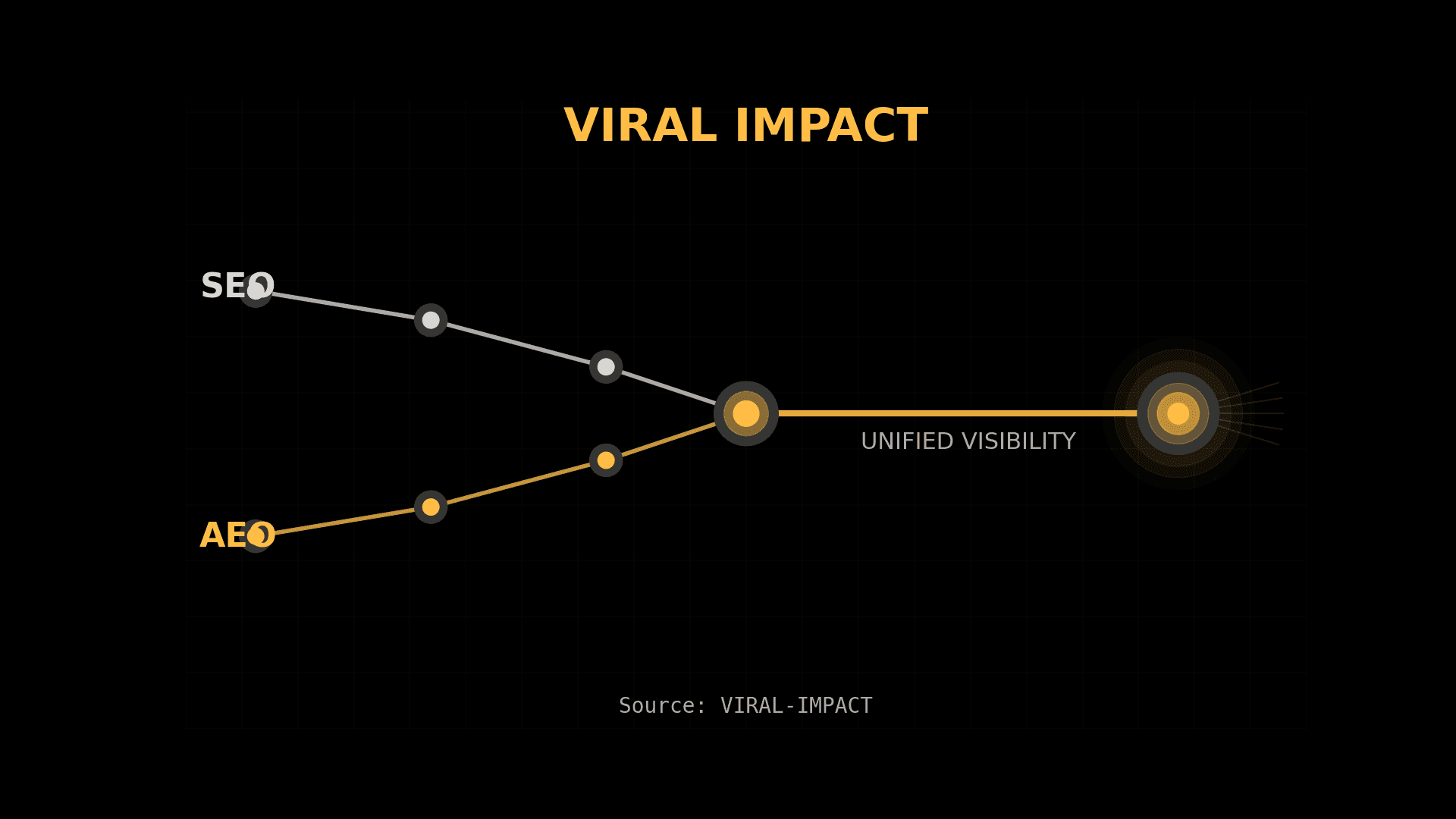
Learn the key differences between AEO and SEO and discover which strategy your startup should prioritize in 2026.