Learn proven strategies to get your content cited by Perplexity AI and boost startup visibility fast.
Getting cited by Perplexity AI requires structured, authoritative content that directly answers user questions with clarity. When your content follows specific optimization patterns, Perplexity pulls your pages as trusted sources in its AI-generated responses.
Perplexity AI is reshaping how people find information. Unlike traditional search engines, it reads, synthesizes, and cites sources directly in its answers. For startups trying to build visibility, earning a Perplexity citation means your brand shows up right where decisions are being made.
But here is the thing. Perplexity does not cite content randomly. It favors pages that are well-structured, deeply relevant, and easy to extract answers from. If your content checks those boxes, you are already ahead of most competitors.
Why Do Perplexity AI Citations Matter for Startups?
Perplexity citations work differently from Google rankings. When Perplexity cites your page, it links directly to your content inside its answer. That means:
• Your brand gets visibility without the user needing to scroll through results.
• You build credibility because Perplexity treats your content as a trusted source.
• Organic referral traffic increases as users click through to read more.
• Your startup gains authority in a space where most companies have not even started optimizing.
Startups that invest in answer engine optimization early are positioning themselves where the traffic is moving. A solid AEO blog content writing strategy makes this significantly easier to achieve.
What Type of Content Does Perplexity AI Actually Cite?
Perplexity AI gravitates toward content that answers questions directly and provides structured depth. These are the content formats that perform best:
• Question-and-answer style blog posts with clear subheadings.
• Data-backed articles that include statistics and original research.
• Step-by-step guides with numbered processes.
• Content with FAQ sections using schema markup.
• Pages that load fast and display clean formatting on mobile.
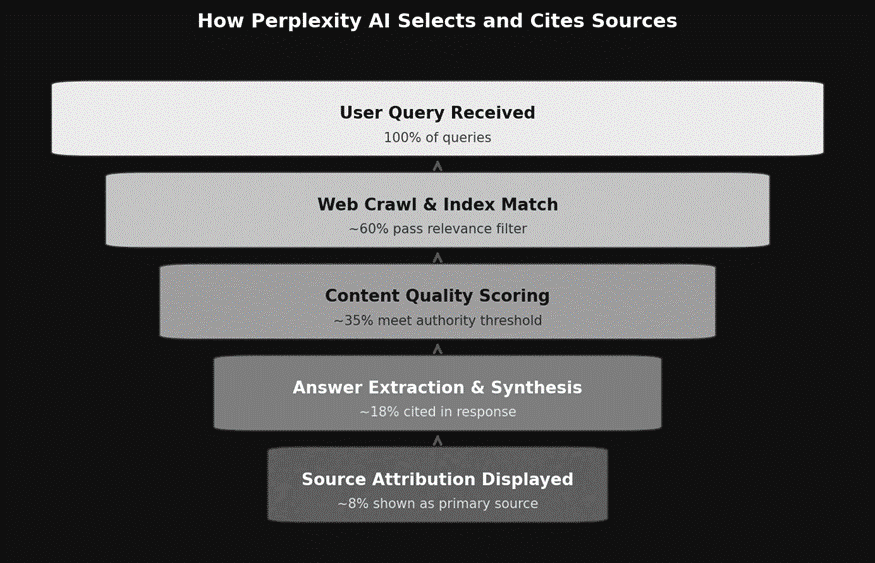
If you have read about the 7 steps to get cited in AI search results, you already know that structure beats length every single time. Perplexity scans for concise, well-organized answers rather than long walls of text.
How Do You Optimize Content to Get Cited by Perplexity?
Optimizing for Perplexity is not guesswork. There are clear patterns that increase your chances:
• Start every section with a direct, concise answer in the first two sentences.
• Use question-based H2 and H3 headings that mirror real search queries.
• Add bullet points for key takeaways so the AI can extract them easily.
• Include relevant statistics and cite credible data sources.
• Implement FAQPage and Article schema markup on every page.
• Keep paragraphs short with three to four sentences maximum.
• Update your content regularly so it stays fresh and current.
These steps align with a broader SEO and AEO growth strategy that treats AI visibility as a core part of your marketing funnel, not an afterthought.
Does Schema Markup Actually Help You Get Cited?
Yes, and the numbers back it up. Content with the FAQPage schema has a 92 percent higher citation rate in AI search engines compared to pages without it. HowTo schema follows at 87 percent, and Article schema at 78 percent.
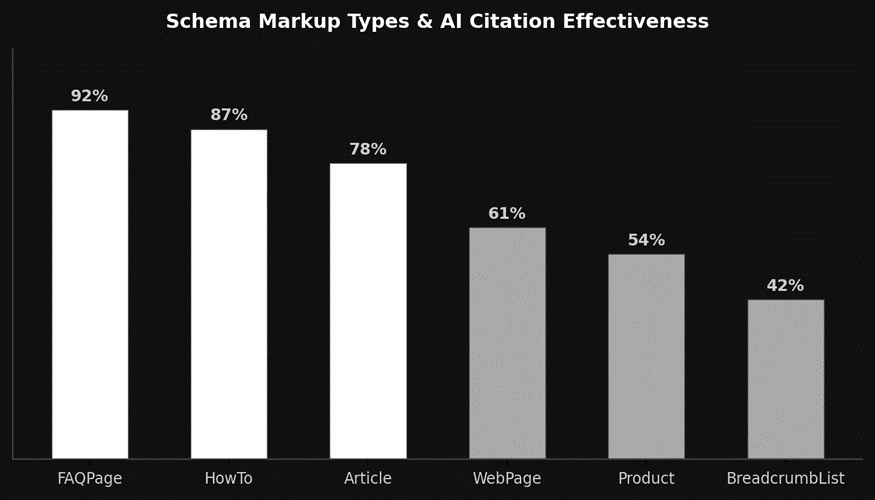
Schema tells AI engines exactly what your content covers and how it is organized. Think of it as a map that helps Perplexity navigate your page faster than your competitors. Without a schema, your content competes blindly.
The Bottom Line
Getting cited by Perplexity AI is not reserved for big brands with massive budgets. Startups that create structured, answer-focused content with proper schema markup are already winning citations. The key is starting now while competition remains low.
If you want expert help building content that ranks on Google and gets cited by AI platforms, visit Viral-Impact to explore how we help startups grow faster through SEO and AEO strategies.