Learn how to get your content cited by ChatGPT with proven AEO strategies that boost your AI visibility.
You get cited by ChatGPT when your content directly answers real questions in a clear, structured format that AI models can easily extract. The key is writing content that sounds like a trusted source, not a sales pitch, while using proper schema markup and question-answer formatting.
Most startup founders spend months creating blog posts that rank on Google but never show up in AI-generated answers. ChatGPT, Perplexity, and other AI tools pull from web content to generate responses, and if your pages are not optimized for this, you are invisible to a growing segment of your audience. Getting cited is not about luck. It is about structure, clarity, and a few tactics most competitors have not figured out yet.
What Makes ChatGPT Cite Certain Content?
ChatGPT does not pick content at random. It favours pages that demonstrate expertise and deliver answers in digestible formats. Here is what the data shows about content types that get cited most.
Several patterns consistently increase your chances of earning an AI citation.
• Answer questions directly in the first two sentences of every section.
• Use headers phrased as real questions people type into search engines.
• Include specific data points, percentages, and statistics to build credibility.
• Keep paragraphs under four sentences so AI models can extract clean snippets.
• Write in a confident, factual tone rather than vague or promotional language.
If your startup needs a tailored approach, a solid SEO and AEO growth strategy can bridge the gap between ranking on Google and getting cited by AI.
How Does Schema Markup Help with AI Citations?
Schema markup is like a cheat code for AI visibility. It tells search engines and language models exactly what your content means, not just what it says. The right schema types make a real difference in whether ChatGPT references your page.
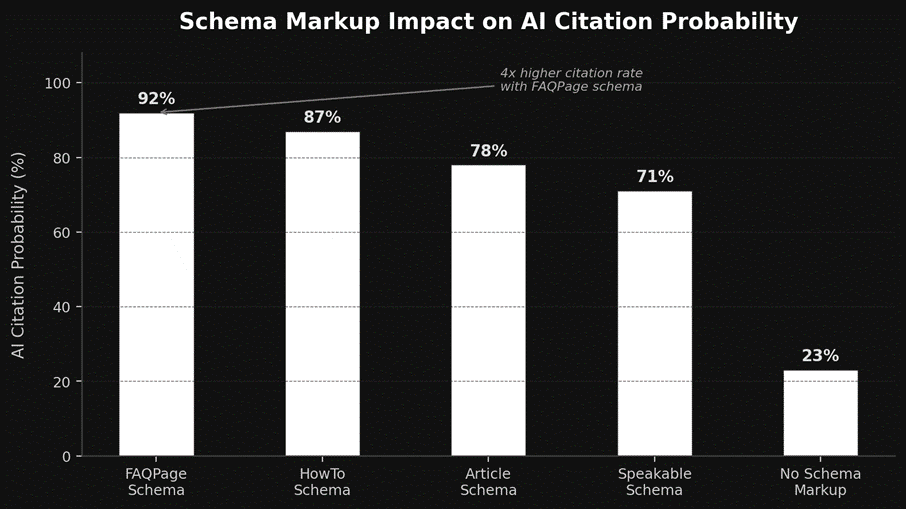
Here is what to implement on your pages right away.
• Add FAQPage schema to every article that includes a question-and-answer section.
• Use HowTo schema for step-by-step guides and process-oriented content.
• Implement Article schema with author credentials and publication dates on every blog post.
• Test your markup with Google’s Rich Results Test before publishing.
Our guide on the 7 steps to get cited in AI search results walks through this process in detail for the full technical breakdown.
Why Does Content Structure Matter More Than Word Count?
Long articles do not automatically earn AI citations. AI models prefer content organized into clear, scannable blocks. Think of it this way: if a human can quickly find the answer on your page, so can ChatGPT.
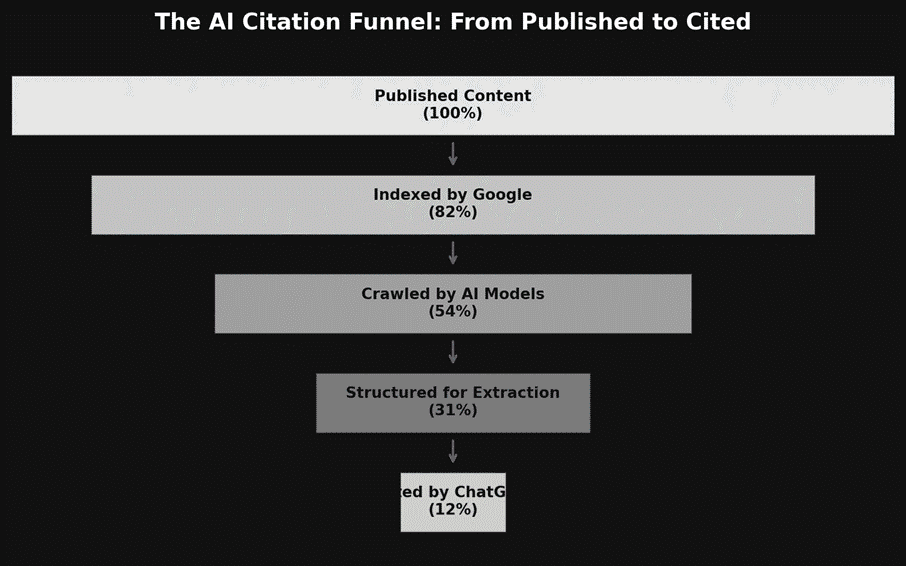
To move your content through this funnel, focus on these structural elements.
• Start every section with a direct, two-sentence answer before expanding.
• Use numbered or bulleted lists for any process, comparison, or set of recommendations.
• Keep your total word count between 1,200 and 2,000 words for Google and 800 to 1,500 for AI optimization.
• Place your most important information above the fold and within the first 300 words.
Startups that invest in AEO-optimized blog writing early on build a compounding advantage as AI search continues to grow.
The Bottom Line
Getting your content cited by ChatGPT is not a mystery. It comes down to answering questions clearly, structuring content for easy extraction, and implementing the right schema markup. Startups that optimize for AI search now will have a serious head start over those that wait.
If you are ready to build a content strategy that ranks on Google and gets cited by AI.
Viral- Impact helps startups do exactly that. Show up where your customers are actually looking.