Learn how to write content that gets cited in AI-generated answers from ChatGPT, Perplexity, and Google AI Overviews.
You can write content that appears in AI-generated answers by structuring clear, direct responses to specific questions and backing them up with facts. AI platforms like ChatGPT, Perplexity, and Google AI Overviews pull from pages that answer questions fast, use simple language, and follow a logical format.
Most startup founders and marketers pour hours into blog posts that never get picked up by AI tools. The reason is simple. These tools do not read content the same way humans do. They scan for structure, relevance, and authority. If your page buries the answer three paragraphs deep, AI skips right past it.
Getting cited in AI search results is not about luck. It comes down to how you organize your writing and whether you give the algorithm what it needs upfront. Here is how to make that happen.
What Format Works Best for AI Citations?
AI engines prefer content that gets straight to the point. The format you choose directly affects whether your content gets cited or ignored.
• Start every section with a direct answer in one or two sentences before expanding on details.
• Use question-based subheadings that match how real people type queries into ChatGPT or Google.
• Break complex ideas into bullet points so AI tools can extract clean, scannable data.
• Keep sentences under 20 words whenever possible to improve readability and citation chances.
• Include specific numbers, statistics, and data points that AI tools love to reference.
A strong AEO blog writing strategy builds every article around this kind of structure from the start.
Does Schema Markup Help AI Find Your Content?
Yes. Schema markup acts like a label that tells AI exactly what your content is about. Without it, algorithms have to guess with what they know.
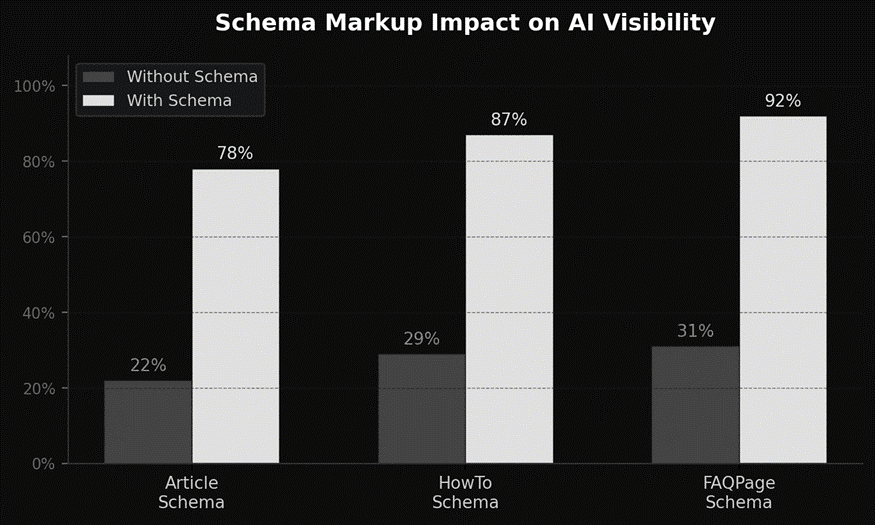
• FAQPage schema increases AI citation rates by up to 92% because it mirrors how AI tools structure answers.
• HowTo schema works great for step-by-step guides, pushing citation rates to around 87%.
• Article schema helps AI understand authorship, publish date, and topic relevance at a base level.
• Combining multiple schema types on one page gives AI tools a layered context that competitors miss.
If you are serious about ranking across both Google and AI platforms, a complete SEO and AEO growth strategy should include schema implementation from day one.
How Long Should AI-Optimized Content Be?
There is a sweet spot. Too short and Google will not rank it. Too long, and AI tools ignore the fluff.
• Aim for 800 to 1,500 words when writing primarily for AI citations.
• For Google rankings, 1,200 to 2,000 words still perform best in competitive niches.
• The overlap zone between 1,000 and 1,500 words gives you the best shot at ranking on both.
• Every paragraph should earn its place by adding value, not padding word count.
Our guide on the 7 steps to get cited in AI search results breaks down the full process with a practical framework you can follow today.
The Bottom Line
Writing content for AI-generated answers is not a mystery. It comes down to clear structure, direct answers, proper schema, and the right word count. If your startup wants to show up where people are actually searching now, including ChatGPT, Perplexity, and Google AI Overviews, you need to build content that these tools can trust and easily parse.
Stop guessing and start structuring. Visit Viral-Impact to see how we help startups get found on Google and AI platforms alike.