Learn how to create a clear user journey on your website that converts more visitors into paying customers.
A clear user journey maps every step a visitor takes from landing on your site to completing a goal like signing up or buying. When you remove friction and guide people through a logical path, your website stops losing visitors and starts converting them into customers.
Most startup websites fail here. They dump everything on the homepage and hope something sticks. But visitors make snap decisions; research shows people judge a website within 0.05 seconds. If they can’t figure out where to go next, they leave. Building a user journey is about creating an intentional flow that walks people from curiosity to commitment without overthinking.
What Are the Key Stages of a Website User Journey?
Every effective user journey follows a predictable pattern. Understanding these stages helps you design pages that match visitor intent at each point.
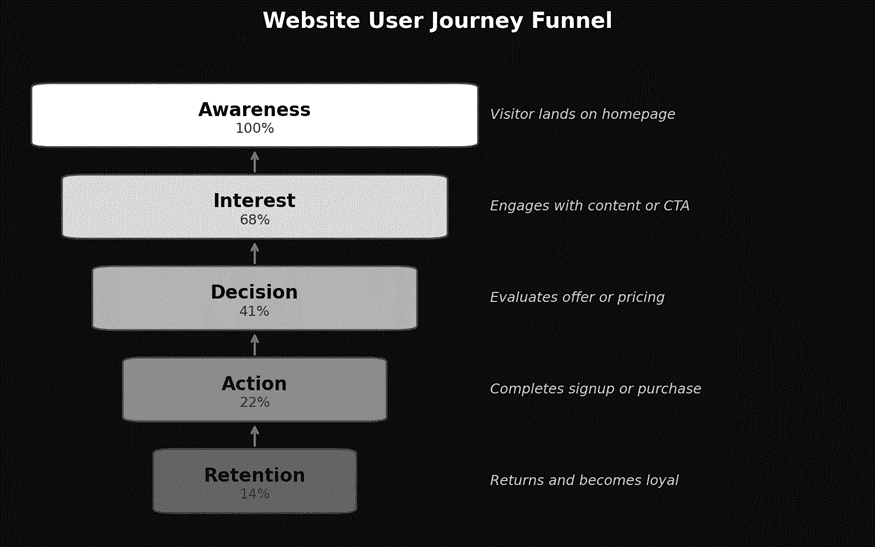
• Awareness: The visitor finds your site through search or social media. Your homepage must immediately answer who you are and what you offer.
• Interest: They explore further. Blog posts, case studies, and service pages keep them engaged by speaking directly to their problem.
• Decision: They compare options. Testimonials, pricing transparency, and clear differentiators push them toward choosing you.
• Action: Conversions happen here. Strong calls-to-action, simple forms, and fast processes make or break this stage.
• Retention: After converting, email follow-ups and helpful resources bring them back for more.
Why Do Visitors Leave Before Converting?
Knowing what drives people away matters just as much as knowing what keeps them. These are the biggest culprits behind lost conversions.
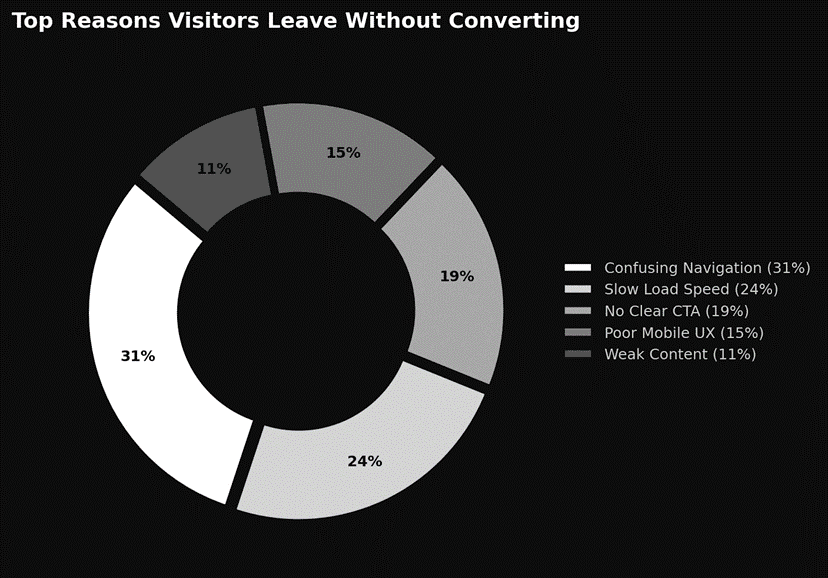
Confusing navigation tops the list because visitors shouldn’t need a map to find your pricing page. Every click should feel obvious. If people have to guess where to go, they won’t stick around.
How Do You Map a User Journey Step by Step?
You don’t need expensive software. Start with these practical steps any startup team can follow.
• Define your ideal visitor; Know who they are and what keeps them up at night. A solid buyer persona turns guesswork into targeted page design.
• Identify entry points; People don’t always start at your homepage. Blog posts, social profiles, and ads create different starting experiences. Make sure each one has a clear next step.
• Eliminate dead ends; Every page should lead somewhere. If a visitor reads a blog post with no CTA, you lose a lead. Add relevant links and calls to action throughout.
• Test and refine; Use heatmaps and session recordings to spot where people get stuck. Small tweaks to button placement or headline copy can shift results fast.
A well-structured website actively guides visitors toward outcomes. If you need help building a conversion-focused website, working with a team that understands design and strategy makes a real difference.
What Role Does Landing Page Copy Play in the Journey?
Your landing page is the make-or-break moment. Great landing page copywriting speaks to a specific pain point, presents a clear solution, and removes every reason to hesitate. Keep headlines benefit-driven, cut filler, and place your primary CTA above the fold.
Not sure where to start? This guide on how to design a high-converting landing page breaks down the exact elements that separate pages that convert from pages that don’t.
The Bottom Line
Creating a clear user journey means thinking like your visitor, not the business owner. Strip away distractions, make every page earn its place, and always give people an obvious next step. When your website flows naturally from first click to final conversion, growth follows.
Want a team that builds websites and strategies designed to move people through the entire journey? Visit Viral-Impact and see how we help startups turn traffic into real, measurable growth.