How to Design a High-Converting Landing Page
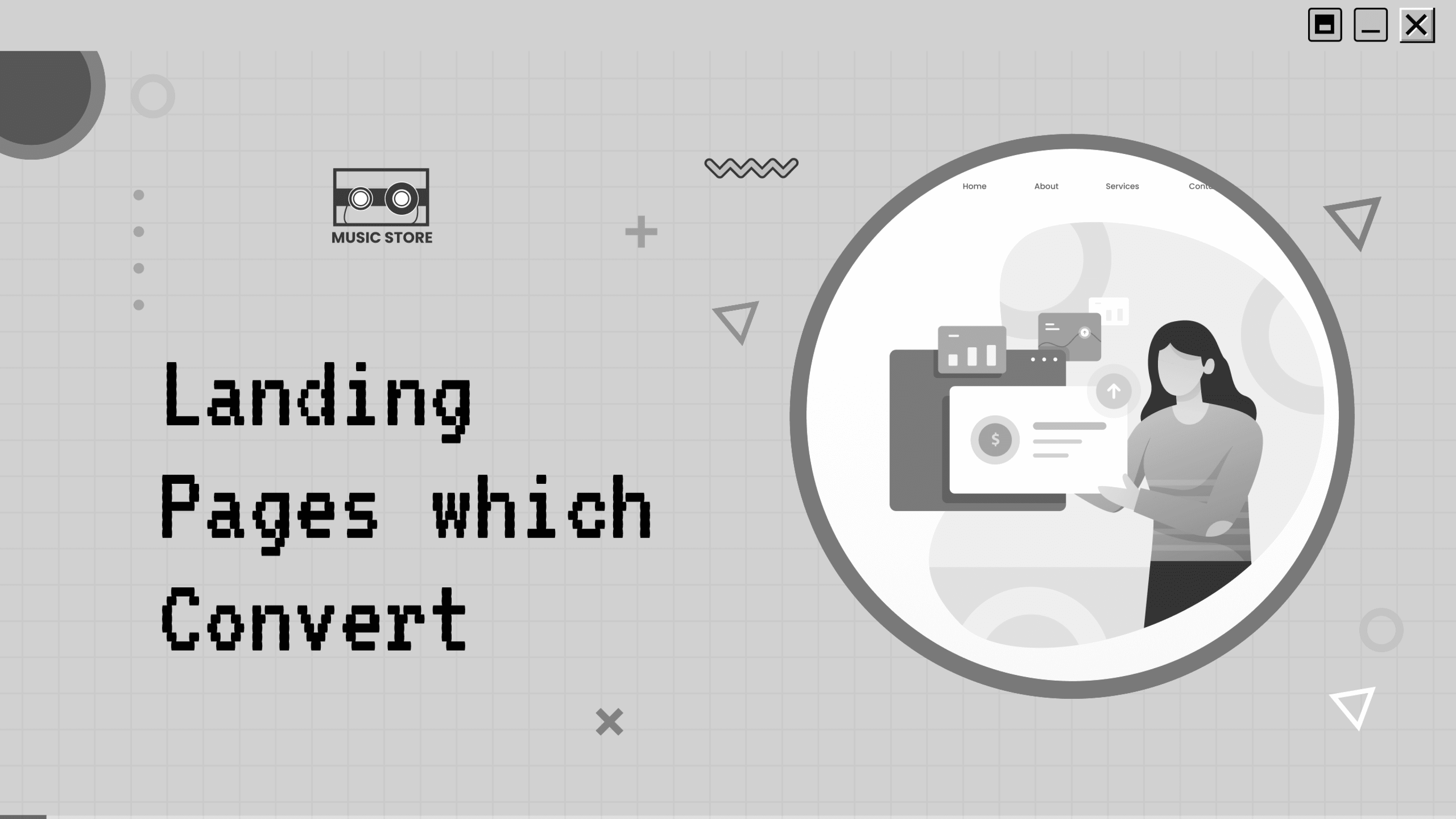
A landing page has one job: convert the visitor. It is not a homepage, not a portfolio, and not a company overview. When a startup invests in paid traffic or builds organic search rankings, every click needs a purposeful landing. Most pages lose conversions because they try to do too much, load too slowly, or bury the most important message beneath unnecessary copy.
This guide covers what high-performing landing pages actually do, from the structure of the first fold to the exact placement of the final CTA.
What Makes a Landing Page High-Converting
Conversion rate optimization begins before you open a design tool. A well-built landing page needs four elements working in unison: a clear value proposition, a friction-free path to the CTA, trust signals that reduce doubt, and a load speed that does not punish the visitor.
According to Unbounce's 2024 Conversion Benchmark Report, median conversion rates across industries fall between 2.6% and 6.1%. Pages that consistently exceed 10% share one trait: they remove every element that does not support the primary action.
Before building, clearly define the following:
Who is landing on this page, and what do they already understand about your offer?
What specific outcome the visitor is looking for when they arrive?
What single action do you want them to take before leaving?
What objection is most likely to block them from converting?
Answer those four questions, and the page structure practically writes itself.
Nail the Above the Fold Section
The above-the-fold section is the content visible without scrolling. This is your highest-value real estate. A weak headline here ends the experience before it begins.
A strong above-the-fold section needs three components working together:
A headline that names the specific outcome the visitor wants.
A subheadline that adds specificity and handles the first objection.
A CTA button that tells the visitor exactly what happens when they click.
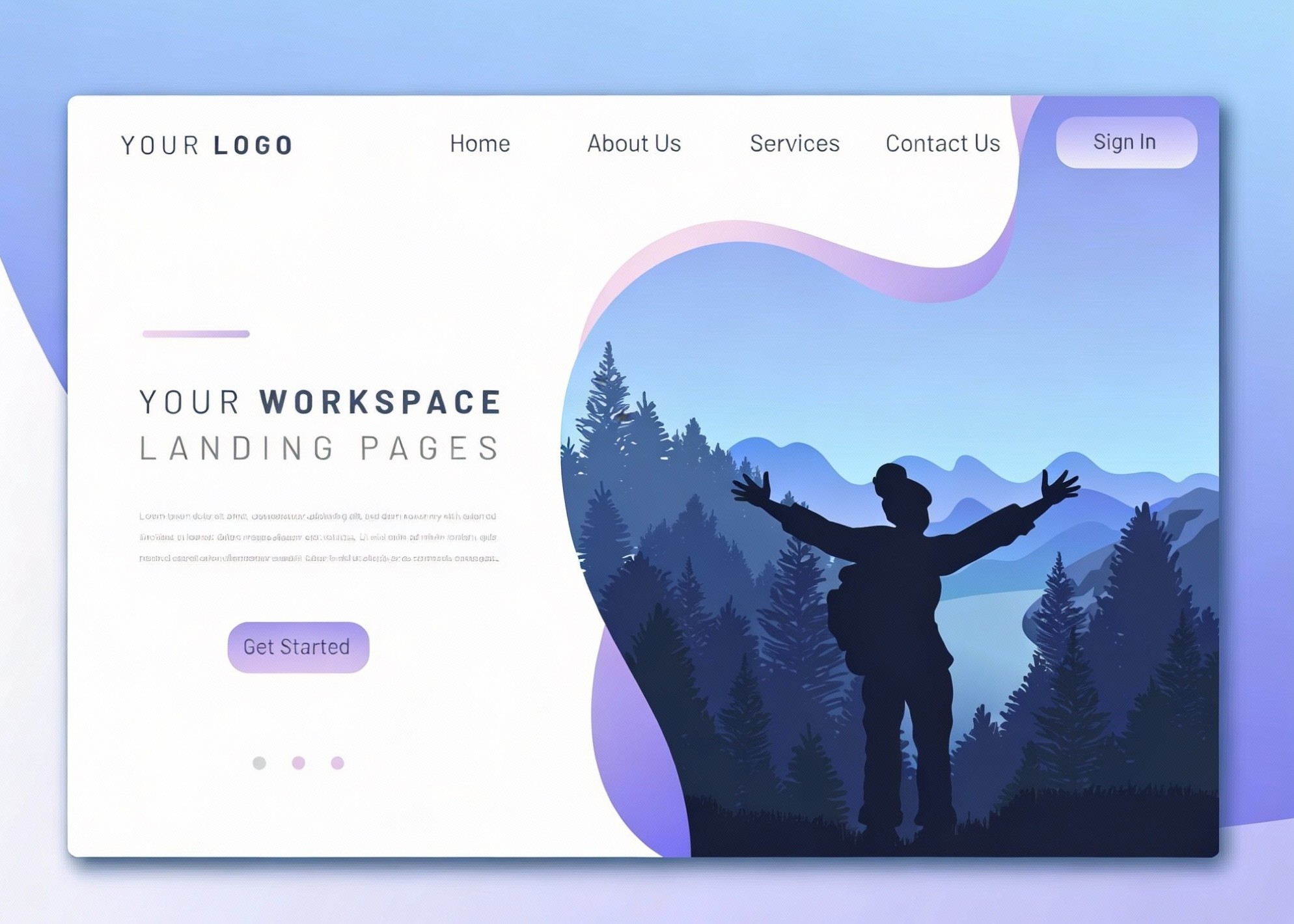
For B2B SaaS and tech companies, this section should also include a product screenshot, a short demo video, or a result-focused illustration. Visitors process visuals faster than text, and a well-chosen image reinforces your headline before the brain finishes reading it.
Working with a skilled UX design team is what separates a page that looks professional from one that actively guides visitors toward the action you want them to take.
Write Headlines That Stop the Scroll
The headline is the most tested element on any landing page. According to HubSpot research, 80% of visitors read the headline, but only 20% continue reading the rest of the content. That gap is why the headline carries the majority of the persuasion workload.
Effective landing page headlines follow a few proven structures:
Outcome-led: "Cut client onboarding from two weeks to two days."
Problem-led: "Still losing leads because your page loads too slowly."
Audience-specific: "The SEO platform designed for B2B startups past the seed stage."
Headlines that describe your company rather than the visitor's outcome consistently underperform. "We provide enterprise software solutions" is a feature declaration. The visitor's question is simple: What is in this for me? The headline must answer that before anything else.
Strong page copy is not about being clever. It is about removing every reason for the visitor to leave.
Use Trust Signals Strategically
Social proof and trust signals placed above the fold can lift conversions by up to 35%.
First-time visitors arrive with doubt. Your landing page may be their first encounter with your brand, and their default position is skepticism. Trust signals are the design and copy elements that reduce that friction before it blocks the conversion.
The most effective trust signals include the following:
Client logos from recognizable brands in your target sector.
Testimonials that reference a specific result, not a vague positive sentiment.
Quantified case study outcomes: "Increased qualified leads by 180% in 60 days."
Security badges are directly adjacent to any form collecting personal or payment data.
Media mentions and awards from credible industry publications.
Placement matters as much as presence. A strong testimonial positioned directly above the CTA does considerably more conversion work than one buried at the bottom of a long page.
Design Forms and CTAs for Zero Friction
The form and the CTA button are where conversions happen or fall apart. Every unnecessary field in a form is a reason to abandon it. Research from the Baymard Institute consistently confirms that abandonment rates climb with each additional field beyond what is genuinely needed.
For lead generation pages, limit forms to three fields: name, email, and one qualifying question. For demo bookings, adding the company name is acceptable. Payment forms must have security badges in direct visual range of the submit button.
CTA button copy is one of the most underrated elements of landing page design. Generic labels underperform because they communicate nothing about the outcome. Use copy that describes what the visitor receives:
"Book My Free Strategy Call"
"Download the Complete Checklist"
"Start My 14-Day Free Trial."
Button color should contrast sharply with the background. It does not need to match your brand palette. It needs to be the most visually dominant element in that section.
Optimize for Mobile and Page Speed
A page with perfect copy, a compelling offer, and strong social proof can still lose conversions if it loads slowly. According to Google, a one-second delay in mobile page load time reduces conversions by up to 20%.
Run every landing page through Google PageSpeed Insights before launch. Target a mobile score above 85. The most common problems are:
Uncompressed images sitting above the fold that delay first contentful paint.
Render-blocking JavaScript files that pause the browser before content loads.
Web fonts that load before any page content renders on screen.
Mobile layout requires a dedicated review pass, not just a responsive preview. Tap targets must be large enough for a thumb, and the CTA must be visible without scrolling on a standard phone screen.
Page speed also directly supports your organic growth goals. A fast, mobile-optimized page improves your Quality Score in paid search and sends positive experience signals to Google.
Test, Learn, and Iterate
A/B testing a single headline change can increase conversion rates by 30% or more.
Most landing pages are not built correctly on the first attempt. A/B testing is the only path from assumptions to evidence. Test one variable at a time to keep results readable. The highest-impact elements to test are the headline, CTA button copy, the hero visual or video, and the number of form fields.
A page converting at 3% that improves to 5% through testing delivers 67% more leads from identical traffic. That result compounds when combined with an SEO strategy that builds consistent inbound volume over time.
For context on how individual landing pages fit within your broader lead architecture, the guide on website structure explains how each page connects into a complete conversion funnel.
Table 1: Landing Page Conversion Rate Benchmarks by Industry (2024)
Industry | Average Conversion Rate | Top Performers |
|---|---|---|
Finance | 5.0% | 12.0%+ |
Education | 4.4% | 11.7%+ |
Healthcare | 3.6% | 11.0%+ |
eCommerce | 2.9% | 8.1%+ |
SaaS / Software | 3.0% | 9.3%+ |
B2B Services | 2.3% | 7.8%+ |
Source: Unbounce Conversion Benchmark Report 2024
Table 2: Impact of Form Field Count on Conversion Rate
Number of Fields | Avg. Conversion Rate | Change vs 3 Fields |
|---|---|---|
3 Fields (Baseline) | 25.0% | — |
4 Fields | 20.1% | -19.6% |
5 Fields | 15.2% | -39.2% |
6 Fields | 11.4% | -54.4% |
7+ Fields | 8.9% | -64.4% |
Source: Baymard Institute / HubSpot Form Research
FAQs
Q1:What is a good landing page conversion rate?
A conversion rate between 2% and 5% is considered average across most industries. Top-performing pages in finance and education regularly exceed 10%. Getting above 8% typically requires consistent A/B testing and a tight match between the ad or search query and the page headline.
Q2:How many CTAs should a landing page have?
One primary CTA per page, repeated two to three times above the fold, mid-page, and near the bottom. Multiple competing CTAs split attention and reduce conversions. Every link on the page should either support the primary action or be removed.
Q3:Should a landing page have a navigation menu?
No. Removing navigation from a landing page typically increases conversions by 10% to 20%. Navigation gives visitors an exit route before they convert. Keep the page focused on a single path: read the offer, address the objection, take the action.
Q4:How long should a landing page be?
Length depends on the offer. Short pages (300 to 500 words) work for simple, low-commitment offers like newsletter signups. Long-form pages (1,000 words or more) work better for high-ticket products or services where visitors need more information before committing. The rule is: as long as it takes to answer every likely objection.
Q5:What is the difference between a landing page and a homepage?
A homepage serves multiple audiences and multiple goals. A landing page serves one audience and one goal. The homepage introduces your brand; the landing page closes a specific conversion. Landing pages should not include the same level of navigation or breadth of content that a homepage carries.

Start Building Pages That Actually Convert
Most startups lose 80% of their paid traffic to landing pages that were never built to convert. If your page is not delivering the leads your business needs, the problem is almost always fixable with the right structure, copy, and testing process. Viral Impact works with early-stage and scaling startups to build and optimize landing pages that turn traffic into a pipeline. Visit the Viral Impact website to see how the team can help you improve your conversion rates and grow faster.
A high-converting landing page is not a design project. It is a business asset built on a clear understanding of your visitor, your offer, and the exact friction points that stand between attention and action. The companies that treat their landing pages as something to test, refine, and improve over time are the ones that consistently outperform competitors spending the same amount on traffic.
Get the structure right, write copy that speaks to the visitor's outcome, and let real user behavior guide every revision from there.
Read more
Learn which marketing skills remain irreplaceable as AI transforms search, content, and strategy for the next decade.
Learn how to reposition your startup brand after a pivot and maintain marketing momentum without losing your audience.
Learn the key differences between AEO and SEO and discover which strategy your startup should prioritize in 2026.