Learn how to create a logo for your business that builds trust, attracts customers, and drives long-term growth.
You create a business logo by defining your brand identity first, then choosing colors, typography, and a visual style that reflects your mission and target audience. A strong logo builds instant trust, makes your brand memorable, and sets you apart from competitors.
Most startup founders rush through logo design. They grab a free template, pick random colors, and move on. Months later, nobody remembers their brand. Your logo sits on your website, emails, social profiles, and pitch decks. Getting it right from day one saves you from a costly rebrand later.
What Makes a Good Business Logo?
A good logo communicates who you are within seconds. Here is what separates forgettable logos from iconic ones:
• Simplicity: Clean, uncomplicated designs scale well across business cards, billboards, and favicons.
• Relevance: Your logo should reflect your industry. A fintech startup needs different visuals than a wellness brand.
• Versatility: It must look sharp in black and white, on dark backgrounds, and at tiny sizes.
• Memorability: Distinctive shapes and intentional color choices help people recall your brand after one glance.
• Timelessness: Trendy design fades fast. Aim for a logo that still feels fresh five years from now.
How Do I Start Designing My Logo Step by Step?
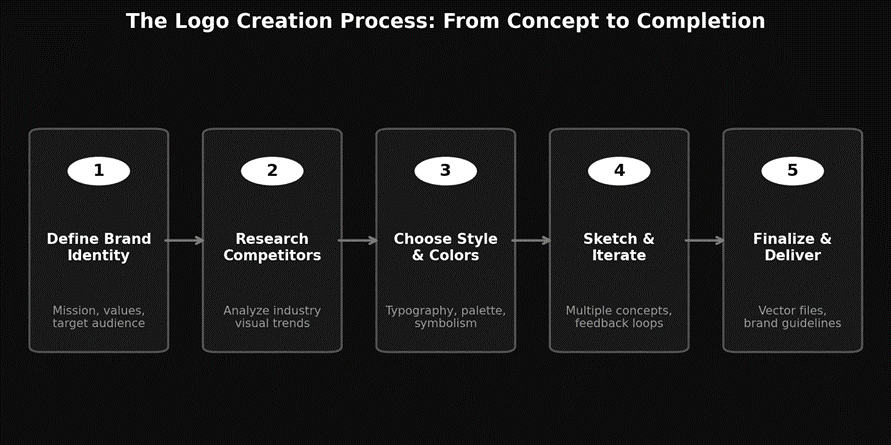
Follow this process and avoid the common mistakes that waste time and money:
• Define your brand personality. Write down three words that describe your company. Bold, minimal, playful, or corporate? This shapes everything.
• Research competitors. Study what others in your space are doing. Your goal is to stand out, not blend in.
• Pick your color palette. Colors trigger emotions. Blue signals trust, red signals urgency, and black signals sophistication. Choose two to three colors maximum.
• Select typography. Serif fonts feel established. Sans-serif fonts feel modern. Match the font to your brand personality.
• Sketch multiple concepts. Never settle on the first draft. Create at least five variations and gather feedback.
• Deliver final files. You need SVG and AI for print, plus PNG and JPEG for digital. Always request brand guidelines.
If design is not your strength, working with a professional team makes a real difference. Viral Impact’s logo and brand identity service helps startups build visual identities that convert visitors into customers.
Should I Use a Free Logo Maker or Hire a Designer?
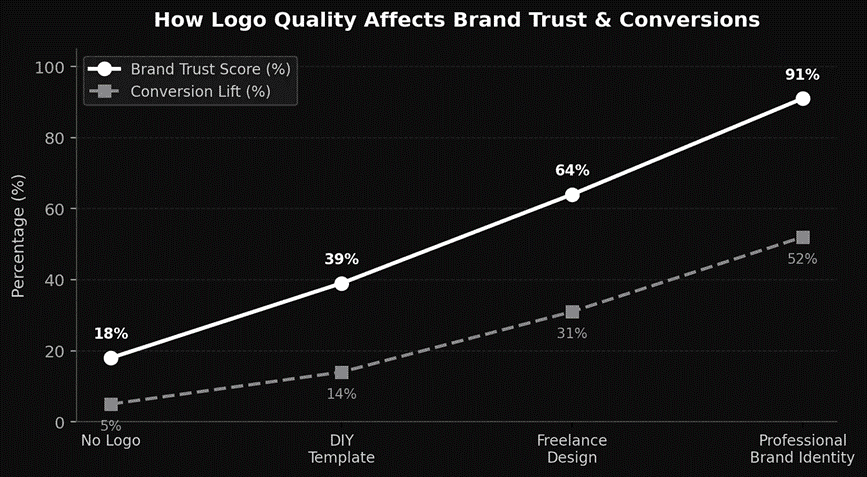
This depends on where you are in your journey. Here is a realistic comparison:
Factor | Free Logo Maker | Freelance Designer | Professional Agency |
Cost | $0 - $20 | $100 - $500 | $500 - $2,000+ |
Uniqueness | Low (templates) | Medium | High (custom) |
Brand Strategy | None | Limited | Full guidelines |
File Formats | PNG only | Varies | All formats |
Scalability | Poor | Fair | Excellent |
Free tools work for testing ideas, but they rarely produce something unique enough for long-term growth. When your website design and logo feel consistent, customers trust you faster.
What Mistakes Should I Avoid When Creating a Logo?
• Using too many colors or fonts. Stick to two or three of each.
• Copying competitors. Inspiration is fine, but imitation confuses your audience.
• Ignoring scalability. If your logo looks blurry as a social media icon, rework it.
• Skipping brand guidelines. Without clear rules, your logo gets used inconsistently.
Understanding why startups need a strong brand identity will help you see the bigger picture behind logo decisions.
The Bottom Line
Your logo is the first impression, the trust signal, and the recognition trigger that keeps your business top of mind. Whether you sketch it yourself or invest in professional design, build a visual identity that represents who you are and where you are headed.
Ready to build a brand identity that grows with your startup?
Visit Viral-Impact and let’s create something your audience actually remembers.