Learn how to structure your content for AI citations, featured snippets, and higher visibility in AI search results.
You create content that shows up in AI answers by writing clear, direct responses to specific questions and structuring them so AI platforms can easily pull and cite your information. The key is matching the exact format AI tools prefer: short answers, organized data, and topic authority that search engines already trust.
Why Do AI Answers Pull From Certain Content?
AI tools like ChatGPT, Perplexity, and Google AI Overviews don’t randomly pick sources. They scan the web for content that answers questions with precision and clarity. If your page reads like a wall of text, it gets skipped. If it gives a clean, structured answer, it gets cited.
Here’s what makes content attractive to AI engines:
• Direct answers placed within the first 40–60 words of a section. AI tools scan opening lines first.
• Question-based headings that mirror real search queries. Think “What is…” or “How does…” formatting.
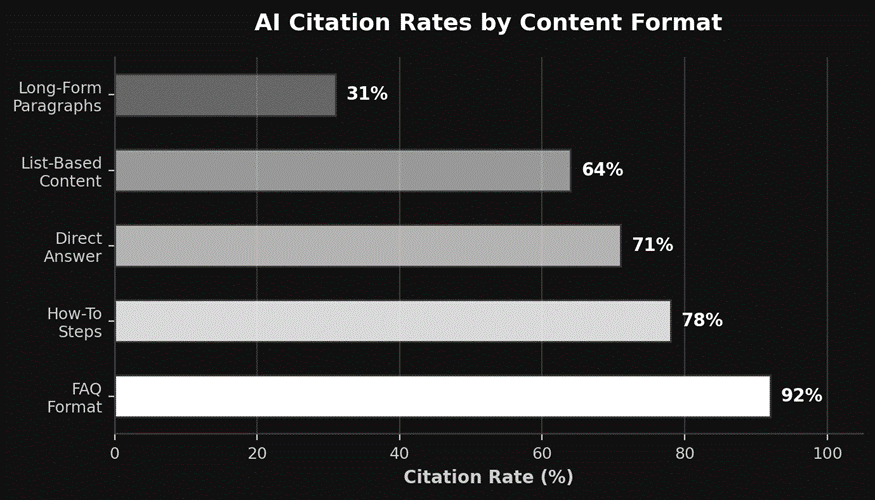
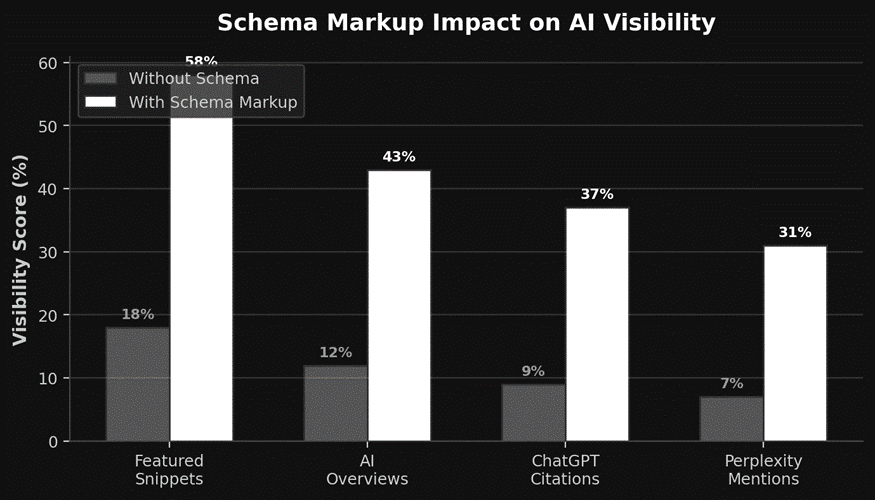
Structured data through schema markup. The FAQPage schema alone has a 92% AI citation rate when implemented correctly.
• Conversational tone that sounds human, not robotic. AI prefers content that reads naturally.
• Topical authority built across multiple related pages. One article won’t do it; you need a cluster.
What Format Works Best for AI Citations?
Not all content formats perform equally. Based on current data, the formats AI engines cite most are FAQ blocks, step-by-step guides, and concise definition-style answers.
To increase your chances:
• Write each section as a standalone answer. AI tools pull sections, not full articles.
• Keep paragraphs under 50 words. Shorter blocks are easier for algorithms to extract.
• Use bullet points for any list of three or more items. Lists get prioritized in featured snippets and AI overviews.
• Add AEO answer blocks; a question header followed by a 40–60 word direct answer right below it.
• Implement Article, FAQPage, and HowTo schema markup on every relevant page.
How Do You Build Topic Authority for AI Search?
AI platforms trust websites that demonstrate deep knowledge on a subject. A single blog post rarely gets cited. But a cluster of interlinked content covering every angle of a topic signals authority.
Steps to build that authority:
• Pick one core topic and create 5–10 supporting articles around it.
• Link every supporting article back to a pillar page that covers the topic comprehensively.
• Update older content with fresh data and new AEO strategies regularly.
• Earn backlinks from credible sources to boost domain trust.
• Add author bios with real credentials. AI engines now weigh E-E-A-T signals heavily.
The Bottom Line
Getting your content into AI answers isn’t about tricks or shortcuts. It’s about writing clearly, structuring smartly, and building genuine authority on topics your audience cares about. Start with one question that your customers ask most. Answer it better than anyone else. Add the right schema. Then build outward from there.
If you’re a startup looking to get cited by AI search engines and rank on Google at the same time, Viral Impact can help you build that content strategy from the ground up.
Visit Viral-Impact to see how we help startups grow faster through SEO, AEO, and smart content systems.