What is Answer Engine Optimization? Top AEO Strategies
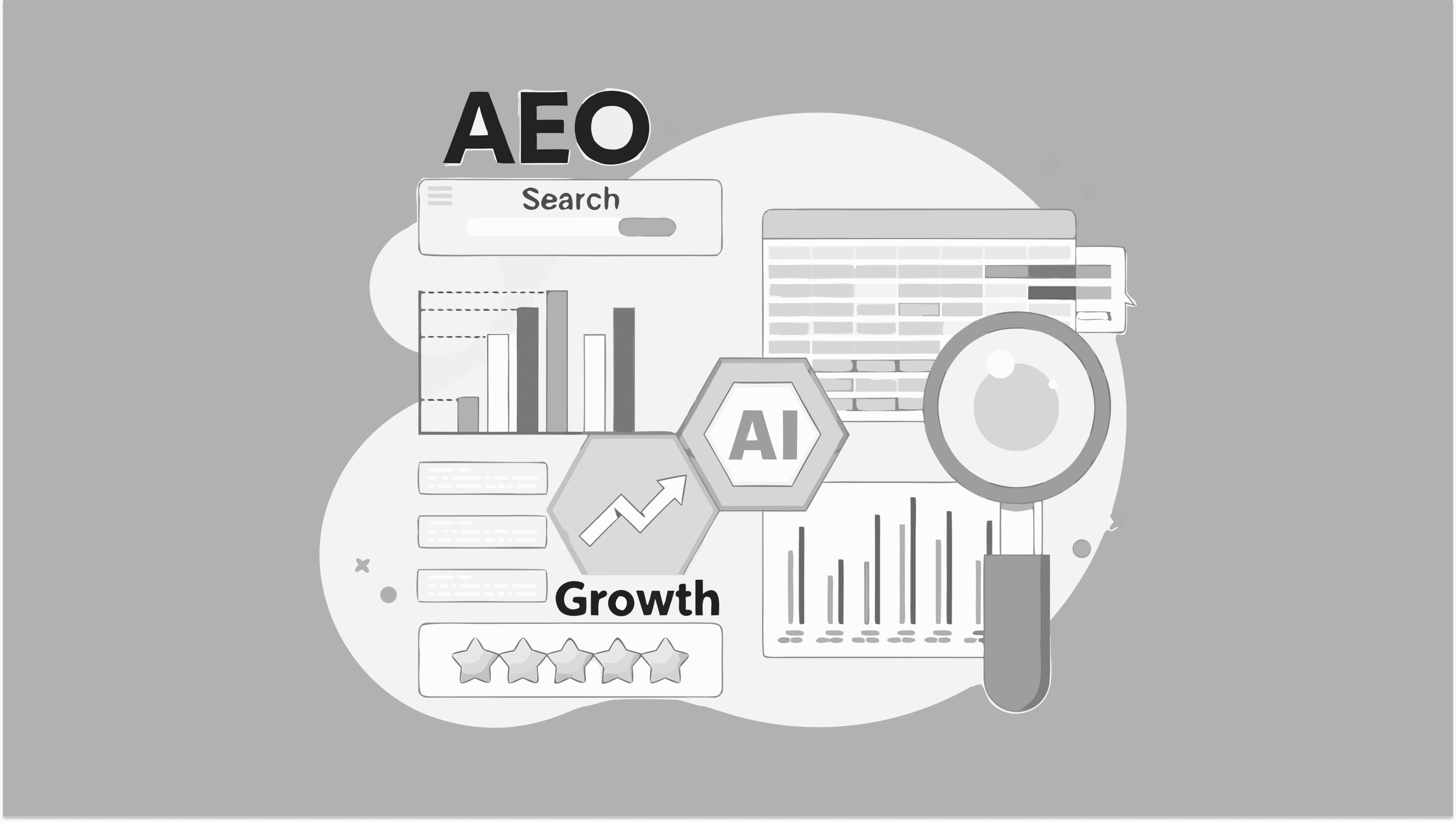
When you ask Google a question, have you noticed the answer appearing instantly at the top of results, before any website links? That's Answer Engine Optimization (AEO) in action.
Answer Engine Optimization (AEO) is the practice of optimising your content to appear as direct answers in search results, voice assistant responses, and AI-generated summaries. Rather than simply ranking as a link, AEO positions your content as THE answer that search platforms deliver to users.
According to HubSpot research, 79% of users who already use AI for search believe it offers a better experience than traditional search engines. This shift toward instant answers is reshaping how businesses must approach digital visibility.
Why AEO Matters in 2026
The search landscape has fundamentally changed. Users no longer want to click through multiple links, they want immediate answers.
Key trends driving AEO importance:
Zero-click searches are rising: Over 60% of Google searches now end without a click to any website
Voice search is mainstream: Voice commerce is projected to reach $80 billion annually
Featured snippets dominate: Position zero captures 35% of clicks when present
AI summaries are expanding: Google AI Overviews appear in 88% of informational queries
According to Gartner predictions, 25% of organic search traffic will shift to AI chatbots and virtual agents by 2026. Businesses that ignore AEO risk becoming invisible to a growing segment of searchers.
The business impact:
Stack Overflow experienced an 18% drop in visits after ChatGPT launched
Yet NerdWallet reported 35% revenue growth despite 20% less site traffic, by dominating answer formats
The difference? NerdWallet optimised for being THE answer, not just A result
How Answer Engines Work
Understanding answer engine mechanics helps you optimise effectively.
Answer engines include:
Featured Snippets: The answer box at the top of Google results
People Also Ask: Expandable question boxes in search results
Voice Assistants: Siri, Alexa, Google Assistant responses
AI Overviews: Google's AI-generated summaries
Knowledge Panels: Information boxes for entities and topics
How they select answers:
Query Analysis: The engine interprets the question's intent and context
Content Matching: It identifies pages that directly answer the question
Authority Assessment: It evaluates source credibility and expertise
Format Extraction: It pulls the clearest, most concise answer passage
Response Delivery: It presents the answer in the appropriate format
Critical insight: Answer engines don't just want relevant content, they want content structured specifically for extraction and delivery.
AEO vs SEO: Key Differences
While AEO builds on SEO foundations, several critical distinctions require different strategies.
Factor | Traditional SEO | Answer Engine Optimization |
|---|---|---|
Primary Goal | Rank high in search results | Become THE direct answer |
Success Metric | Rankings, clicks, traffic | Featured snippet wins, voice mentions |
Content Focus | Comprehensive coverage | Concise, extractable answers |
User Interaction | User clicks through to website | User receives answer without clicking |
Query Types | Keyword phrases | Natural language questions |
Optimisation Target | Search engine algorithms | Answer extraction systems |
Key distinction: SEO drives users TO your website. AEO makes your content the answer users receive, sometimes without ever visiting your site.
Why both matter:
AEO isn't replacing SEO, it's extending it. Strong SEO foundations (authority, quality content, technical health) support AEO success. But AEO requires additional tactics focused on answer formats and direct response delivery.
Our SEO & GEO Strategy services help businesses optimise for both traditional rankings and answer engine visibility.
AEO vs GEO: Understanding the Relationship
AEO and GEO (Generative Engine Optimization) are related but distinct strategies.
Aspect | AEO | GEO |
|---|---|---|
Target Platforms | Featured snippets, voice assistants, People Also Ask | ChatGPT, Perplexity, Google AI Overviews |
Answer Format | Single extracted answer | Synthesised multi-source response |
Citation Style | One source highlighted | Multiple sources cited |
Primary Focus | Concise, direct answers | Comprehensive, authoritative content |
Emergence | Mid-2010s with featured snippets | 2023 with generative AI rise |
How they work together:
Content optimised for AEO often performs well in GEO because both reward:
Clear, direct answers
Well-structured content
Authoritative sources
Question-focused formatting
The main difference: AEO targets single-answer formats, while GEO targets AI systems that synthesise responses from multiple sources.
How to Optimise for AEO: Core Strategies
Implementing AEO best practices positions your content to capture answer placements.
1. Target Question-Based Keywords
Answer engines respond to questions. Your content must address them directly.
Question research tactics:
Analyse "People Also Ask" boxes for your target topics
Use tools like AnswerThePublic and AlsoAsked
Review customer support queries and sales call questions
Monitor industry forums and Reddit discussions
Check voice search query patterns (longer, conversational)
Question types to target:
What is / What are
How to / How do
Why does / Why is
When should / When do
Which is best / Which should I
2. Structure Content for Extraction
Answer engines need content they can easily extract and display.
Structural best practices:
Lead with the answer: Put the direct answer in the first 40-60 words
Use question-based headings: Match H2s to exact questions users ask
Format for snippets: Use numbered lists, bullet points, and tables
Keep paragraphs short: 2-3 sentences maximum for easy extraction
Define terms clearly: Start definitions with "X is..." format
Example structure:
3. Implement Schema Markup
Structured data helps answer engines understand and trust your content.
Essential schema types for AEO:
FAQPage: For question-and-answer content
HowTo: For step-by-step instructions
Article: For blog posts and guides
LocalBusiness: For location-based queries
Product: For product-related questions
Review: For comparison and recommendation queries
Schema doesn't guarantee featured snippets, but it significantly improves your chances by making content machine-readable.
4. Optimise for Voice Search
Voice queries require specific optimisation approaches.
Voice search characteristics:
Longer queries (average 29 words vs 4 for typed searches)
Conversational, natural language phrasing
Often location-based ("near me")
Question-focused format
Mobile-first context
Voice optimisation tactics:
Write in conversational tone
Target long-tail question phrases
Include location modifiers where relevant
Ensure mobile-friendly page experience
Optimise for fast page load speeds
Our Blog Content services create AEO-optimised content structured for featured snippets and voice search.
AEO Content Formats That Win
Certain content formats consistently capture answer placements.
High-performing AEO formats:
Format | Best For | Example |
|---|---|---|
Definition paragraphs | "What is" queries | 40-60 word direct definitions |
Numbered lists | "How to" queries | Step-by-step instructions |
Bullet lists | "Why" and "benefits" queries | Feature/benefit lists |
Tables | Comparison queries | Feature comparison charts |
FAQ sections | Multiple related questions | Q&A format content |
Content length considerations:
Featured snippet paragraphs: 40-60 words optimal
List snippets: 5-8 items typically displayed
Table snippets: 3-4 columns, 5-10 rows maximum
Full page content: 1,500-2,500 words to establish authority
Measuring AEO Success
Tracking AEO performance requires different metrics than traditional SEO.
Key AEO metrics:
Featured snippet ownership: Percentage of target queries where you hold position zero
Voice search appearances: Mentions in voice assistant responses
People Also Ask inclusions: Presence in expandable question boxes
Zero-click impressions: Search Console impressions without clicks
Brand mention growth: Increases in branded search volume
Tools for AEO tracking:
Tool | Function |
|---|---|
Google Search Console | Track featured snippet appearances and impressions |
Semrush Position Tracking | Monitor position zero rankings |
Ahrefs SERP Features | Identify featured snippet opportunities |
HubSpot AEO Grader | Analyse AI answer engine visibility |
Manual voice testing | Query voice assistants with target questions |
Testing process:
Search target questions in Google and note featured snippets
Ask voice assistants your target questions
Track which competitors hold answer positions
Monitor changes after content optimisation
Our SEO & GEO Optimisation services include comprehensive AEO tracking and reporting.
Common AEO Mistakes to Avoid
Many businesses fail at Answer Engine Optimization by making these errors:
1. Burying the Answer Placing the direct answer deep in content instead of leading with it. Answer engines extract from the top, front-load your answers.
2. Over-Optimising for Keywords Stuffing keywords instead of writing natural, conversational responses. Answer engines prioritise clarity over keyword density.
3. Ignoring Question Format Writing content without question-based headings. Match your H2s to exact questions users ask.
4. Neglecting Mobile Experience Slow, poorly-formatted mobile pages hurt AEO performance. Most voice searches happen on mobile devices.
5. Missing Schema Markup Failing to implement structured data that helps engines understand your content. Schema is table stakes for AEO.
6. Creating Thin Answers Providing surface-level responses without depth. While answers should be concise, the supporting content must demonstrate expertise.
The Future of AEO
Answer Engine Optimization will continue evolving as AI capabilities expand.
Trends shaping AEO's future:
Multimodal answers: Visual, audio, and text responses combined
Personalised responses: Answers tailored to user context and history
Conversational depth: Follow-up question handling becoming standard
Cross-platform consistency: Same answers across devices and platforms
Real-time information: Fresher content prioritised for timely queries
Strategic implications:
Businesses that master AEO now will maintain visibility as answer formats become increasingly dominant. The fundamentals, clear answers, structured content, demonstrated expertise, will remain constant even as platforms evolve.


Ready to Make Your Content THE Answer?
Answer Engine Optimization isn't optional anymore, it's essential for visibility in modern search. As users increasingly expect instant answers from featured snippets, voice assistants, and AI summaries, businesses must optimise specifically for these formats.
At Viral Impact, we help B2B and SaaS companies implement comprehensive AEO strategies that capture featured snippets, win voice search placements, and establish authority in answer formats. From content structuring and schema implementation to ongoing optimisation, our integrated approach ensures your brand becomes the answer users receive.
Stop competing for clicks. Start becoming THE answer.
Read more
Learn which marketing skills remain irreplaceable as AI transforms search, content, and strategy for the next decade.

Learn how to reposition your startup brand after a pivot and maintain marketing momentum without losing your audience.
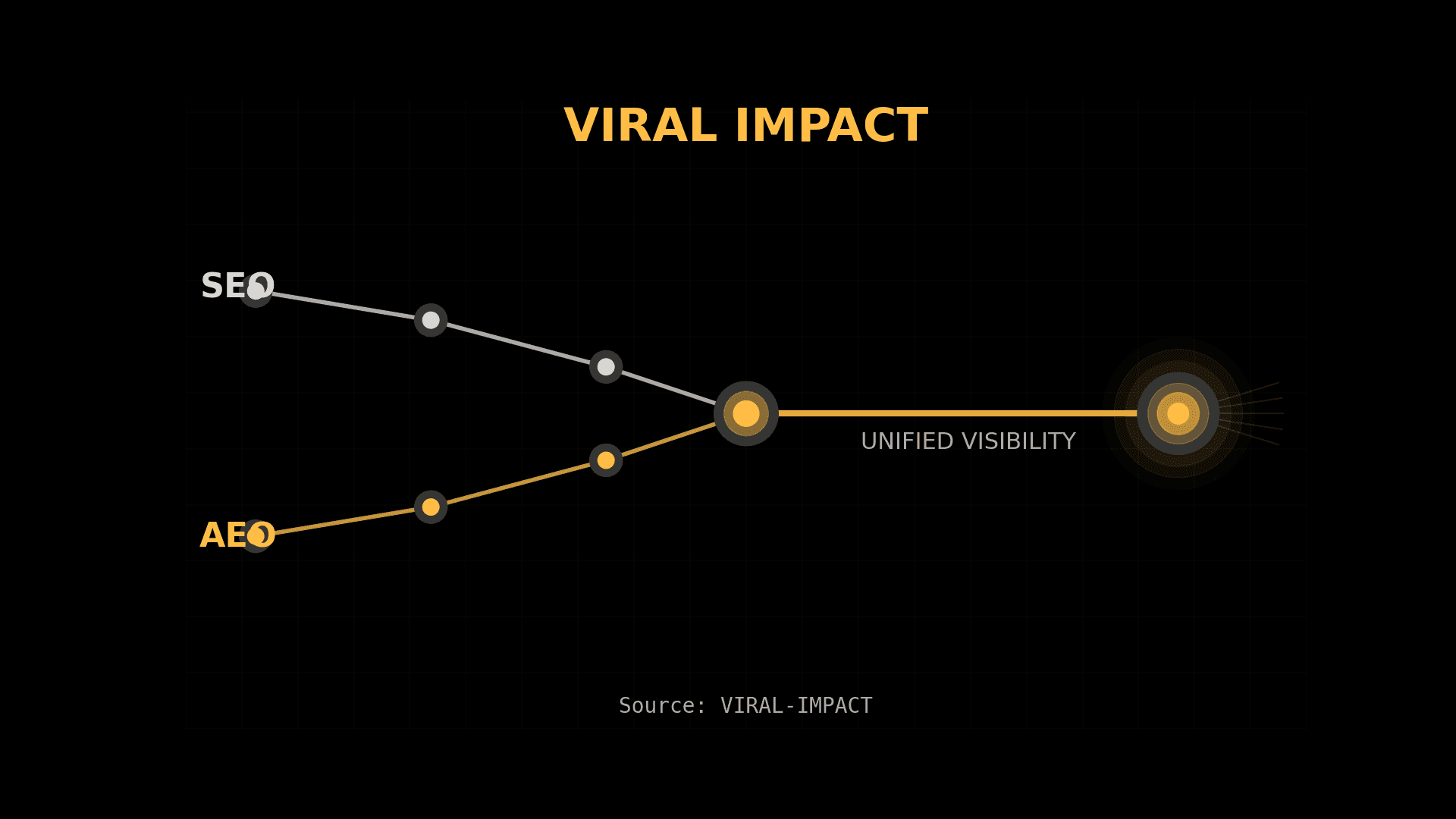
Learn the key differences between AEO and SEO and discover which strategy your startup should prioritize in 2026.