Learn the exact website design strategies that turn your visitors into customers through clear messaging and smart layouts.
A high-converting website combines clear messaging, fast load times, and strategic layout to guide visitors toward action. When every element serves a purpose, visitors stop bouncing and start buying.
Most startup founders pour money into driving traffic, but forget one critical truth. Your website is not a digital brochure. It is your hardest-working salesperson. And if that salesperson mumbles, visitors leave.
The good news? Designing a website that converts is not about flashy animations or trendy aesthetics. It comes down to a handful of principles that work across every industry.
What Makes a Website Convert?
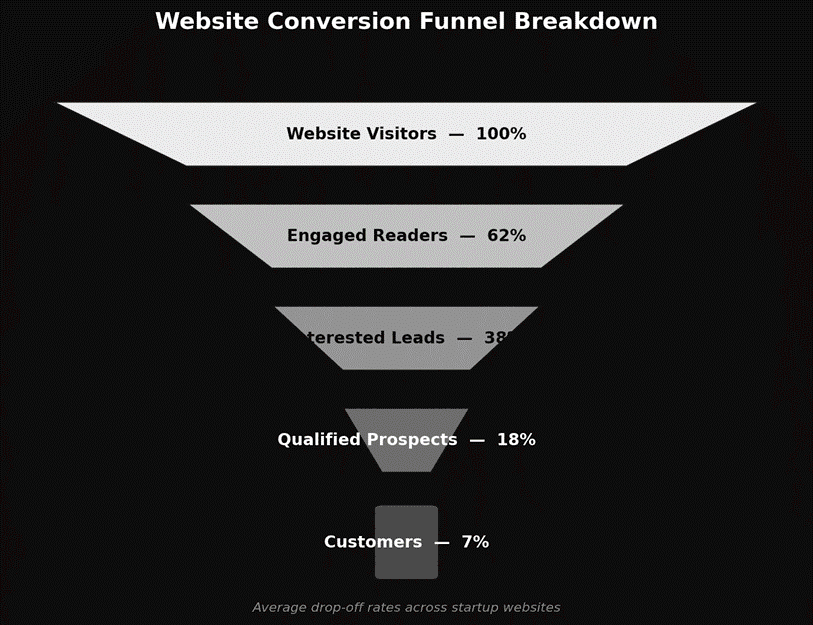
Conversion happens when a visitor takes the action you want. That could be signing up, booking a demo, or making a purchase. Research shows that small changes in design and copy can lift conversions by 200% or more.
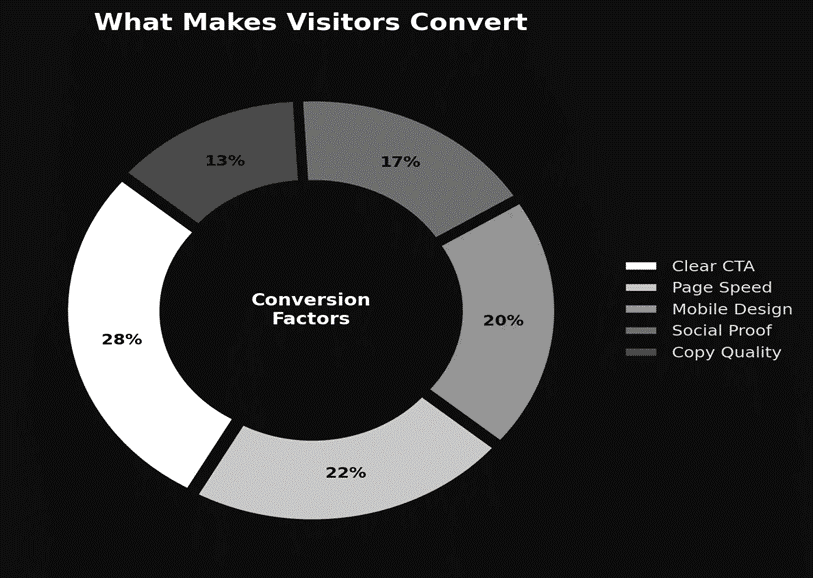
Here is what actually moves the needle:
One clear call to action per page: When visitors see too many options, they choose none. Focus each page on a single goal.
Headline that speaks to a pain point: Your visitor should read your headline and think, “This is exactly what I need.”
Social proof above the fold: Testimonials, client logos, or case study numbers build instant trust before someone scrolls.
Fast loading speed: Every additional second of load time drops conversions by roughly 7%. Compress images, minify code, and choose lightweight frameworks.
Mobile-first design: Over 60% of web traffic now comes from mobile devices. If your site does not look clean on a phone, you are losing more than half your audience.
How Should I Structure My Pages for More Conversions?
Page structure matters more than most founders realize. Visitors scan before they read, and your layout needs to guide their eyes in the right direction.
Follow this proven structure:
• Hero section: Bold headline, supporting subhead, one CTA button, and a relevant visual.
• Problem section: Describe the pain your audience feels. Make them nod along.
• Solution section: Show how your product or service solves that pain.
• Trust section: Add testimonials, reviews, case studies, or media mentions.
• Final CTA section: Repeat your main call to action with urgency or a value reminder.
Professional website design and development follow this framework because it works. Every section earns the next scroll.
What Role Does Copywriting Play in Conversions?
Design gets attention. Copy closes the deal. You could have a beautiful site, but if your words feel generic or confusing, visitors will not convert.
Strong conversion copy does the following:
• Uses “you” language instead of “we” language.
• Leads with benefits, not features.
• Keeps sentences under 20 words.
• Removes jargon that your audience does not use.
This is exactly why landing page copywriting matters as much as visual design. The right words paired with the right layout create momentum that pushes visitors toward action.
If you need a step-by-step breakdown, check out our guide on how to design a high-converting landing page for practical tips you can apply today.
The Bottom Line
A website that converts is not built on luck or good looks alone. It is built on clear messaging, smart structure, and trust signals working together. If your startup needs a site that actually turns visitors into customers, Viral-Impact can help you build one that performs from day one.