Learn how to use social proof on your landing page and turn more visitors into paying customers.
Social proof works by showing new visitors that real people already trust your product. Place it near your CTAs, in the hero section, and at every point where a visitor might hesitate.
If someone lands on your page for the first time, they do not know you yet. They have not heard of you, never bought from you, and have no real reason to trust what you are saying not yet. Social proof fixes that. It shows people that others made the same decision and got real results. That is more persuasive than any headline you write yourself.
What Counts as Social Proof?
Not all praise works the same way. Real social proof is specific, credible, and tied to an actual person or company. Here are the types that convert best on landing pages:
• Customer testimonials: A short quote with a real name, photo, and job title
• Star ratings and review counts: Numbers pulled from Google, G2, Capterra, or Trustpilot
• Case study snippets: One-line results like “3x more leads in 60 days”
• Client logo strips: Brand names your audience already recognizes
• User and subscriber counts: “Trusted by 12,000+ SaaS founders”
• Media mentions: Press logos from Forbes, TechCrunch, or Product Hunt
• Video testimonials: A 30-to-60-second clip with a real face and voice
Each type works differently. Logos build credibility on sight. Numbers suggest scale. Personal testimonials build emotional connection. Use a mix depending on what your target audience responds to most.
Where to Place Social Proof on the Page
Placement matters more than most people realize. Do not drop all your reviews at the bottom. Put them exactly where doubt tends to show up.
• Hero section: A short quote or one trust stat right beneath your headline
• Just above your main CTA: One testimonial placed directly before the button
• Next to the pricing block: This is where visitors pause the longest
• Near forms and sign-up fields: Reassure people right before they commit
• Spaced throughout long pages: Every 2–3 scroll lengths to keep trust building
If your landing page has more than one CTA, every single one should have a piece of social proof nearby.
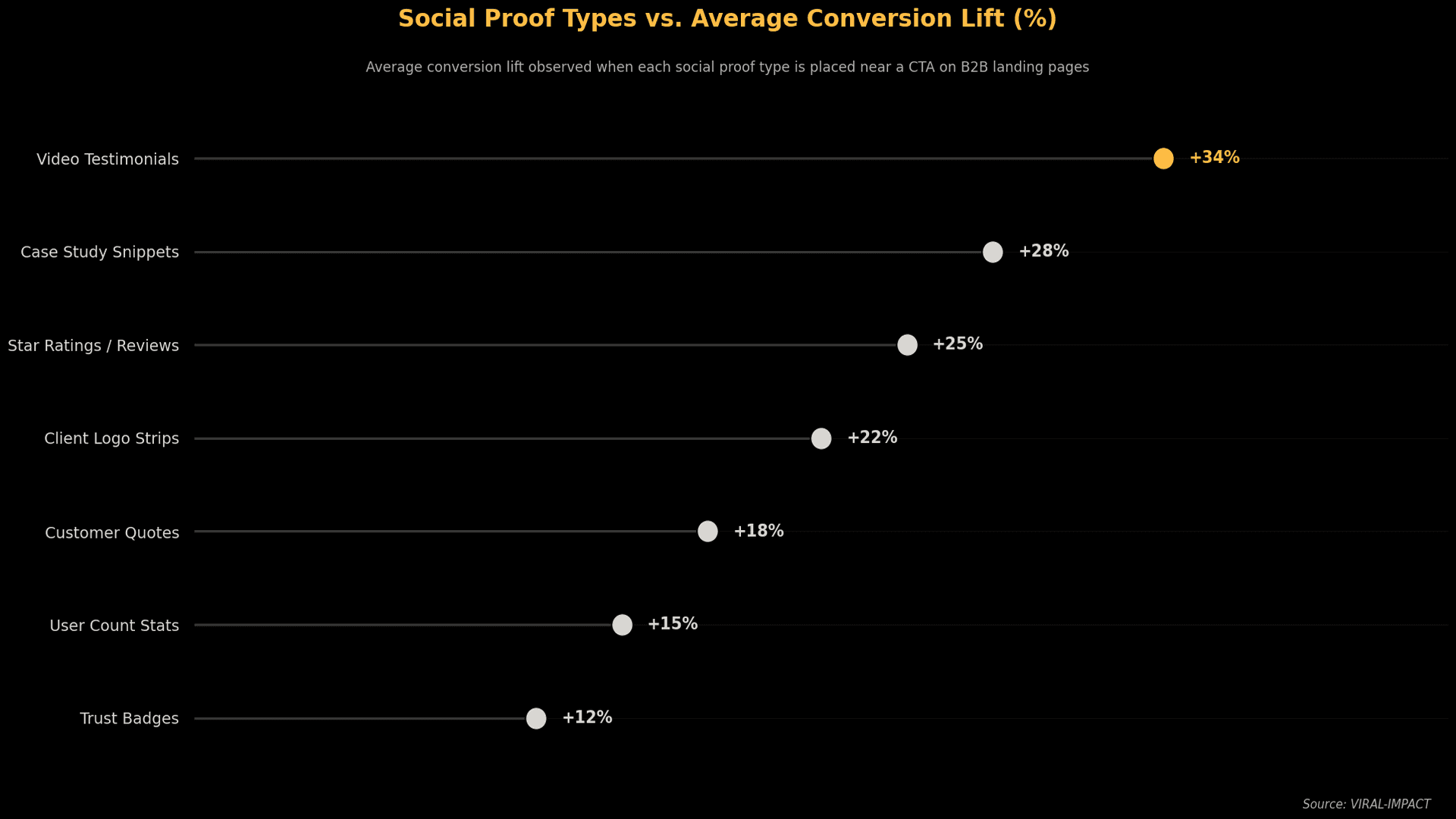
The chart below shows the average conversion lift each social proof type produces when placed near a CTA on a B2B landing page:
How to Write Testimonials That Actually Convert
“Great product, would recommend.” That line helps no one. Strong testimonials are specific. They describe a clear before-and-after.
The best-converting ones include:
• A specific result “Cut our onboarding time by 40%”
• The person’s real name, title, and company
• A reason what problem they had before using your product
• Language that sounds like a real person, not a polished press release
Do not ask customers to write testimonials from scratch. Pull exact phrases from emails, support chats, and review sites. Copy the raw language. That is what makes it believable.
Trust Badges and Security Signals
If you sell a SaaS product, trust badges carry more weight than people expect. These include:
• SSL and security certifications
• Payment processor logos (Stripe, PayPal, Visa)
• Industry award badges (G2 Leader, Capterra Best Value)
• Compliance marks (SOC 2, GDPR, ISO 27001)
Place them near checkout fields, pricing rows, and anywhere money changes hands. A small verified badge next to a payment form can lift conversions in ways that copy alone cannot.
Use Real Numbers, Not Vague Claims
“Thousands of happy customers” tells people nothing. “4,700 B2B teams trust this platform” is a different story.
Use actual figures wherever possible:
• Review scores: “847 reviews, 4.8 stars on G2”
• Outcome data: “3x more pipeline in 60 days”
• Geographic reach: “Used by teams in 40+ countries”
Your organic growth metrics also work here. Traffic improvements, ranking milestones, and engagement data all signal that your product delivers what you promise.
Three Mistakes That Kill Social Proof
Even the best testimonials lose impact when these errors appear:
• Placing them only at the bottom: Most visitors never scroll that far
• Using stock photos: A generic-looking headshot destroys credibility instantly
• Leaving old dates on testimonials: A 2020 quote on a 2026 page raises real questions
For a detailed walkthrough of how page structure affects conversions, read this guide on high-converting pages.
The Bottom Line
Social proof is not decoration. It is a conversion tool that works when placed with intent. Start with one sharp testimonial in your hero. Put another one right above your main CTA. Collect real numbers. Use real faces. Let your customers do the closing for you.
Ready to build a page that earns trust from the first scroll? Head to Viral Impact and explore what a trust-optimized landing page can do for your growth.