Learn how ChatGPT selects which websites to cite using trust and authority signals that boost your AI visibility.
ChatGPT cites websites that demonstrate high domain authority, factual consistency, and structured content that directly answers user questions. If your site lacks these trust signals, it simply won't appear in AI-generated responses, no matter how much content you publish.
Why Does ChatGPT Cite Some Websites and Not Others?
ChatGPT doesn't randomly pull sources. It relies on patterns learned during training and real-time browsing (when enabled) to identify content that meets specific quality thresholds. The model prioritises pages that are well-referenced across the web, factually accurate, and structured in a way that makes information easy to extract.
Think of it this way: ChatGPT is looking for the same things a careful researcher would like: credibility, clarity, and consistency.
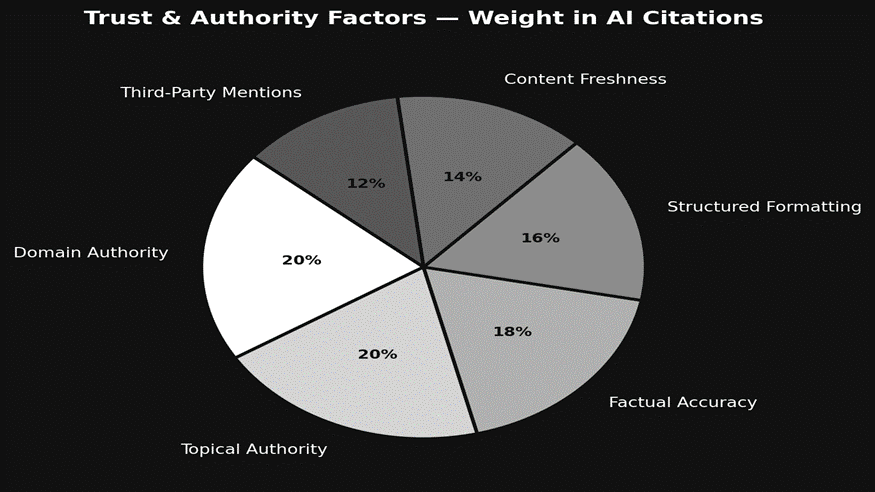
What Trust Signals Does ChatGPT Look For?
Here's what actually moves the needle when ChatGPT decides whether to cite your website:
• Domain Authority (DA/DR): Sites with strong backlink profiles from reputable sources get cited more frequently. A DR of 40+ significantly improves your chances.
• Topical Authority: Websites that cover a niche deeply and consistently are favoured over those with scattered, surface-level content.
• Content Freshness: Updated content signals relevance. Pages with recent publish or update dates perform better in AI citations.
• Factual Accuracy: ChatGPT cross-references information across multiple sources. If your data contradicts widely accepted facts, it gets filtered out.
• Structured Formatting: Clear headings, bullet points, FAQ sections, and direct answers make your content easier for AI models to parse and quote.
• Third-Party Mentions: Being referenced by other authoritative sites, press outlets, or academic sources increases your citation probability.
If you want a deeper understanding of how to optimise for AI answers, our SEO & AEO growth strategy covers the full framework.
The Authority Formula: How It All Connects
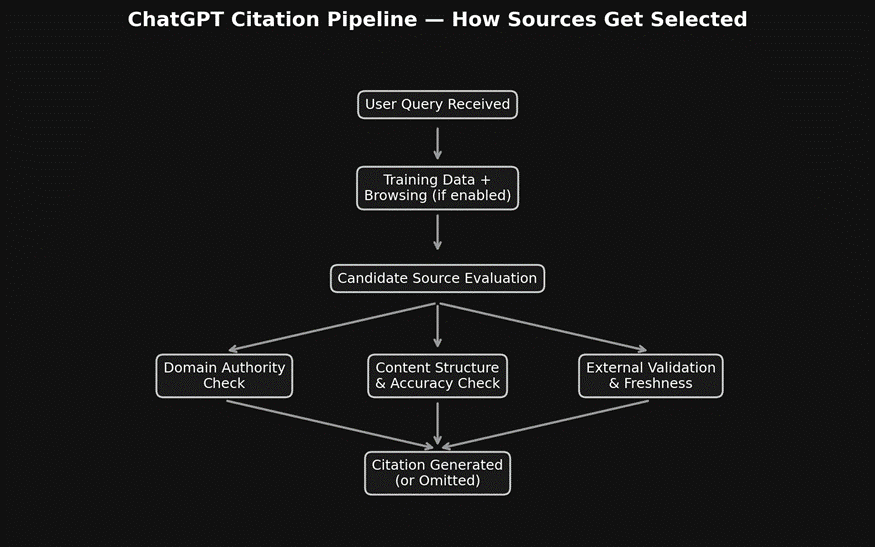
There's no single published algorithm, but based on observable patterns, the trust formula works roughly like this:
Citation Likelihood = Domain Authority + Topical Depth + Content Structure + External Validation
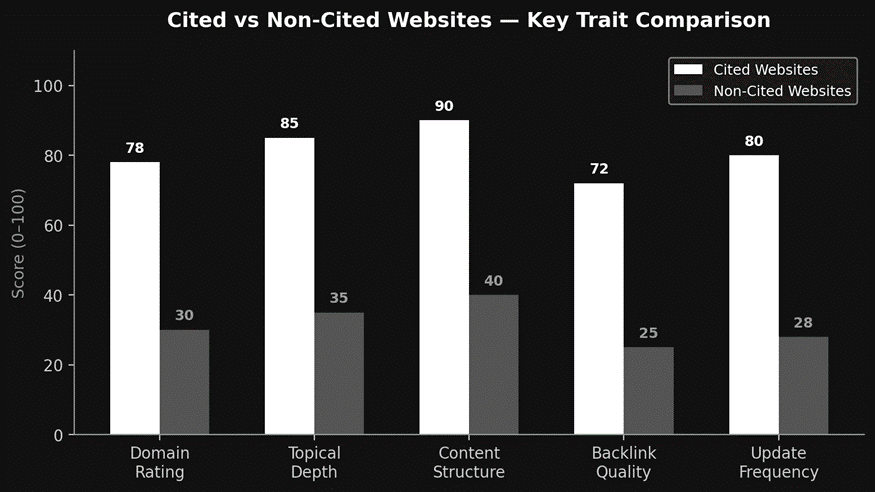
Each factor reinforces the others. A high-authority domain publishing well-structured, deeply researched content on a consistent topic is almost guaranteed to get picked up.
Websites that only check one or two boxes rarely make the cut. The ones that show up in ChatGPT responses are playing the long game across all four pillars.
How Can You Get ChatGPT to Cite Your Website?
Getting cited isn't about gaming the system. It's about building real authority. Here are practical steps:
• Build quality backlinks through guest posts and press coverage to raise your domain rating.
• Write AEO-optimised content that directly answers common questions in your industry. Our
• Leverage AEO blog writing to create content specifically structured for AI citation.
• Use clear question-answer formatting with H2 and H3 headings that mirror how people search.
• Update existing content regularly so it stays relevant and accurate.
• Get mentioned on third-party platforms like industry publications, podcasts, and media outlets.
We've broken down a practical step-by-step approach in our guide on how to get cited in AI search results.
The Bottom Line
ChatGPT doesn't cite websites at random. It follows a clear trust-and-authority formula that rewards credible, well-structured, and deeply relevant content. If your startup isn't showing up in AI-generated answers, the fix isn't more content. It's better content, stronger authority, and smarter optimisation.
Ready to make your brand visible where it matters most? Visit Viral-Impact and let's build a strategy that gets your content cited by both search engines and AI platforms.