Discover how Google E-E-A-T signals influence which websites get trusted, cited, and recommended by AI search tools today.
E-E-A-T (Experience, Expertise, Authoritativeness, and Trustworthiness) is the framework Google and AI tools use to decide which websites deserve visibility. If your content lacks these signals, AI engines like ChatGPT, Perplexity, and Google SGE will skip your site and cite someone else.
What Is E-E-A-T and Why Should You Care?
E-E-A-T isn’t just a Google ranking concept anymore. AI-powered search tools now use the same trust signals to decide which sources they pull answers from. When someone asks ChatGPT or Perplexity a question, these tools scan indexed content and pick the most credible sources. They’re running their own version of E-E-A-T evaluation behind the scenes.
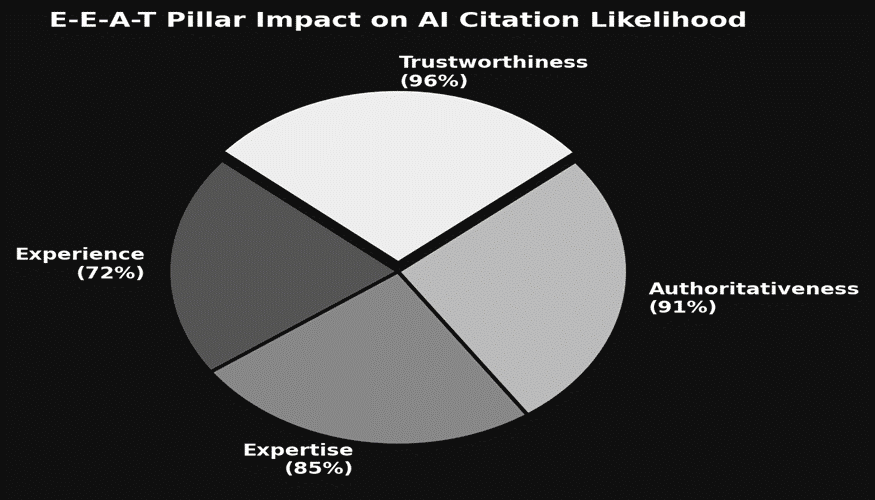
Here’s what each pillar means for AI visibility:
• Experience: Have you actually done the thing you’re writing about? AI tools favor content from people with real hands-on knowledge.
• Expertise: Does your content show deep knowledge? Shallow posts get ignored by both Google and AI citation engines.
• Authoritativeness: Are credible sites linking to your work? Backlinks from respected sources signal authority to AI crawlers.
• Trustworthiness: Is your site secure, transparent, and accurate? AI tools check for HTTPS, clear authorship, and factual consistency.
How Do AI Tools Evaluate E-E-A-T Signals?
AI search engines don’t read your “About” page and decide you’re trustworthy. They evaluate signals programmatically. Here are the key ones:
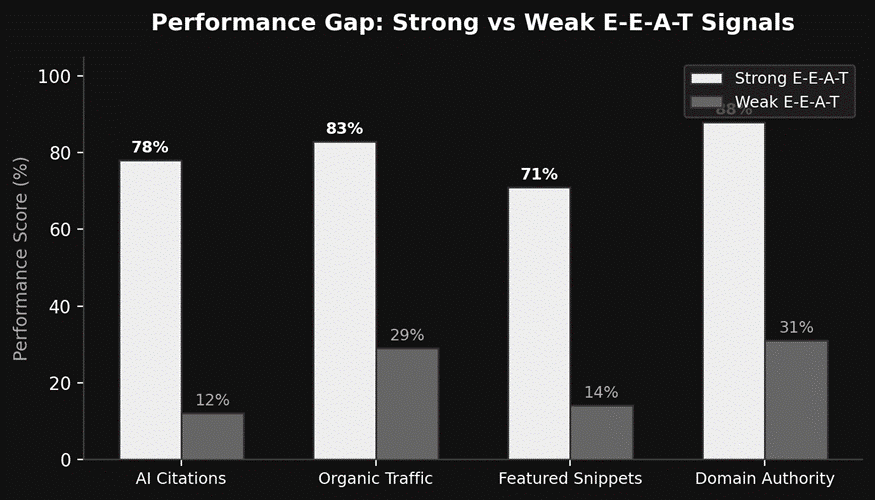
• Author credentials: Pages with named authors who have verifiable expertise get cited more often.
• Backlink quality: A strong SEO and AEO strategy that builds high-authority backlinks tells AI tools your content is worth referencing.
• Structured content: Clear headings, FAQ schemas, and Q&A formats make it easy for AI to parse your content. This is what AEO blog writing is built to do.
• Content freshness: Outdated stats are red flags. AI tools prioritize recently updated, factually sound content.
• Brand mentions: When your brand gets mentioned across trusted platforms and press outlets, AI models take notice.
Practical Steps to Strengthen E-E-A-T for AI Visibility
Here’s what works right now:
• Add detailed author bios with credentials and social links to every piece of content.
• Build backlinks through guest posting and press coverage on high-authority sites.
• Structure posts with clear H2/H3 headings and FAQ sections that AI can easily extract.
• Set a quarterly review schedule to refresh stats, links, and examples.
• Use FAQ and HowTo schema markup to give AI crawlers structured data they can read instantly.
For a deeper look at how this fits together, check out our guide on answer engine optimization and the top AEO strategies working right now.
The Bottom Line
E-E-A-T is the framework that determines whether your website gets cited by AI tools or buried under competitors who built trust signals properly. The startups winning right now are treating E-E-A-T as a growth strategy, not an afterthought.
If you’re ready to make your website the one AI tools trust and cite, visit Viral-Impact and let’s build a strategy that puts you in front of the right audience on Google, in AI answers, and everywhere that matters.