Learn exactly how long your landing page copy should be to convert more visitors into paying customers fast.
The best landing page copy is usually between 500 and 1,000 words, but the right length depends on your offer, your audience, and how much convincing they need before saying yes. Short pages work for simple products, while longer copy performs better when the buying decision feels risky or expensive.
If you have ever stared at a blank page wondering whether to write 200 words or 2,000, you are not alone. Most startup founders wrestle with this when building their first landing page copy. No magic number exists, but clear patterns separate pages that convert from those that flop.
Does Landing Page Copy Length Actually Affect Conversions?
Yes, and data backs it up. Pages that are too short leave visitors with unanswered questions. Pages that go on too long make people lose interest before reaching the call to action. The sweet spot shifts depending on what you sell.
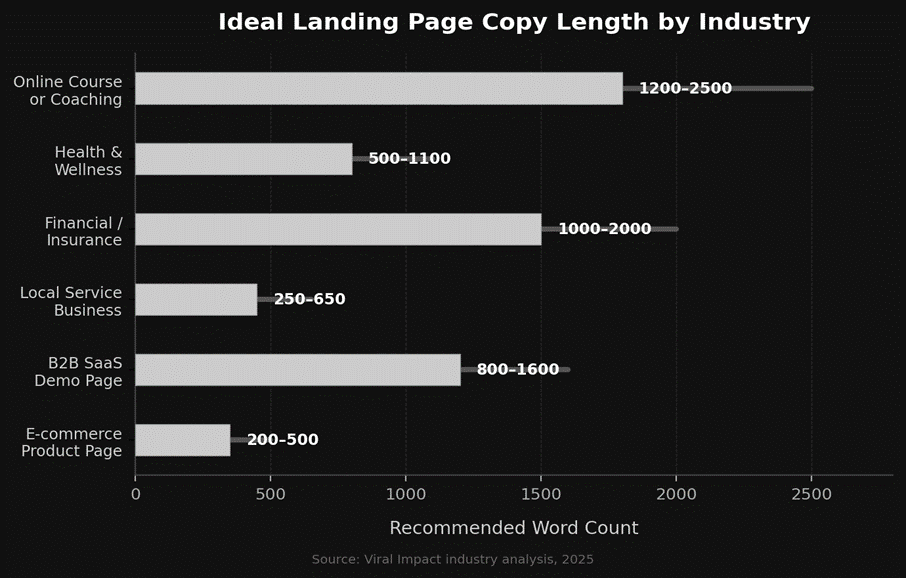
Here is what tends to work across different scenarios:
Simple, low-cost offers (free trials, ebooks, newsletter signups) convert well with 250 to 500 words. Visitors already know what they want.
Mid-range products (SaaS subscriptions, online courses, consulting calls) perform best with 500 to 1,000 words. Enough room to explain value and build trust.
High-ticket or complex offers (enterprise software, coaching programs, financial services) often need 1,500 to 2,500 words. Buyers want proof and reassurance before committing serious money.
The core principle is simple. Match copy length to buying complexity. The harder the decision, the more words you need.
What Factors Decide the Right Copy Length?
Word count alone does not tell the whole story. Several factors shape how long your page should be.
Audience awareness level: Cold traffic needs more explanation. Warm traffic from email lists or retargeting needs less.
Price point: A $9 tool needs fewer words than a $5,000 annual contract. Higher stakes demand more persuasion.
Offer complexity: If your product takes three sentences to explain, keep the page short. If it requires a demo walkthrough, go long.
Trust signals: Testimonials and case studies take space but drive conversions. Do not cut them just to hit a lower word count.
Traffic source: Visitors from a detailed blog post arrive more educated than those from a generic social ad. Adjust accordingly.
If you are running a startup and building pages from scratch, a strong SEO and AEO strategy helps you figure out what your audience actually searches for, so every word on the page earns its spot.
How Do You Know If Your Copy Is Too Long or Too Short?
Your analytics will tell you. Watch for these signals:
• High bounce rate with low scroll depth means visitors are not finding what they need. Your opening copy might be weak.
High scroll depth but low conversions suggest people read but are not persuaded. You need stronger proof or a better call to action.
Good conversions but low traffic could signal your page converts well, but is not optimized for search. That is where aligning copy with proven high-converting landing page design principles can close the gap.
Test relentlessly. Run A/B tests with different lengths on the same offer. Let your visitors decide what works, not assumptions.
The Bottom Line
There is no universal word count that guarantees a winning landing page. What matters is writing enough to answer every visitor's question and cutting everything that does not push them closer to clicking that button. Start with 500 to 1,000 words, test from there, and let data guide you.
If you want landing pages that actually convert visitors into customers,
Viral-Impact builds data-driven pages designed for startups that need results, not guesswork.