Learn how to write content that AI search engines cite, rank, and recommend to users looking for answers.
Writing content that AI search engines pick up requires clear structure, direct answers, and formatting that machines can easily read and quote. If your content does not follow these patterns, you are leaving traffic and potential clients on the table every day.
Most startups still write content the old way. Long paragraphs, vague introductions, and zero structure for AI to grab onto. Tools like ChatGPT, Google AI Overviews, and Perplexity pull from organized content formatted for quick extraction. If you want to show up, rethink how you write.
What Makes Content Rank in AI Search Results?
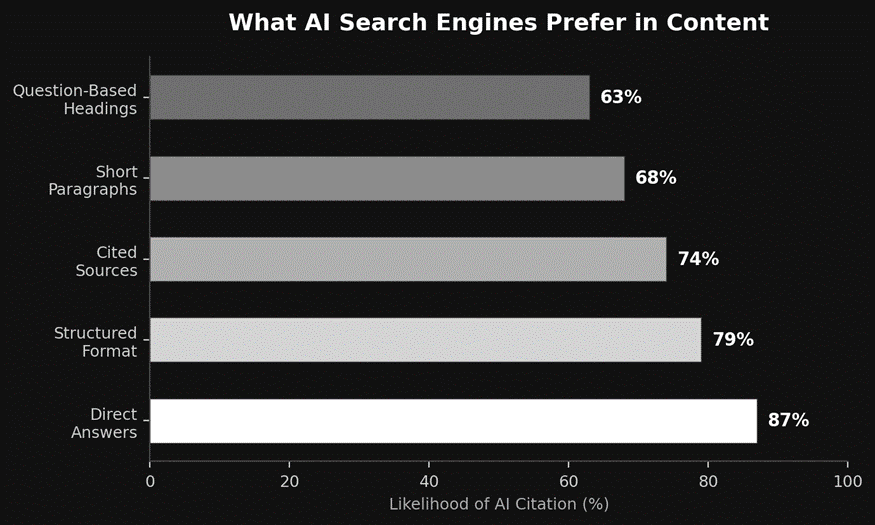
AI search engines scan millions of pages and select content that meets specific criteria. Here is what they look for:
• Direct answers in the first two sentences. AI tools prioritize pages that answer the question right away, not after three paragraphs of backstory.
• Question-based subheadings. Structuring content around how people search tells AI exactly what each section covers.
• Bullet points and short paragraphs. AI engines prefer scannable content. Dense walls of text rarely get cited.
• Cited data and specific numbers. Concrete statistics build trust with AI algorithms and readers.
• Schema markup. Adding FAQPage, HowTo, or Article schema gives AI engines structured signals about your content.
How Do You Structure Content for Featured Snippets and AI Citations?
Think of your content like a well-organized filing cabinet. Every drawer is labeled, and every folder is easy to find. A solid AEO blog writing strategy starts with structure:
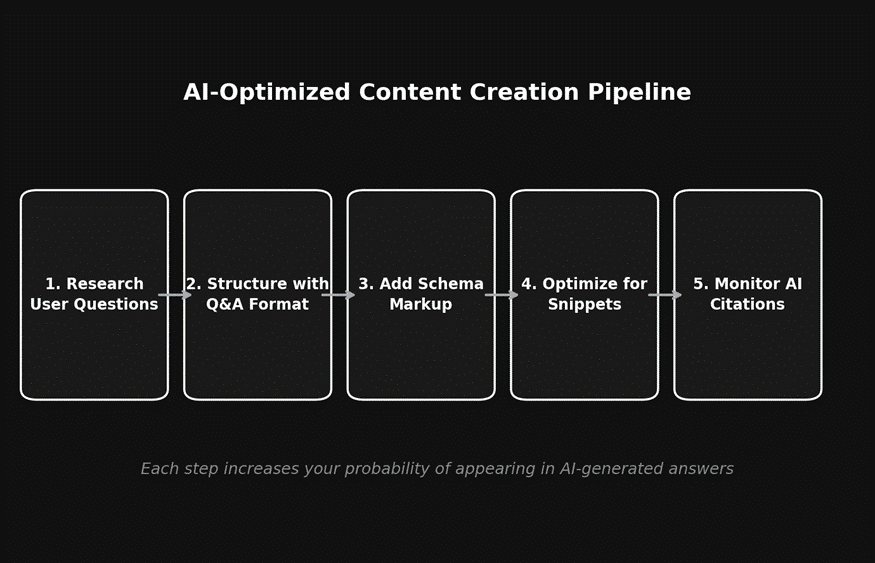
Start every section with a clear, one-sentence answer. Then expand with details.
Use H2 and H3 tags that mirror real search queries. Google’s "People Also Ask" section is a goldmine for these.
Keep paragraphs under four sentences. Shorter blocks are easier for AI to extract as answers.
Implement the FAQPage schema at the end of every article. This directly feeds AI systems the questions and answers they need.
Why Does Traditional SEO Alone Fall Short for AI Search?
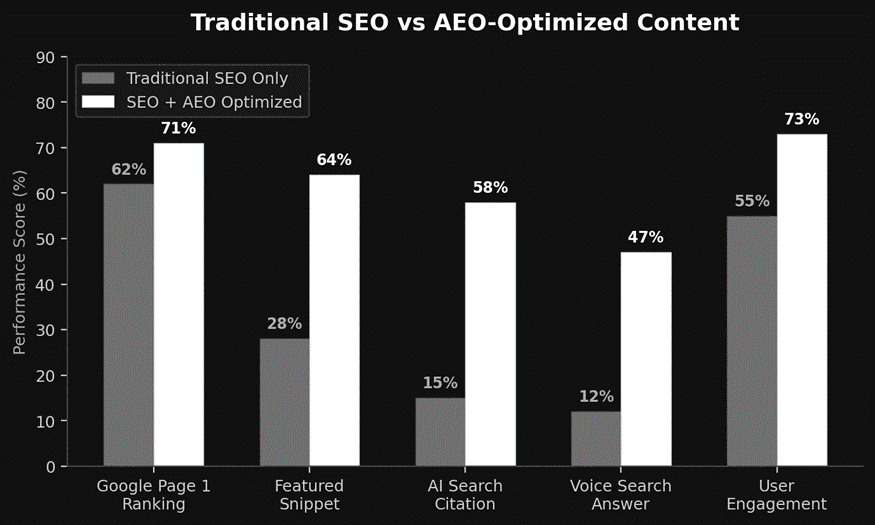
Traditional SEO focuses on keywords, backlinks, and page speed. Those still matter. But AI search engines pull from structured content that directly answers queries. A page ranking first on Google does not guarantee an AI citation if the formatting is weak.
Startups that combine a strong SEO and AEO growth strategy see measurably better results. You are not choosing between old and new. You are layering AI optimization on top of what already works.
What Practical Steps Can Startups Take Today?
You do not need a massive budget. Start small and stay consistent:
• Audit your existing blog posts. Rewrite introductions to lead with direct answers.
• Add FAQ sections with schema markup to your top-performing pages.
• Use Google’s People Also Ask and AnswerThePublic to find the exact questions your audience asks.
• Write every subheading as a question. It sounds simple, but it dramatically improves AI readability.
• Study how AI platforms answer queries in your niche, then write content that fills the gaps.
If you are unsure where to begin, check out our guide on how to get cited in AI search results for a step-by-step breakdown that any startup can follow.
The Bottom Line
AI search is not replacing Google. It is adding a new layer on top of it. Startups that adapt now will dominate both traditional search and AI-powered answers. The formula is simple: answer questions directly, use clear structure, add schema markup, and write like someone who actually wants to help the reader.
Stop overthinking it. Start with one blog post, restructure it, add an FAQ section, and watch what happens.
Ready to make your content visible in AI search results?
Visit Viral-Impact and let us build a content strategy that works for both Google and AI.