Learn how to build a proven SEO strategy that drives organic traffic and real business growth.
An SEO strategy is a step-by-step plan to help your website rank higher in search results. By choosing the right keywords, creating helpful content, and building your site’s reputation, you can turn your website into a steady source of organic traffic and leads.
Many business owners know SEO is important, but aren’t sure how to get started. You don’t need a big budget; just a clear plan.
Step 1: Define Your Goals and Audience
Before using any SEO tools, decide what success means for you. Do you want more traffic, more leads, or better visibility? Your goal will guide every step you take.
Figure out who you’re trying to reach:
What problems do they type into Google?
What words and phrases do they actually use?
Where are they in the buying process? Are they just browsing, comparing options, or ready to make a purchase?
Step 2: Do Keyword Research That Matches Intent
Keywords are the foundation of your strategy. If you’re starting, targeting popular keywords is usually ineffective.
Focus on:
Long-tail keywords with clear search intent (e.g., “best CRM for small teams” vs. “CRM”)
Question-based queries that match how real people search
Low to medium competition terms, where you have a realistic shot at ranking
Group your keywords into topic clusters. This way, your content works as a cohesive system rather than a collection of unrelated posts.
Step 3: Audit Your Current Website
You need to measure your website before you can improve it. Run an SEO audit to find any problems.
Look for:
Slow page speed or poor mobile experience
Broken links, 404 errors, or redirect chains
Missing or duplicate meta titles and descriptions
Thin or outdated content that needs a refresh
A strong SEO and AEO growth plan always begins with understanding where you stand now.
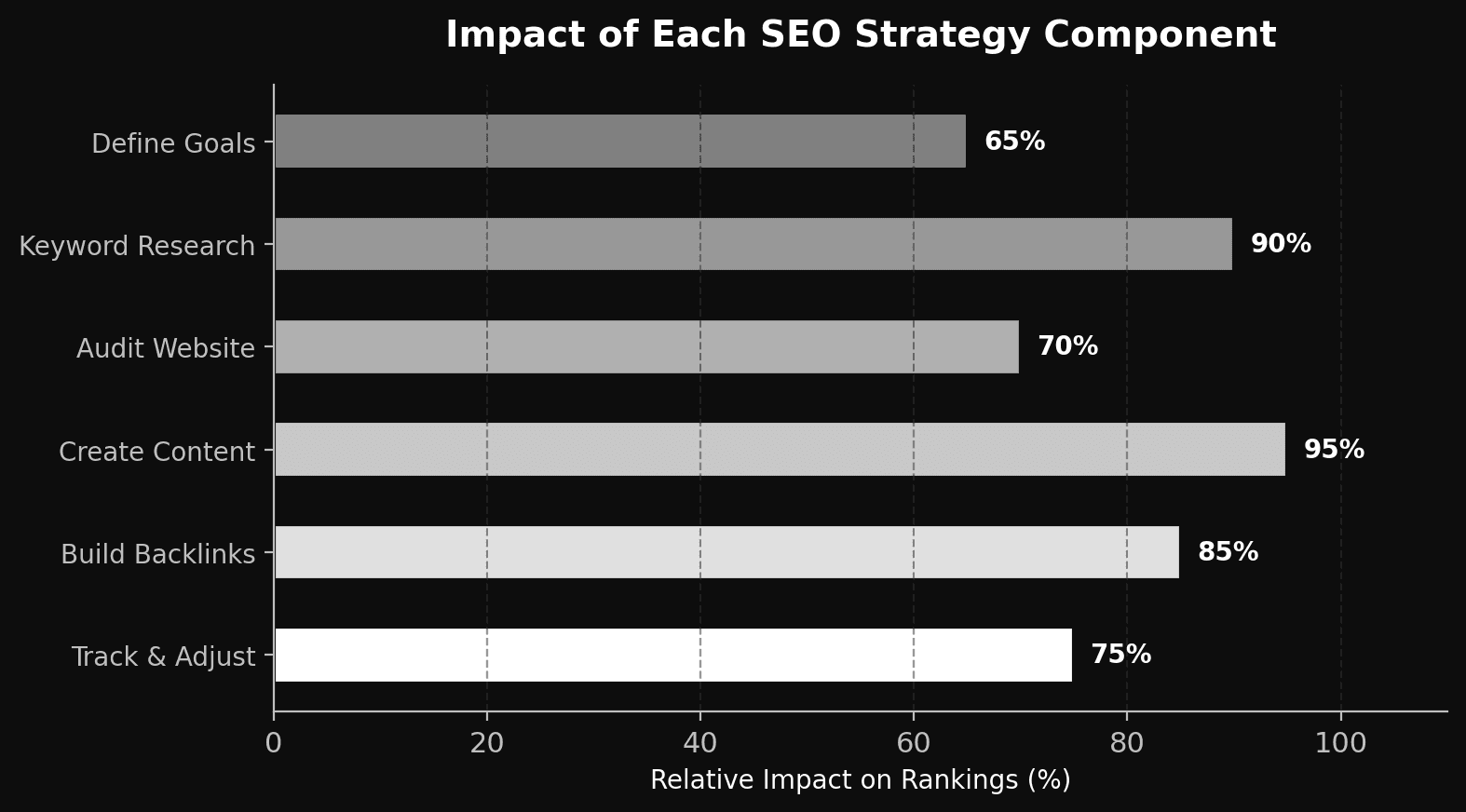
Step 4: Create High-Value Content Consistently
Content is what helps your site rank. There’s no shortcut for this step.
Every blog post, landing page, or resource you publish should:
Target a specific keyword cluster with clear intent.
Answer a real question your audience is actively searching for
Make your content more helpful than what’s already on the first page of search results.
If you’re starting, avoid posting random articles. Create a content plan that brings in traffic, then follow it.
Step 5: Build Backlinks and Domain Authority
Google still relies a lot on backlinks when ranking sites. Focus on securing high-quality links rather than many low-quality ones.
Effective ways to build links:
Publish guest posts on reputable, high-DR websites in your niche.
Earn press coverage through strategic press release distribution.
Create original research, data, or tools that other sites naturally want to link to
A single link from a trusted website is worth more than a hundred links from weak directories.
Step 6: Track, Measure, and Adjust
SEO is not something you do just once. It’s a long-term process that works best when you stay consistent and make smart changes along the way.
Track these metrics monthly:
Organic traffic growth
Keyword ranking movements
Bounce rate and time on page
Conversion rates from organic visitors
Google Search Console and Analytics are free tools you can use to get started. Use real data to make decisions instead of guessing.
How Long Does SEO Take to Show Results?
It’s important to set the right expectations. Most businesses start to see results between months 3 and 6. Bigger traffic growth usually happens between months 6 and 12:
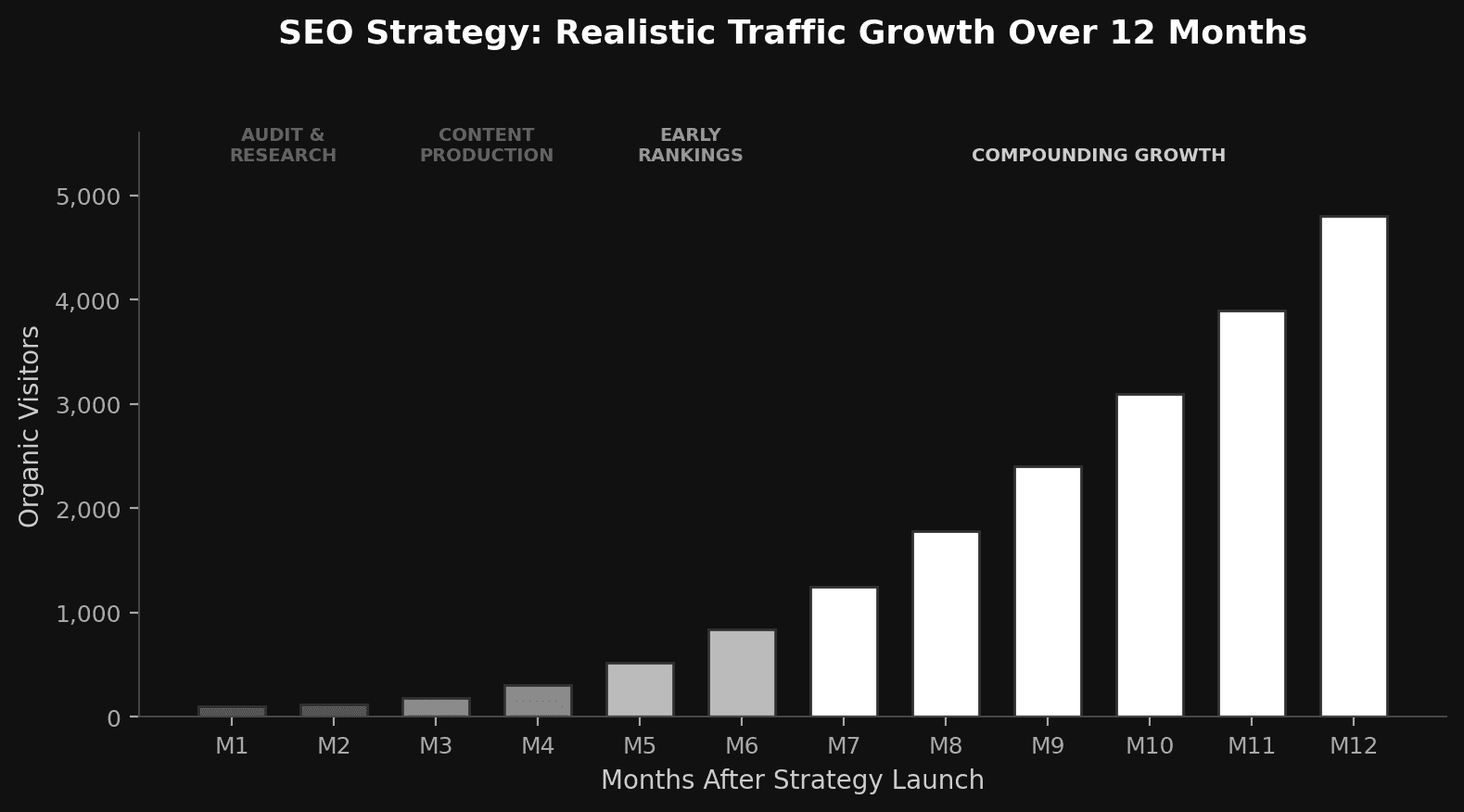
Month 1–2: Technical fixes, audit, keyword research
Month 3–4: Content production and on-page optimization
Month 5–6: Early ranking improvements, initial traffic lift
Month 7–12: Compounding growth, backlink authority building
Many businesses give up between months 3 and 5 because results seem slow. But this is when your efforts start to add up.
The Bottom Line
Building an SEO strategy can be simple if you’re intentional. Set clear goals, choose the right keywords, and make content that helps your audience. Keep improving your approach based on the data.
If you need expert help with your growth strategy, Viral Impact offers SEO, AEO, and full organic growth systems for startups and SaaS companies. Visit Viral-Impact to learn how we can help your business rank higher and grow faster.