Discover the exact signals AI search engines use to determine content trustworthiness and boost your rankings.
AI systems identify trustworthy content by analyzing E-E-A-T signals (Experience, Expertise, Authoritativeness, Trustworthiness), citation quality, backlink profiles, and factual accuracy verified against multiple authoritative sources. Content that shows clear expertise with proper credentials, cites primary research, and maintains consistency across reputable publications earns higher trust scores in AI-generated answers.
ChatGPT, Perplexity, and Google's AI Overviews don't pick random content to cite. They follow specific patterns to determine which sources deserve visibility. Understanding these patterns gives your startup a massive advantage in getting cited by AI systems that influence millions of purchase decisions daily.
The difference between content AI trusts and content it ignores comes down to measurable signals. This guide breaks down exactly what those signals are and how to build them into your content strategy.
Why AI Trust Signals Matter for Startups
Traditional SEO focused on ranking for keywords. Answer Engine Optimization focuses on getting cited as a trusted source. When AI systems reference your content, you gain exposure to users who never click through to search results.
The stakes are higher because:
• AI citations appear above traditional search results, capturing attention first.
• Voice search reads answers from trusted sources without offering alternatives.
• B2B buyers increasingly rely on AI tools to research solutions before contacting vendors.
Building trust with AI systems now positions your startup as an authority before competitors realize the opportunity exists.
The Four Core Trust Signals AI Systems Evaluate
Google publicly documented its quality rater guidelines, which AI systems adapted for automated evaluation. These four signals determine content trustworthiness.
1. Author Expertise and Credentials
AI systems scan for clear indicators that the content creator possesses relevant knowledge:
• Author bios that mention professional experience, education, or industry recognition.
• LinkedIn profiles linked from bylines showing relevant work history.
• Portfolio evidence demonstrating practical application of expertise.
• Citation patterns showing the author referenced by other authoritative sources.
Anonymous content or thin author profiles hurt trust scores. AI systems prefer named experts with verifiable backgrounds over generic corporate voices.
2. Citation Quality and Source Verification
The sources you cite matter as much as what you write. AI systems trace citation chains to evaluate credibility:
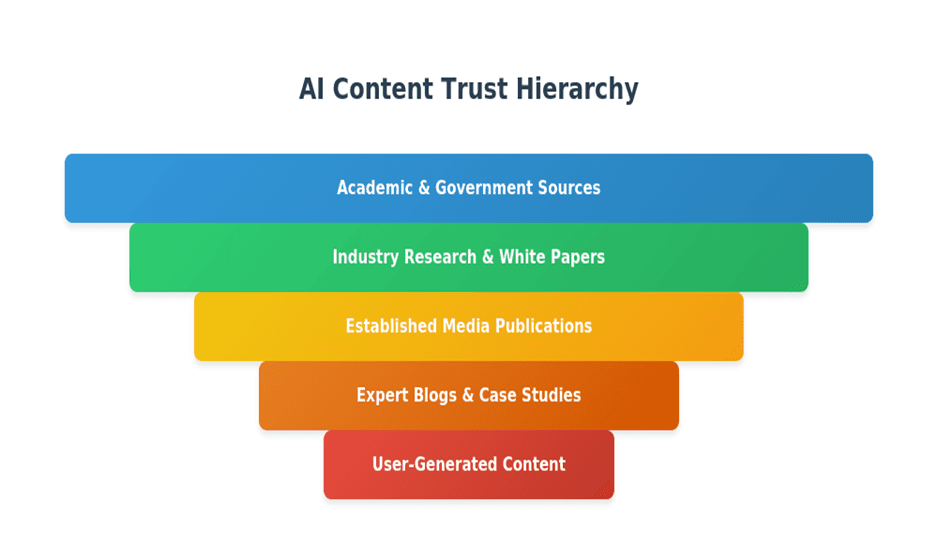
• Primary research from academic journals and peer-reviewed studies carries maximum weight.
• Government data from agencies like the Census Bureau or CDC provides trusted statistics.
• Industry reports from recognized research firms like Gartner or McKinsey add authority.
• Original surveys or studies you conduct with proper methodology establish thought leadership.
Citing other blog posts or secondary sources weakens trust signals. Always trace back to the original research when possible. This is one of the core principles we emphasize in our AEO blog writing service.
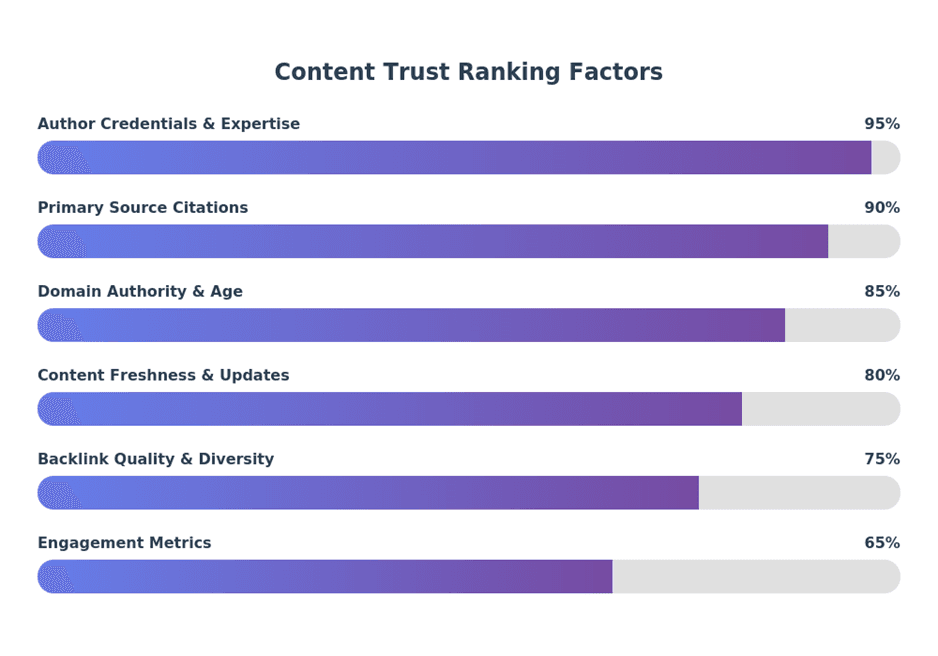
3. Domain Authority and Historical Reputation
Your website's overall reputation influences individual content trust scores. AI systems evaluate domain-level signals:
• Backlink profile quality measured by links from .edu, .gov, and industry-leading publications.
• Content consistency shown through regular publishing schedules and topic depth.
• Technical optimization including HTTPS, fast load times, and mobile responsiveness.
• Brand mentions across the web that signal market recognition.
Building domain authority takes time, which makes strategic link building essential. Our guest posting service helps startups acquire high-quality backlinks from authoritative sites in their industry.
4. Factual Accuracy and Cross-Reference Consistency
AI systems verify claims by checking if multiple trusted sources report the same information:
• Statistical accuracy confirmed against official databases and research papers.
• Date verification checking that events and data points match historical records.
• Quote attribution confirming statements match their original context.
• Update frequency for time-sensitive information like software versions or regulatory changes.
Content with conflicting information or outdated statistics receives lower trust scores. Regular content audits keep your information current and trustworthy.
How to Audit Your Content for AI Trust Signals
Run existing content through this evaluation framework to identify trust gaps:
Author credibility check:
• Does every article display a named author with credentials?
• Are author bios detailed enough to establish expertise?
• Do authors link to professional profiles on LinkedIn or personal sites?
Citation quality check:
• Are you citing primary sources or secondary blog posts?
• Do external links go to authoritative domains (.edu, .gov, major publications)?
• Are statistics sourced with direct links to original research?
Content freshness check:
• When was the content last updated?
• Do time-sensitive claims still reflect current reality?
• Are examples and case studies from recent years or outdated?
Fix gaps systematically rather than randomly updating articles. Prioritize high-traffic pages and content targeting commercial keywords where AI citations drive revenue.
Building Trust Signals Into New Content
Prevention beats remediation. Build trust signals into your content creation workflow:
• Research-first approach: Start with authoritative sources, then create content around verified information.
• Expert collaboration: Partner with industry professionals who can lend credibility through bylines or quotes.
• Original data creation: Conduct surveys or compile industry data that others will cite.
• Transparent methodology: Document how you reached conclusions so AI systems can verify your process.
These practices take more time upfront, but compound over months as AI systems recognize your content as consistently trustworthy. Learn more about implementing these strategies in our guide on getting cited in AI search results.
What Hurts Content Trust Scores
Avoid these patterns that signal low quality to AI systems:
• Clickbait headlines that overpromise or misrepresent content.
• Affiliate link overload suggesting commercial intent over educational value.
• Thin content that rehashes information without adding unique insights.
• Excessive ads or popups that interfere with content consumption.
• Controversial claims without supporting evidence from authoritative sources.
User experience and quality content cover trust evaluation. Sites that prioritize reader value over advertising revenue perform better in AI citations.
The Bottom Line
AI systems trust content that demonstrates clear expertise, cites authoritative sources, maintains factual accuracy, and comes from established domains. Building these trust signals requires systematic effort across author credentials, citation quality, domain reputation, and content freshness. Startups that implement trust-building practices now gain significant advantages as AI-driven search continues replacing traditional results pages.
At Viral Impact, we specialize in creating content that AI systems recognize as trustworthy. Our SEO and AEO strategy service helps startups dominate both traditional search and AI-generated answers. We handle everything from expert author placement to primary source research that establishes your brand as an industry authority.
Ready to build content that AI systems cite consistently? Visit Viral-Impact to discover how we help companies earn trust from both humans and algorithms.