Learn how to structure and optimize your content so Perplexity AI cites your website in its search answers.
To get cited by Perplexity AI, your content needs to be clearly structured, factually accurate, and optimized for how AI engines pull and reference information. The more your content mirrors how AI reads the web, the higher your chances of being cited as a source.
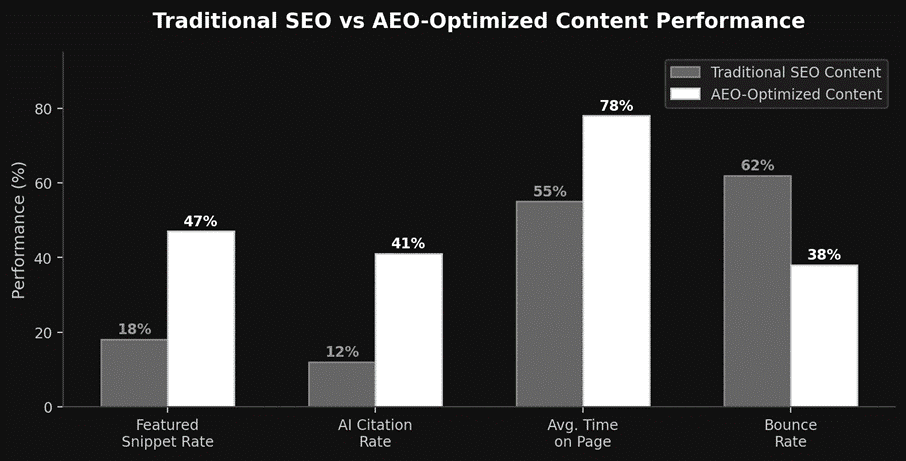
If you’ve been creating content only for Google, you’re already falling behind. Perplexity AI doesn’t just scrape pages. It evaluates structure, authority, and relevance before deciding which sources to cite in its answers. That means your SEO game alone won’t cut it anymore.
Welcome to the era where Answer Engine Optimization (AEO) matters just as much as traditional search ranking.
Why Perplexity AI Citations Matter for Your Startup
Perplexity is quickly becoming a go-to search tool for professionals, researchers, and decision-makers. When it cites your content, you get something money can’t buy: trust at the point of discovery. Unlike a Google link buried on page two, an AI citation positions your brand as a verified source of truth.
For startups trying to build authority fast, that kind of visibility is gold. It drives qualified traffic, builds credibility, and shortens the trust gap between you and your audience.
What Makes Content Eligible for AI Citations?
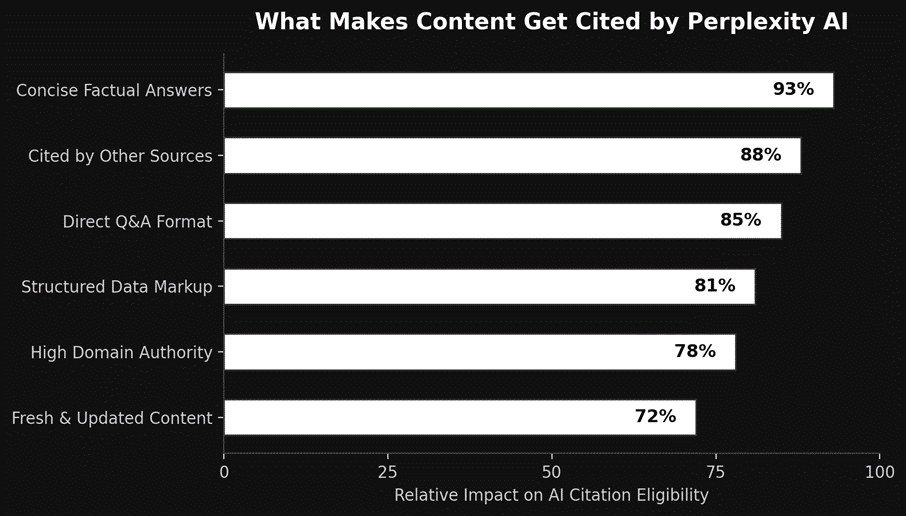
Perplexity AI favours content that checks specific boxes. Here’s what you need to focus on:
• Answer questions directly. Start sections with a clear, concise answer before diving deeper. AI engines pull from content that gives immediate value.
• Use structured formatting. Headings, subheadings, bullet points, and numbered lists help AI parse your content efficiently.
• Include factual, verifiable data. Statistics, studies, and expert references increase your citation-worthiness. AI tools prioritize accuracy.
• Write in a question-answer format. Mirror how people actually search. If someone types “how to get cited on Perplexity,” your content should match that query pattern.
• Build topical authority. One blog post won’t get you cited. A cluster of related content around a core topic signals to AI that you’re a reliable source. This is where a strong AEO blog writing strategy becomes essential.
• Keep content fresh. Outdated information gets skipped. Update your posts regularly with current data and insights.
How to Structure Your Content for Maximum Citation Potential
Think of Perplexity as a reader with zero patience. It wants answers fast, formatted cleanly, and backed by evidence. Here’s a content structure that works:
• Lead with the answer. Your opening paragraph should directly address the search query.
• Break the body into clear sections. Each H2 or H3 should target a specific subtopic or question.
• Use schema markup. FAQ schema, How-To schema, and Article schema give AI engines a roadmap of your content.
• Link to authoritative sources. Both internal and external links tell AI your content sits within a trusted network. A comprehensive SEO and AEO growth strategy ties all of this together.
• Keep paragraphs short. Two to three sentences max. Dense walls of text get overlooked by both humans and algorithms.
If you want a deeper breakdown of how to structure content specifically for AI search results, check out our guide on how to get cited in AI search results.
The Bottom Line
Getting cited on Perplexity AI isn’t about gaming an algorithm. It’s about creating content that’s genuinely useful, well-structured, and easy for both humans and machines to understand. Startups that invest in AEO today will dominate AI search results tomorrow.
If you’re ready to make your content work harder, explore what Viral-Impact can do for your brand. We help startups build the kind of content that gets noticed, cited, and trusted across every platform that matters.