Learn what a content distribution strategy is and discover how smart startups use it to grow faster online.
A content distribution strategy is a plan that maps out how, where, and when you share content with the right audience. Without one, even the best blog posts sit unnoticed while competitors grab the attention you deserve.
What Is a Content Distribution Strategy?
Think of it this way. You spend hours creating a well-researched blog post. You hit publish. Then nothing happens. That silence is what kills most startup content efforts.
A content distribution strategy fixes this by mapping out exactly how your content reaches people who care about it. It covers the platforms you use, the formats you repurpose into, the timing of each post, and the promotion tactics that amplify reach.
This is not just about sharing links on social media. It is a repeatable system that connects your content creation efforts with measurable audience growth.
Why Do Startups Need a Content Distribution Strategy?
Most startups pour energy into creating content but skip the distribution side entirely. Here is why that costs them:
• Over 90% of blog content gets zero organic traffic from Google.
• Startups with limited budgets cannot afford to create content nobody sees.
• A clear distribution plan turns every piece of content into a growth asset.
• Consistent distribution builds brand visibility faster than publishing alone.
• It helps you reach audiences on channels where they already spend time.
Startups that invest in an organic growth strategy paired with intentional distribution often see results within weeks rather than months. The difference is not the content itself. It is how strategically it gets placed in front of the right people.
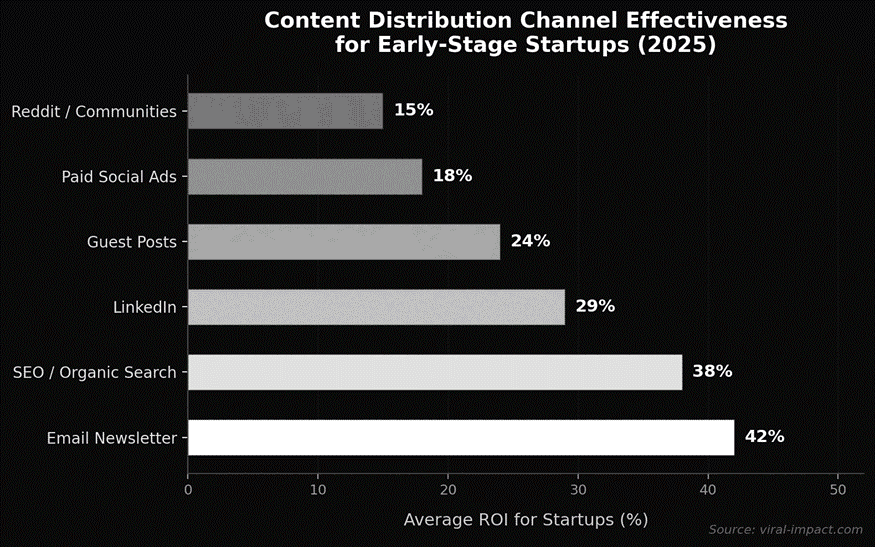
What Are the Three Types of Content Distribution Channels?
Every distribution strategy works across three channel categories. Understanding them helps you balance effort and budget.
Owned Channels
• Your website and blog.
• Email newsletters.
• Social media profiles you control.
These are free to use and give you full control. They should be your foundation.
Earned Channels
• Guest posts on industry websites.
• Press mentions and media coverage.
• Social shares and backlinks from other creators.
Earned distribution builds credibility and domain authority. It takes more effort, but the trust factor is impossible to replicate with paid methods.
Paid Channels
• Social media ads on LinkedIn, Facebook, or Reddit.
• Sponsored content placements.
• Pay-per-click campaigns.
Paid channels give you speed. When you need quick visibility for a launch or funding announcement, paid promotion fills the gap while organic efforts build.
A smart startup balances all three. Start with owned, invest in earned through quality SEO blog writing, and layer in paid when budgets allow.
How Do You Build a Content Distribution Strategy?
You do not need a complicated playbook. Follow these steps to get started:
• Audit your existing content to find pieces worth redistributing.
• Define your target audience and the platforms they use most.
• Choose two or three primary distribution channels to focus on first.
• Create a content calendar that ties every piece to a specific channel and format.
• Repurpose each blog post into at least three formats, such as social snippets, email summaries, and short videos.
• Track performance weekly and double down on what works.
• Adjust your approach based on real engagement data, not assumptions.
A strong blog content strategy that drives traffic becomes even more powerful when paired with a distribution system that keeps pushing that content in front of new eyes.
The Bottom Line
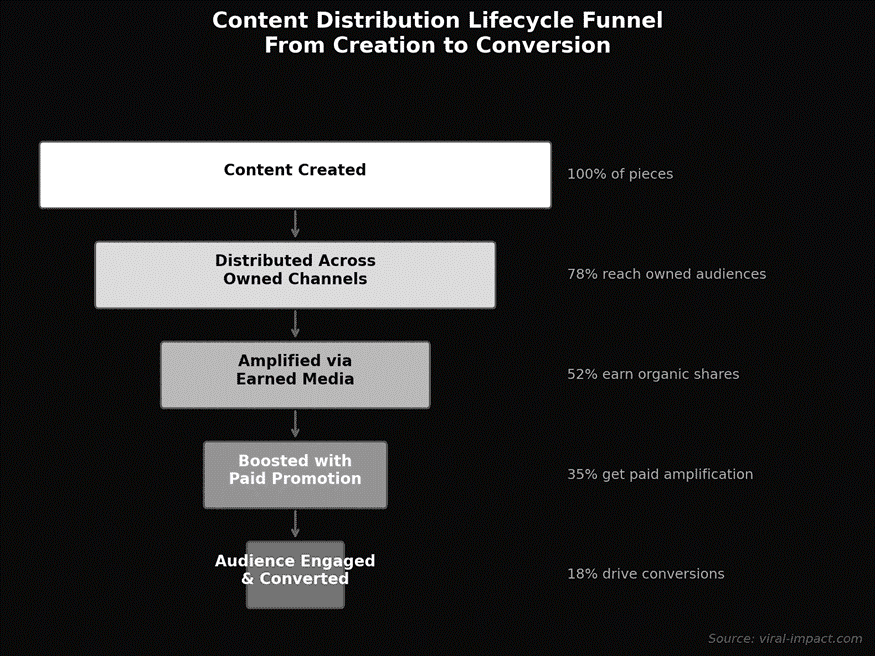
A content distribution strategy separates startups that grow from those that stay invisible. Creating great content is only half the job. Getting it seen is the other half.
If your startup is ready to stop guessing and start building a distribution system that works, visit Viral-Impact to explore how our team helps brands turn content into measurable growth.