Learn what a content flywheel is, how it compounds organic growth, and exactly why smart startups use it.
A content flywheel is a self-reinforcing marketing system where every piece of content you publish attracts visitors, builds trust, and fuels the creation of more content. Unlike one-off campaigns that fade after launch, a flywheel gains speed over time and turns your blog and SEO efforts into a compounding growth engine.
Why Does the Content Flywheel Matter for Startups?
Most startups pour money into paid ads and expect instant results. That works until the budget runs dry. A content flywheel flips the script. It helps you grow organically by turning every blog post, guide, and social share into a building block for the next wave of traffic.
Here is why this model matters so much for early-stage companies:
• It reduces dependency on paid advertising over time.
• Each published piece strengthens your domain authority and search rankings.
• Content attracts backlinks, which push newer articles higher in search results.
• Audience engagement (comments, shares, saves) signals relevance to Google and AI search engines.
• It creates a repeatable system instead of random acts of marketing.
Startups that build this loop early tend to outpace competitors chasing short-term wins. If your organic growth strategy relies only on paid channels, you are renting attention. A flywheel lets you own it.
How Does a Content Flywheel Work Step by Step?
Think of it as a loop with five connected stages. Each one feeds the next:
• Create valuable content: Write blog posts, guides, or videos that answer real questions your audience is searching for. Focus on topics with clear search intent.
• Attract organic traffic: SEO-optimized content pulls visitors from Google, AI-powered search tools like ChatGPT and Perplexity, and social media shares.
• Build audience trust: Helpful, well-structured content positions your startup as a credible source. Readers start to recognize your brand.
• Generate leads and shares: Engaged readers share your content, subscribe to newsletters, and link back to your site, which increases your reach without extra spending.
• Fuel more content ideas: Comments, questions, and performance data from existing content reveal exactly what to write next. The cycle repeats, faster each time.
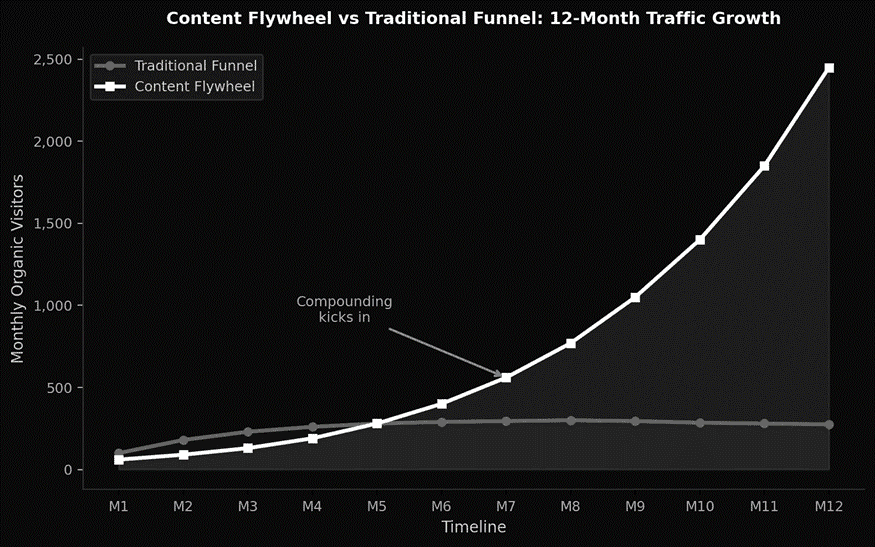
The magic happens between stages three and five. Once readers trust you, they do the distribution work for you. That is the compounding effect most marketers miss. A strong blog content strategy that drives traffic is the engine behind this system.
How Do You Build a Content Flywheel That Actually Ranks?
Getting the flywheel spinning takes intentional effort upfront. These steps will set the foundation:
• Start with keyword research focused on questions your ideal customers are actually asking.
• Publish at least one in-depth, search-optimized article every week
• Structure content for Featured Snippets using short answers, bullet points, and clear subheadings.
• Add internal links between related posts so readers stay on your site longer.
• Repurpose each blog post into social content, email newsletters, and guest posts.
• Track what performs and double down on winning topics.
You do not need a massive team to make this work. What you need is consistency and a clear SEO and AEO growth strategy that aligns every piece of content with search demand. Most startups stall because they publish randomly. A flywheel forces discipline.
The Bottom Line
A content flywheel is not just a trendy buzzword. It is the most cost-effective growth system a startup can build. When every blog post and social share feeds back into your content engine, growth stops being something you chase and starts being something that chases you.
The startups that win long-term stop thinking in campaigns and start thinking in systems. Build the flywheel now and watch it compound for years.
Ready to build a content flywheel that drives real growth? Visit Viral-Impact and let us help you turn content into your startup’s most powerful growth channel.