Learn what a landing page is, why startups need one, and how it turns website visitors into customers.
A landing page is a standalone web page built for one specific goal: getting visitors to take action. Whether that action is signing up, booking a demo, or downloading a guide, every element on the page exists to push people toward that single outcome.
Most startup founders confuse landing pages with homepages, and that confusion costs them conversions daily. Your homepage introduces your brand and links out to multiple sections. A landing page does the opposite. It strips away distractions and focuses attention on one clear next step. Think of your homepage as a department store with multiple floors. A landing page is a pop-up shop with one product and one register.
Why Do Startups Need Landing Pages?
Early-stage companies run on tight budgets. Sending traffic to a generic homepage means visitors wander, get distracted, and leave. Landing pages fix that by creating a focused experience.
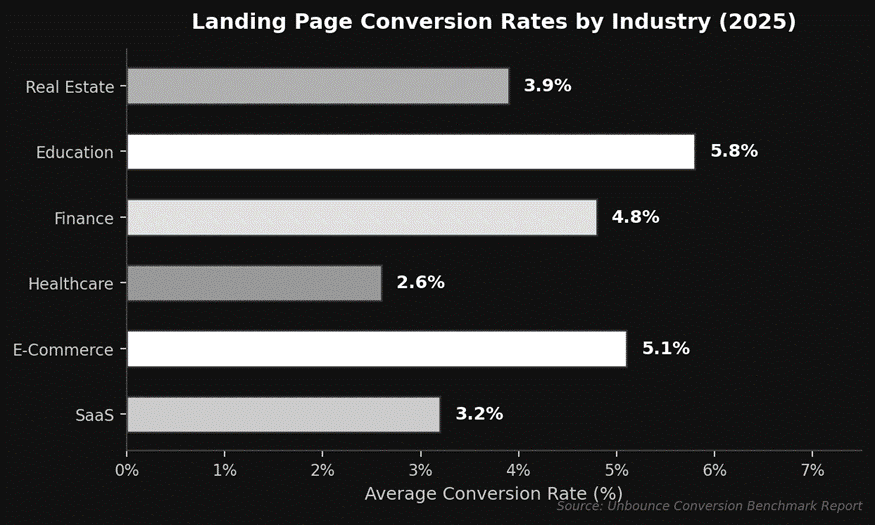
• Higher conversion rates. Businesses using dedicated landing pages see conversion rates between 2.6% and 5.8%, compared to under 1% for generic pages.
• Better ad performance. When your ad matches your landing page message, platforms reward you with lower cost-per-click.
• Cleaner data. One goal means you track exactly what works without noise from other page elements.
• Faster testing. Running A/B tests on a focused page is far simpler than testing an entire website.
What Makes a Landing Page Actually Work?
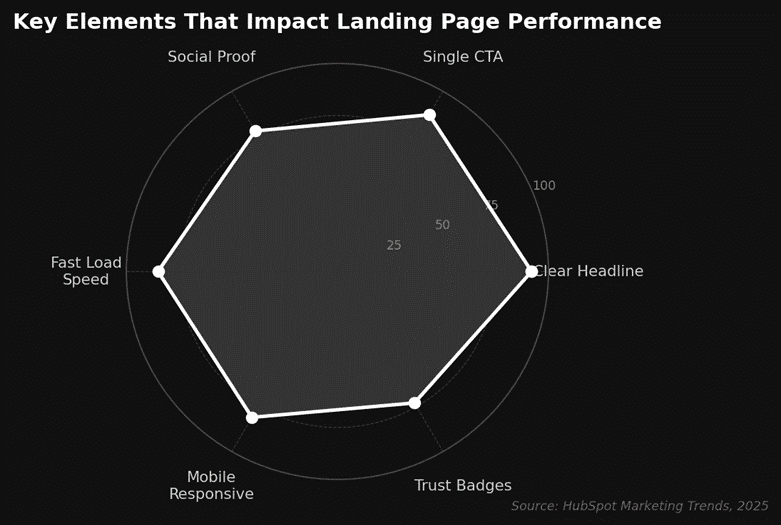
The difference between a page that converts at 2% and one at 7% comes down to a few key elements working together.
• A clear headline. Visitors decide within three seconds whether to stay. Your headline must answer their biggest question immediately.
• One call-to-action. Multiple CTAs create decision fatigue. The best landing pages guide visitors toward exactly one action.
• Social proof. Testimonials, client logos, and review badges reduce hesitation. People trust other people more than marketing copy.
• Mobile-first design. Over 60% of web traffic comes from phones. If your page is not built for mobile, you are losing the majority of visitors.
Writing copy that converts takes more than good grammar. It requires understanding buyer psychology and matching your words to what your audience thinks. That is what professional landing page copywriting focuses on.
How Do Landing Pages Help With SEO?
Landing pages are not just for paid campaigns. When optimized with the right keywords and structured headings, they rank organically on Google and get cited by AI tools like ChatGPT and Perplexity.
• They target long-tail keywords matching buyer intent, bringing higher-quality organic traffic.
• Well-structured pages signal relevance to Google, improving chances of appearing in Featured Snippets.
• Clear question-answer formatting performs well in AI-driven search, which is becoming a major traffic source.
Pairing your landing pages with a proper SEO and AEO growth strategy ensures they rank on Google and get picked up by AI platforms simultaneously.
For a deeper walkthrough on layout and design choices, check out this guide on how to design a high-converting landing page.
The Bottom Line
A landing page is one of the most powerful tools a startup can build. It takes scattered traffic and channels it into focused, measurable results. Whether you are running ads, sending cold emails, or sharing content on social media, every campaign performs better when it points to a well-crafted landing page instead of a generic homepage.
Ready to build a landing page that actually converts?
Visit Viral-Impact and let us help you turn clicks into customers.