Discover how answer engine optimization helps brands win visibility in AI search results and attract more clients organically.
Answer Engine Optimization, or AEO, is the practice of structuring your content so AI platforms like ChatGPT, Perplexity, and Google AI Overviews cite your brand as a trusted source. If your content isn't built for these engines, you're missing a fast-growing segment of your audience.
Why Does AEO Matter Right Now?
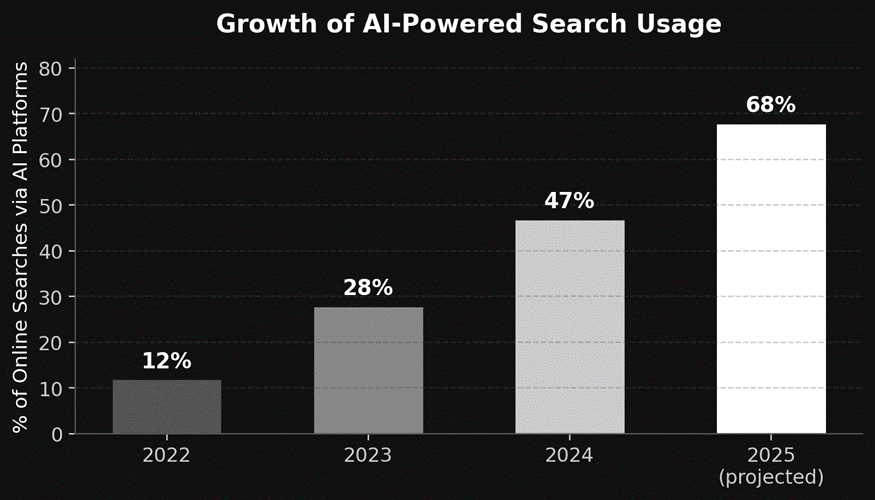
The way people search is changing. Instead of clicking through ten blue links, millions now ask AI tools direct questions and expect direct answers. Research shows that nearly half of all online searches in 2024 involved an AI-generated response.
That shift creates a problem for brands still relying only on traditional SEO. Here's the thing: ranking on page one of Google still matters, but it's no longer enough. Your content also needs to show up when someone asks ChatGPT or Perplexity a question about your industry.
AEO bridges that gap. It ensures your brand is the one AI engines pull from when generating answers.
What Makes AEO Different from Traditional SEO?
SEO focuses on keywords, backlinks, and technical performance to climb Google rankings. AEO goes a step further. It focuses on how AI engines read, interpret, and cite your content.
Key differences include:
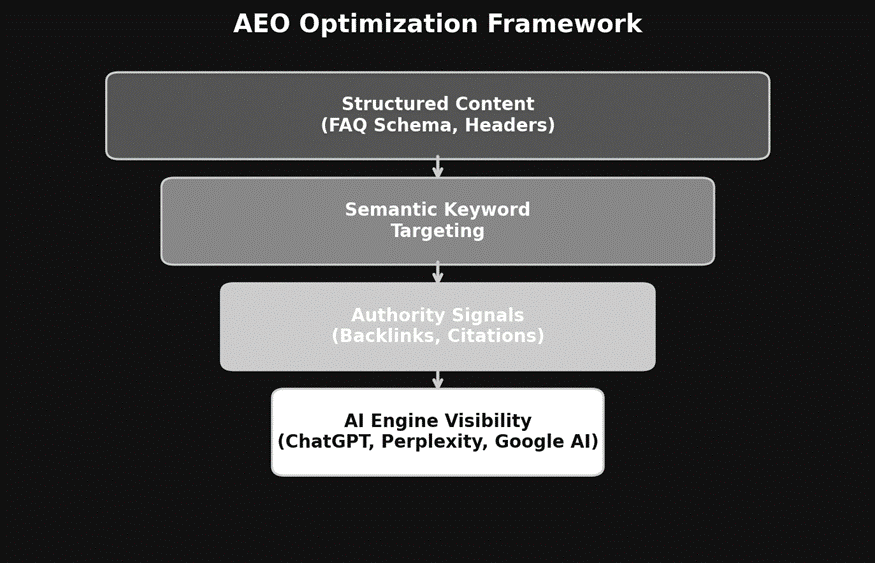
• Content structure: AEO prioritizes clear question-answer formats, structured headers, and schema markup that AI can parse easily.
• Authority signals: AI engines pull from sources with strong domain authority, quality backlinks, and consistent topical coverage.
• Semantic depth: Rather than stuffing keywords, AEO rewards content that fully answers a question with context and supporting detail.
• Citation potential: The goal isn't just traffic. It's getting your brand named directly in AI-generated responses.
If you want your startup to stay competitive, combining your SEO & AEO growth strategy is no longer optional.
How Are Brands Actually Winning AI Visibility?
The brands getting cited by AI search tools aren't doing anything magical. They follow a repeatable playbook.
• They write FAQ-style content. AI engines love clear questions followed by concise, authoritative answers. This format matches how users query AI tools.
• They build topical authority. Publishing consistent, deep content on a specific niche signals to AI that your site is a reliable source. A solid AEO blog writing approach makes this scalable.
• They earn quality backlinks. Guest posts on high-authority sites and press coverage create the trust signals AI engines weigh heavily when deciding which sources to cite.
• They use structured data. Schema markup, clean HTML, and logical heading hierarchies help AI crawlers understand and extract your content faster.
• They update content regularly. AI engines favor fresh, accurate information. Outdated pages get pushed aside quickly.
What Content Formats Get the Most AI Citations?
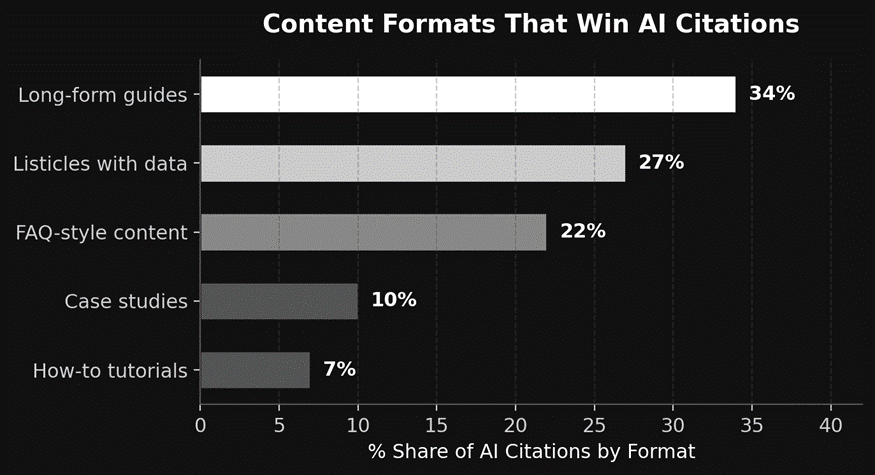
Not all content types perform equally in AI search. Long-form guides and data-driven listicles capture the largest share of AI citations because they provide comprehensive answers in a well-organized structure.
FAQ-style articles come in close behind. Their question-answer format maps directly to how users interact with AI tools, making them easy for engines to parse and cite.
If you're curious about how to structure content that ranks on Google and gets cited by AI, this guide on what is answer engine optimization breaks it down step by step.
The Bottom Line
AI search isn't a future trend. It's happening right now, and it's reshaping how customers discover brands. If you want your startup to be the answer, not just another search result, AEO needs to be part of your growth strategy today.
Ready to get your brand cited by AI search engines?
Visit Viral-Impact and let's build a visibility strategy that works across Google and every AI platform your audience is using.