Discover what brand positioning strategy really is, why every startup needs one, and how it drives real growth.
A brand positioning strategy is a deliberate plan that defines how your startup is perceived by your target audience compared to competitors. It shapes your messaging, visual identity, and ultimately determines why customers choose you over everyone else.
If you’re building a startup, there’s one thing that separates brands people remember from brands people scroll past: positioning. Most founders obsess over features and pricing. But the companies that grow fastest? They plant a flag in people’s minds before competitors get the chance. And it’s not some abstract theory reserved for Fortune 500 boardrooms. It’s a practical framework early-stage companies can use right now.
Why Does Brand Positioning Matter for Startups?
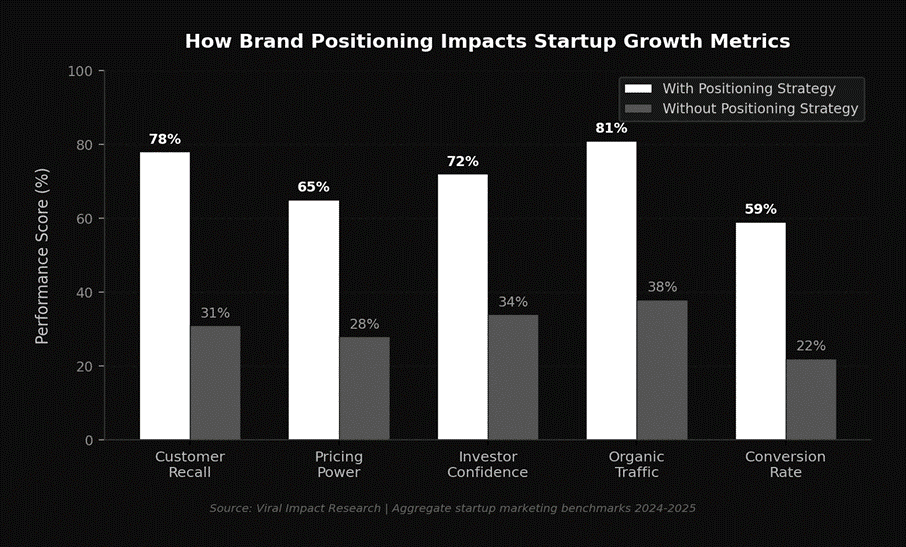
Two SaaS companies sell nearly identical project management tools. One positions itself as “the simplest tool for remote freelancers.” The other just says “project management software.” Which one sticks? Here’s what a clear positioning strategy delivers:
• Clarifies your message so your ideal customer immediately understands what you offer.
• Creates an emotional connection that makes people pick you over cheaper alternatives.
• Supports premium pricing when your audience sees you as the go-to solution.
• Drives organic visibility because clear positioning makes your organic growth strategy far more effective.
How Do You Build a Brand Positioning Strategy?
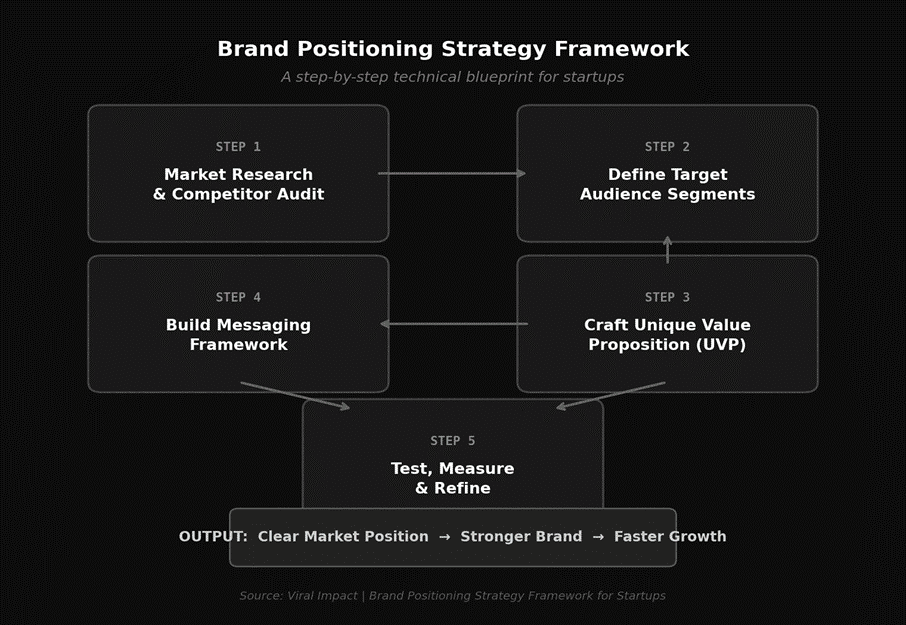
You don’t need a massive budget. You need clarity. Follow these five steps:
• Research your market and competitors. Find the gaps others aren’t filling. That’s your opportunity.
• Define your target audience precisely. Don’t say “everyone.” Are you serving solo founders? Series A SaaS teams?
• Craft your unique value proposition. One sentence answer: “Why should someone pick you?” Make it sharp and honest.
Build a messaging framework. Map positioning into every touchpoint: website, emails, social media. Consistency is non-negotiable.
• Test and refine constantly. Run A/B tests, gather feedback, and adjust as your market evolves.
What Are the Biggest Brand Positioning Mistakes?
Plenty of startups skip positioning entirely or get it wrong. Avoid these traps:
• Trying to appeal to everyone. When you speak to everyone, you connect with nobody.
• Copying competitor messaging. If you sound like everyone else, you’re invisible. Differentiate or disappear.
• Ignoring visual identity. Your logo and brand identity are the visual shorthand for your positioning. Mismatch kills trust.
• Setting it and forgetting it. Markets shift, and customer needs evolve. Your positioning also needs to evolve.
How Does Brand Positioning Connect to SEO?
Here’s the part most people miss. Your positioning drives your entire content engine. When you know exactly who you serve, every blog post and landing page becomes sharper. Keyword targeting gets focused. Content earns more backlinks because it says something original. Search engines reward that authority, both on Google and in AI-powered answer engines. A well-positioned startup doesn’t just get clicks; it gets remembered, cited, and recommended.
The Bottom Line
Brand positioning strategy isn’t a luxury; it’s the foundation of everything you build as a startup. Without it, your marketing is noise. With it, every dollar you spend works harder because people already know what you stand for.
Ready to build a brand that people actually remember?
Visit Viral-Impact and let’s create a positioning strategy that drives real, measurable growth for your startup.