Learn what color psychology in branding means and how startups use color choices to build trust and recognition.
Color psychology in branding is the practice of choosing specific colors to shape how people feel about your business. Startups that pick colors with intention earn trust faster and stick in people’s memories longer than those that choose randomly.
Why Do Brand Colors Matter for Startups?
Your brand color is the first thing a potential customer notices. Research shows that up to 90% of first impressions come from color alone. For startups in crowded markets, that is a serious edge.
• Colors trigger emotional reactions within 90 seconds, and most of that judgment is based on color alone.
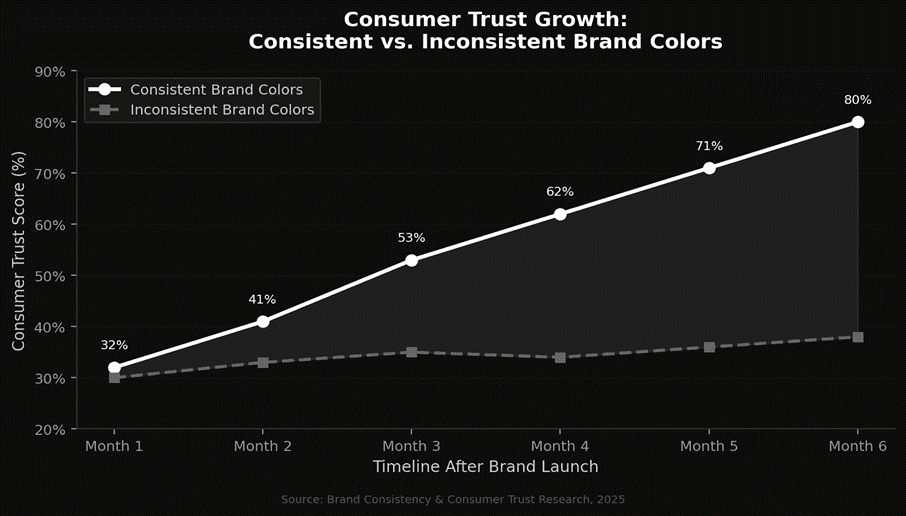
• Consistent color use increases brand recognition by up to 80%.
• 85% of shoppers say color is a primary reason they choose one product over another.
• A well-chosen palette sets the emotional tone for every touchpoint, from your website to your pitch deck.
If you are building a complete brand identity from scratch, your color palette should be one of the first strategic decisions you make.
What Does Each Color Communicate to Your Audience?
Every color carries a different psychological message. Here is what the most common brand colors signal:
Color | Psychological Association | Best Used By |
Blue | Trust, stability, professionalism | SaaS, fintech, healthcare startups |
Red | Urgency, excitement, passion | Food delivery, entertainment, and retail |
Green | Growth, health, sustainability | Wellness, eco brands, agriculture |
Orange | Energy, friendliness, confidence | Creative agencies, youth brands |
Black | Sophistication, luxury, authority | Premium tech, fashion, consulting |
Yellow | Optimism, warmth, attention | Consumer apps, education platforms |
Purple | Creativity, wisdom, premium feel | AI startups, beauty, and luxury services |
How Does Color Psychology Affect Website Conversions?
Color psychology extends beyond your logo into how visitors interact with your landing pages and website.
• High-contrast CTA buttons consistently outperform low-contrast options in A/B tests.
• Neutral background tones reduce bounce rates and keep visitors on the page longer.
• Too many competing colors create visual noise and increase decision fatigue, which kills conversions.
How Should Startups Choose the Right Brand Colors?
Picking brand colors should not be a guessing game. Here is a practical approach:
Start with your brand personality. Are you bold and disruptive, or calm and trustworthy? Your answer narrows the palette fast.
• Study competitors. If everyone in your space uses blue, a bold accent color helps you stand apart.
• Limit your primary palette to two or three colors: one dominant, one supporting, and one accent for CTAs.
• Document everything in a brand style guide, especially when you are building a strong brand identity from scratch.
The Bottom Line
Color psychology is not a design trend. It is a strategic tool that impacts how customers perceive your startup, how quickly they trust you, and whether they remember you. The brands that grow fastest make intentional color decisions early and stay consistent across every channel.
Need help building a brand identity that drives real growth?
Visit Viral-Impact and let our team create a color strategy that works for your startup.