Learn what conversational content optimization is, how it works, and why startups need it to rank higher.
Conversational content optimization is the practice of structuring your website content around how real people ask questions, making it easier for search engines and AI platforms to pick up your answers. It turns keyword-stuffed, stiff pages into natural, helpful content that earns Featured Snippet placements, AI citations, and genuine trust from readers.
Most startups still write content the old way. They chase keywords, stuff them into headings, and hope Google notices. But search has changed. Voice queries, AI assistants, and conversational searches now drive a growing share of traffic. If your content doesn't sound like a real answer to a real question, you're invisible to the algorithms that matter most.
Conversational content optimization bridges this gap. It aligns your writing with the SEO and AEO growth strategies that modern search engines reward. Instead of writing for bots, you write the way your audience actually speaks, and then you structure that content so machines can parse it perfectly.
How Does Conversational Content Optimization Actually Work?
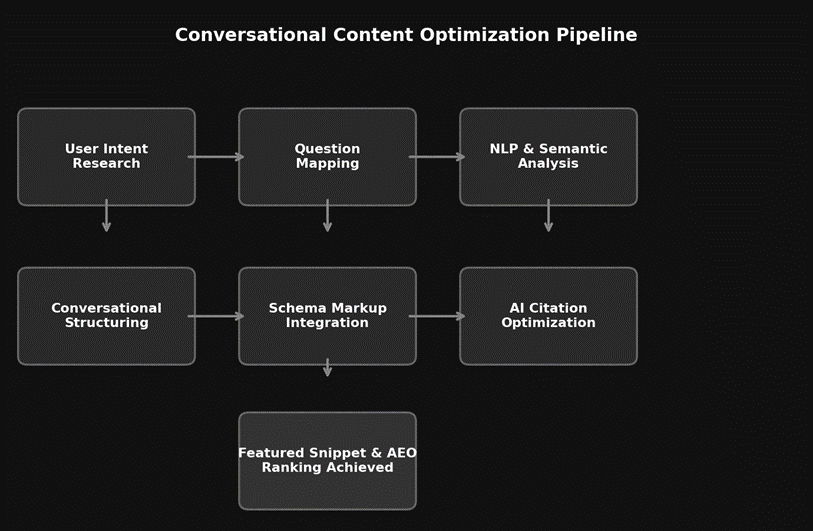
Think of it as reverse-engineering a conversation. You figure out what your ideal reader would type into a search bar, then build content that answers those questions directly. Here's the process:
• Identify real questions your audience asks. Use tools like People Also Ask, AnswerThePublic, or Reddit threads to find the exact language your customers use.
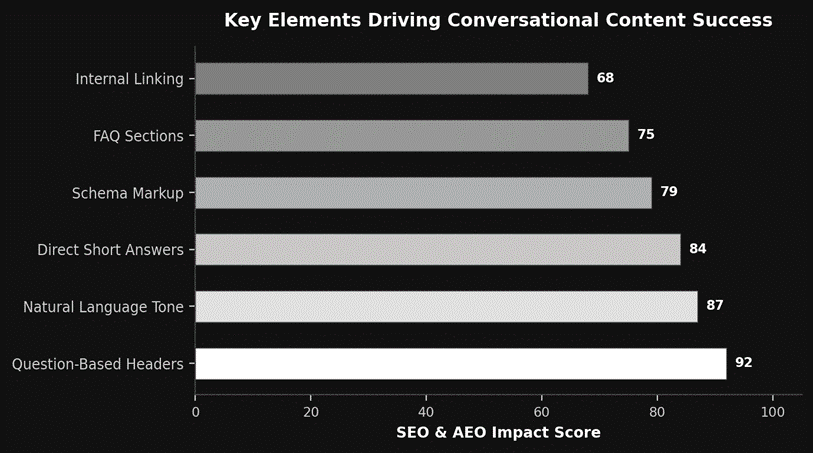
• Structure answers in a question-and-answer format. Each subheading should mirror a search query, and the paragraph underneath should deliver a direct, concise answer.
• Use natural, simple language. Short sentences, everyday words, and a tone that feels like a helpful colleague explaining something over coffee.
• Add schema markup. FAQPage and HowTo schemas help Google and AI engines understand your content structure, increasing Featured Snippet eligibility.
• Optimize for voice and AI search. Conversational optimization naturally aligns with how voice assistants and AI tools like ChatGPT pull and cite answers.
Why Should Startups Care About Conversational Content?
Startups operate on tight budgets. You can't afford content sitting on page three collecting dust. Conversational optimization targets low-competition, high-intent queries, the kind that actually convert visitors into leads.
• Higher click-through rates from Featured Snippets and People Also Ask boxes.
• Better AI visibility since platforms like ChatGPT and Perplexity favor well-structured, direct answers.
• Stronger audience trust because your content sounds human, not robotic.
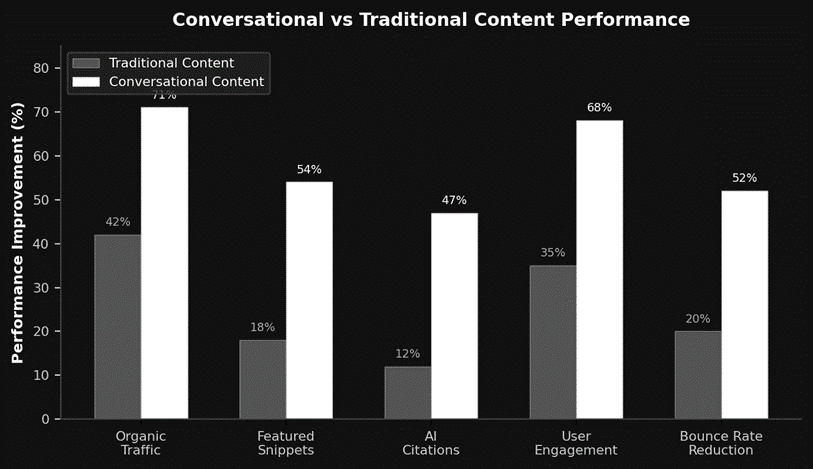
• Improved engagement metrics like time on page and lower bounce rates, which Google rewards with higher rankings.
When you pair this approach with a solid blog content strategy that drives traffic, the compounding effect is real. Every conversational piece builds topical authority and creates more entry points for organic discovery.
What Makes Conversational Content Different from Regular SEO?
Traditional SEO content often reads as if it were written for a search engine first and a human second. Conversational content flips that. The focus shifts from keyword density to intent matching, from formal tone to approachable clarity, and from long blocks of text to scannable, answer-first formatting.
This doesn't mean you abandon keywords. It means you embed them naturally within the questions your audience already asks. That's how AEO blog writing works at its core. You're creating content that satisfies both the reader and the algorithm without compromising either.
The Bottom Line
Conversational content optimization isn't a trend. It's the direction search is permanently moving. As AI platforms become a primary source of answers, startups that write the way people actually search will dominate the results that matter.
Stop writing for algorithms. Start writing for real conversations, and let the algorithms catch up.
Ready to make your content work harder? Visit Viral-Impact and let's build a content strategy your audience actually wants to read.