Discover what Framer is and why SaaS startups are leaving Webflow to launch better websites without the hassle.
Framer is an AI-powered website builder that lets teams design, animate, and publish production-ready sites without heavy developer input. SaaS startups are switching from Webflow because Framer ships faster, performs better out of the box, and includes native AI tools that can generate entire page layouts from a single prompt.
What Is Framer?
Framer started as a design prototyping tool. Designers used it to test animations and interactions before handing files off to developers. Around 2022, Framer pivoted into a full web publishing platform, and that changed everything.
Today, it sits somewhere between Figma and a headless CMS. You design visually, Framer writes the code for you, and your site goes live with a single click.
What makes it different from most builders:
• Framer outputs clean, performant code, not bloated or messy HTML.
• Pages load fast without manual optimization tweaks.
• The editor works like a design tool, not a form builder.
• AI generates full sections, layouts, and copy from a text prompt.
• Custom domains, localization, and analytics are built in from day one.
For a SaaS team, your website is a growth asset. The faster you can test and iterate, the faster you can convert.
What Made Webflow Popular (And Why It's Not Enough for Fast Teams)
Webflow was genuinely impressive when it launched. Designers got pixel-level layout control without writing CSS, plus a full CMS and hosting all in one.
But SaaS startups kept running into the same friction:
• The learning curve is steep. Webflow's editor can take weeks to feel comfortable.
• CMS-heavy sites slow down without a developer actively managing optimization.
• Customizing templates often requires deep platform knowledge.
• Running an A/B test on a landing page takes longer than it should.
• Team pricing scales up fast for growing companies.
Webflow still works well for content teams with dedicated developers. But early-stage SaaS founders with small crews, tight roadmaps, and limited runway started asking if there was a leaner path.
Why SaaS Startups Are Making the Switch
The core reason is speed. Not just page load speed, but the full workflow from idea to live URL.
Here's what teams consistently point to when switching:
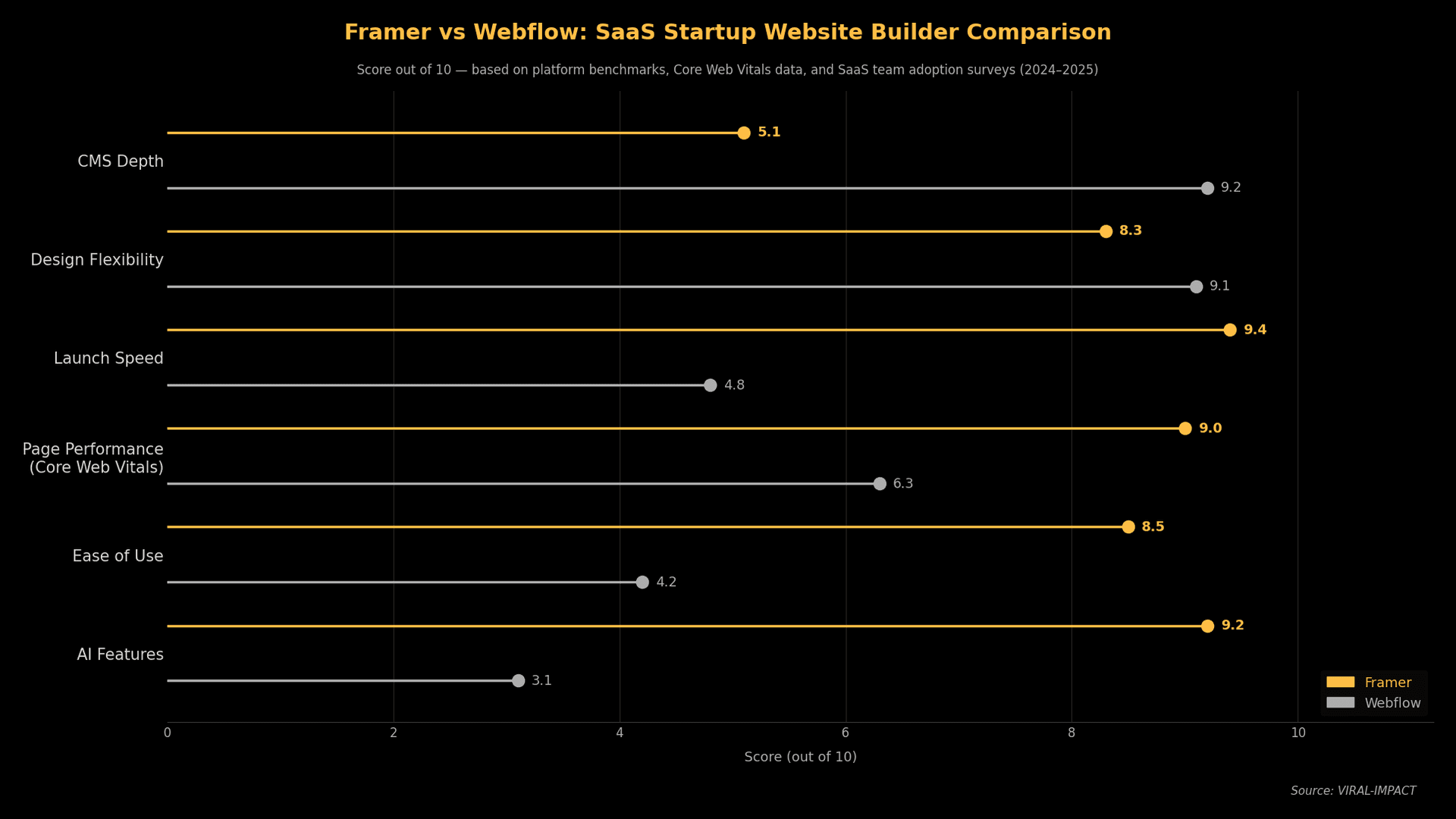
• Launch time: A Framer site can go from blank canvas to published in a single day. Webflow projects routinely take weeks.
• AI-assisted design: Framer's AI generates a full page from a text prompt, then lets you adjust everything visually. For a startup testing new messaging every few weeks, this alone is worth it.
• Performance scores: Framer sites consistently score 90+ on Google PageSpeed Insights, often without any extra configuration. That matters directly for SEO.
• React components: Engineers can drop custom React components into Framer pages, so the no-code editor is never a ceiling.
• Predictable pricing: Framer's pricing model is simpler and more predictable for small teams.
Getting your website design and development right from the start matters more than most founders realize, and Framer removes a lot of the friction that slows teams down.
Does Framer Help or Hurt Your SEO?
For most startups, Framer helps. It generates clean semantic HTML, handles meta tags natively, and produces fast pages that perform well across Core Web Vitals, all of which feed directly into Google's ranking signals.
That said, switching platforms alone won't move your rankings. You still need a proper SEO and AEO growth strategy running behind the scenes. Framer gives you a strong technical foundation. What you build on top of that is what actually drives growth.
For a deeper look at how site architecture ties into B2B leads, the guide on the best website structure for B2B companies is worth reading before any redesign.
When Framer Is Not the Right Choice
Framer works best for marketing sites, landing pages, and startup websites with relatively straightforward content needs.
If your site runs a large editorial CMS with hundreds of posts, multi-author workflows, or complex membership logic, a Webflow or a headless CMS setup may still suit you better. Framer's CMS is functional but intentionally lean.
The right call depends on your team size, publishing cadence, and how technically complex your content workflows actually are.
The Bottom Line
Framer gives SaaS startups a faster, cleaner path to building and shipping websites. The AI tools, strong performance scores, and design-first editor solve real problems that Webflow's complexity creates for lean teams.
If you're rethinking your web presence, the team at Viral-Impact can help you build, optimize, and grow it from first launch to first-page rankings.