Learn what Google AI Overview is and discover proven strategies to get your startup content featured in it.
Google’s AI Overview is the AI-generated answer box that sits right at the top of search results, pulling information from trusted web pages to answer questions instantly. If your content isn’t structured to show up there, you’re handing free visibility to competitors who figured it out first.
You type a question into Google, and before any blue links appear, there’s a neatly written AI summary at the top. That’s Google’s AI Overview. It pulls together information from high-quality pages and presents a synthesized answer. For startups building online visibility, this changes how SEO works.
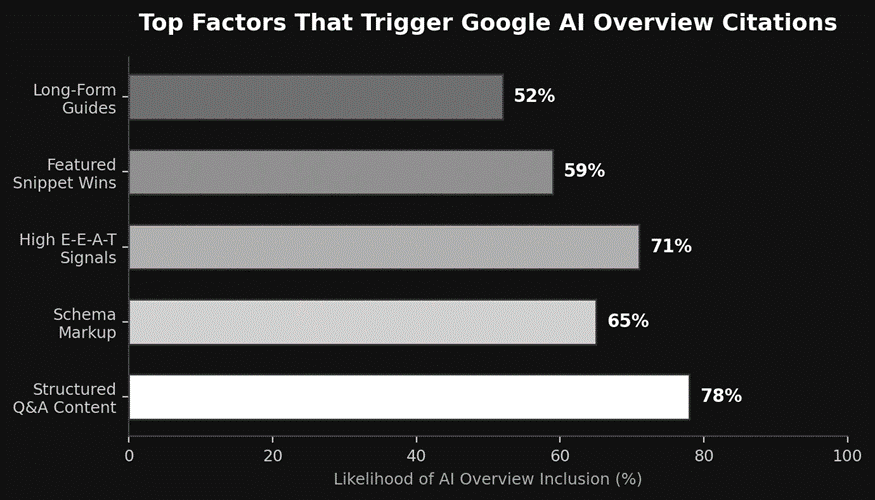
How Does Google AI Overview Actually Work?
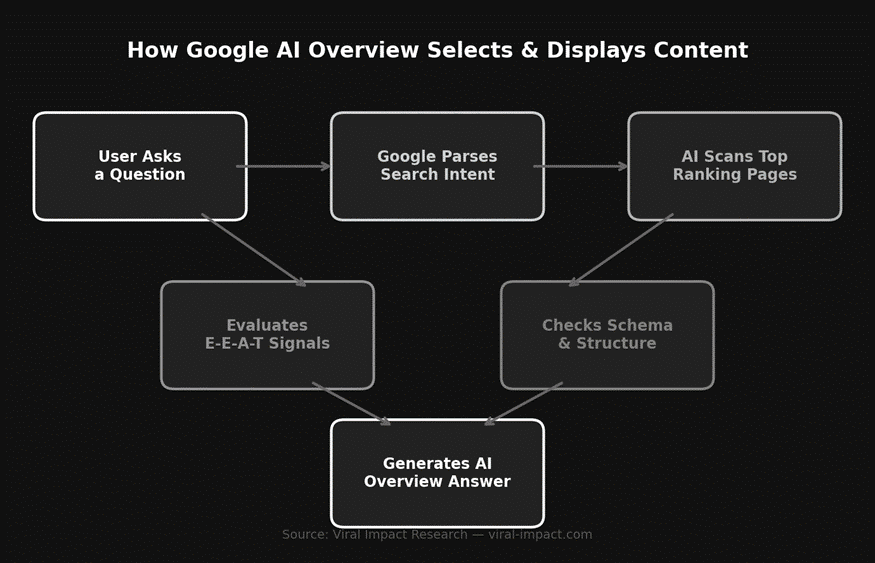
Think of AI Overview as Google’s way of giving searchers an instant, reliable answer without clicking through multiple websites. Here’s what happens:
• A user types a question or informational query into Google Search.
• Google’s AI model scans top-ranking pages that already demonstrate authority and relevance.
• It evaluates content structure, E-E-A-T signals (Experience, Expertise, Authoritativeness, Trust), and schema markup.
• The AI generates a summarized answer, often citing the source pages with clickable links.
• Content formatted with clear headings, direct answers, and structured data has the highest chance of being pulled in.
The takeaway? Google doesn’t randomly pick content. It favours pages that rank well and are formatted in ways its AI can easily parse. That means your SEO and AEO strategy needs to work together, not separately.
What Kind of Content Gets Featured in AI Overview?
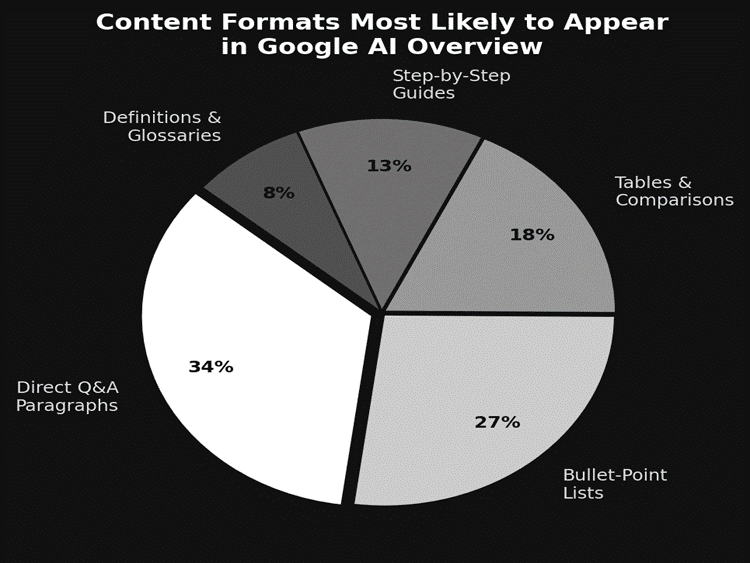
Not every page gets cited. Google’s AI tends to pull from content that follows specific patterns:
• Direct question-and-answer format; pages that answer a question within the first 40 to 60 words perform significantly better.
• Bullet-point lists and step-by-step instructions; structured content is easier for AI models to extract and reformat.
• Schema markup implementation; FAQPage, HowTo, and Article schema types signal to Google exactly what your content covers.
• Strong E-E-A-T signals; author bios, real-world examples, cited data, and consistent publishing history all matter.
• Content between 800 and 1,500 words; this range tends to be the sweet spot for AI search engines looking for comprehensive but focused answers.
If you’re already creating AEO-optimized blog content, you’re halfway there. The next step is making sure your technical foundation supports it.
How Can Startups Optimize for Google AI Overview?
Getting into AI Overview isn’t about gaming any system. It’s about creating genuinely useful, well-structured content. Here’s a practical checklist:
• Start every article with a clear, direct answer to the target question within the first two sentences.
• Use question-based H2 subheadings that mirror real search queries from Google’s People Also Ask section.
• Implement FAQPage, Article, and HowTo schema markup across your key pages.
• Build topical authority by publishing clusters of related content that internally link to each other.
• Keep paragraphs short, sentences simple, and always use plain language over jargon.
• Update your content regularly with fresh data, recent examples, and improved formatting.
Structure matters more than most founders realize. A well-organized page with proper headings will outperform a wall of text every time, especially when AI is doing the reading. Our guide on getting cited in AI search results breaks this down further.
The Bottom Line
Google’s AI Overview isn’t a concept for the future. It’s live, it’s reshaping how people find information, and startups that adapt now will own the visibility others keep losing. Structure your content for both humans and AI, invest in real expertise, and make it easy for search engines to understand what you offer.
Ready to get your startup’s content in front of the right audience through Google and AI search? Visit Viral-Impact and let’s build a growth strategy that actually works.