Discover the real differences between AEO and GEO strategies and learn which approach helps startups dominate AI search.
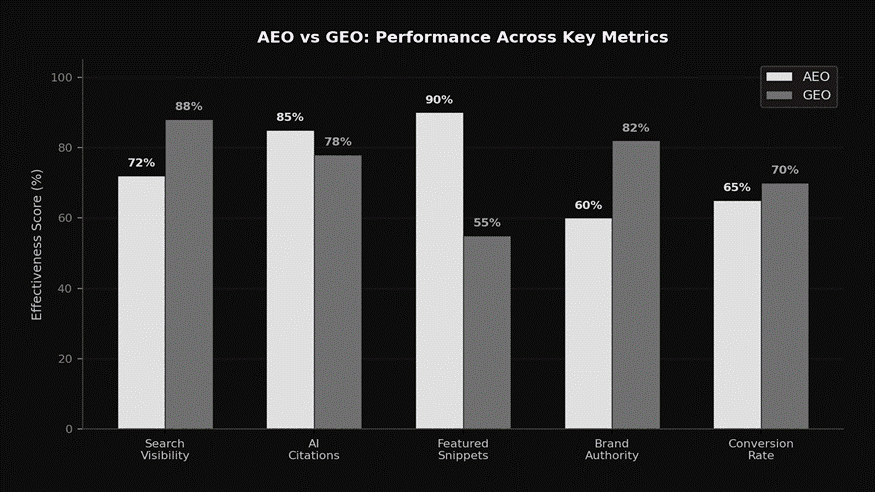
AEO focuses on structuring your content so AI tools like ChatGPT and Google AI Overviews pull direct answers from your website. GEO goes further by improving how often and how prominently generative AI platforms cite your brand in their responses.
Both terms have been floating around marketing circles for a while now. The confusion is understandable. They sound similar and overlap in places. But once you break them down, the differences become clear and surprisingly useful for any startup trying to grow through organic search.
What Does AEO Actually Mean?
AEO stands for Answer Engine Optimization. It is the practice of formatting your content so AI-powered search tools can easily extract and display your answers. Think of it as making your website the go-to source when someone asks a direct question.
Here is what AEO typically involves:
• Writing concise, direct answers at the top of your content blocks.
• Using the FAQ schema and structured data for search engines to understand your format.
• Targeting Featured Snippets, People Also Ask boxes, and voice search results.
• Aligning content with question-based search queries that real people type every day.
For a deeper breakdown, check out our full guide on what answer engine optimization is and the top AEO strategies.
What Does GEO Mean and How Is It Different?
GEO stands for Generative Engine Optimization. While AEO focuses on answer formatting, GEO looks at the bigger picture. It is about making sure generative AI platforms like ChatGPT, Perplexity, and Google AI Overviews mention and cite your brand when they build responses.
GEO strategies typically include:
• Building topical authority across your entire website, not just individual pages.
• Earning backlinks from high-authority sources so AI models trust your content
• Including original data and expert citations that generative engines prefer to reference.
• Strengthening E-E-A-T signals across every piece of published content.
The big takeaway? AEO helps your content get picked as the answer. GEO helps your brand get picked as the source. Both matter, but they work at different levels.
Can Startups Use Both AEO and GEO Together?
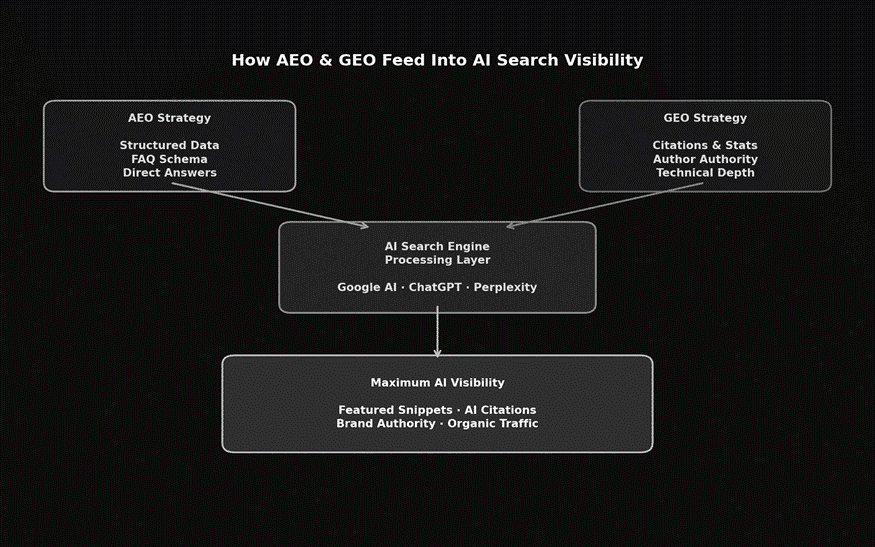
Absolutely. The smartest approach is layering both on top of a solid SEO and AEO growth strategy. Start with AEO to capture quick wins like Featured Snippets. Then build GEO over time to increase how often AI platforms reference your brand.
Here is a practical way to combine them:
• Use AEO formatting on every blog post and service page you publish.
• Apply GEO principles by backing claims with original data and earning backlinks through guest posting on high-DR websites.
• Implement schema markup on every page to give AI engines a clear context.
• Audit your content quarterly to keep answers accurate and data fresh.
The Bottom Line
AEO and GEO are not competing strategies. They are two sides of the same coin. AEO makes your content easy for AI to pick up. GEO makes your brand the one AI trusts and cites. Startups that combine both will have a serious edge as search shifts toward AI-driven results.
Ready to build a search strategy that works across Google, ChatGPT, Perplexity, and every AI platform that matters? Start with Viral-Impact. We help startups get found, get cited, and get growing.